


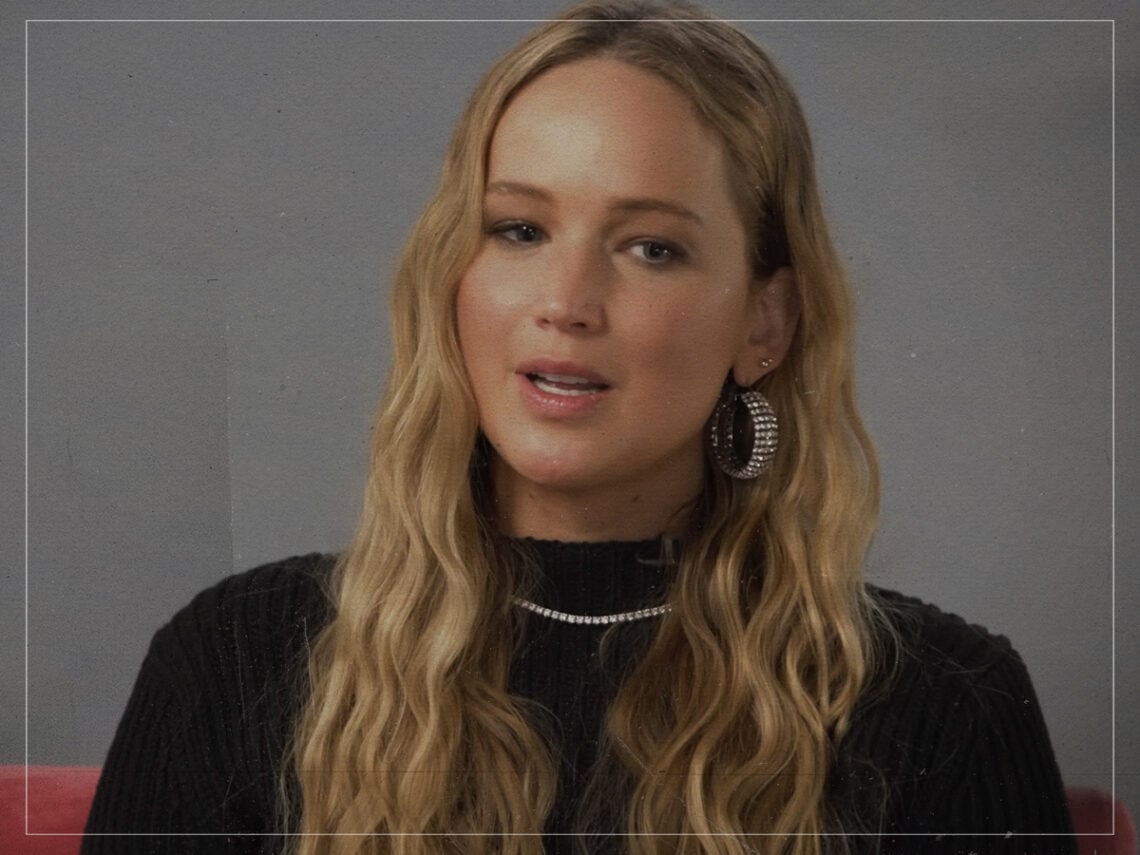
The one movie Jennifer Lawrence needs everyone to see: “This is a must”

Like most exceptional female actors of our generation, Jennifer Lawrence has endured quite the storm when it comes to earning and losing respect.
After all, she’s not the first to have experienced the whirlwind of having audiences turn on her after being so well-liked, just as she’s not the first to have turned the tide and come out the other side still fighting and still pulling off her best work. She’s not the first to face criticism about her appearance, her attitude, or her response to the more serious topics of discussion, and she certainly won’t be the last.
Most people probably remember the trajectory of Lawrence’s reputation, beginning with her popularity after the 2010 thriller Winter’s Bone, followed by her role as Katniss Everdeen in the action epic franchise The Hunger Games. At this time, when social media was also shaping into its own beast, Lawrence became an internet era-defining idol who was hilariously relatable, and, most importantly, an excellent actor.
Then came the storm. Over the years that followed, Lawrence was branded annoying, cringe-worthy instead of charismatic, and not as talented on the big screen as people once thought. Many actors go through these shifts, especially women, but Lawrence’s experience seemed especially gruelling, particularly when you look back and realise that people mainly took issue with her personality.
Lawrence actually weighed in on this recently, reflecting on how being “annoying” in the 2010s resulted in her being “rejected” in Hollywood. “It was my genuine personality, but it was also a defence mechanism,” Lawrence told the New Yorker, saying that she was “hyper” and “embarrassing” and that she didn’t really blame the reaction of her audience when they started to make fun of her.
Thankfully, things shifted again, and in recent years, Lawrence’s position in Hollywood has remained sturdier than ever. When it comes to the broader topics, like the art itself, Lawrence is there to deliver her two cents, and people are there to listen. This openness has become especially prominent whenever she discusses film, and, although she claims not to be a cinephile, the emotion that she exhibits when she discusses her favourite films proves that she has the passion of one, especially when it’s a film like Wong Kar-wai’s 2000 romance In the Mood for Love, which she once said was one of her favourites – and one everybody else must see.
“This movie is the most beautiful movie in the world, in my world,” she said. “It’s for anybody that loves, like, a period, like, love story. It’s like, similar to Pride and Prejudice, and it’s, like, set in this conservative society in this specific time and this reluctant love story where everything is so chaste that like, just passing in the hallway or like, the touch of a hand is so electric, and the cinematography and the set design is so beautiful. There’s pastels and pops of colour. There’s source lighting with shadows. It’s, I mean, if anybody wants to do anything in film, this is a must.”
She also explained why it meant so much to her in the first place, and how the emotional response it evokes, both in terms of its cinematography and the collaboration of each person who made the film itself, is what brought Lawrence back to the beauty of the art form in a simpler, more foundational sense. And when there are experiences like those, all the more trivial aspects of a life under Hollywood’s probing lens fall away to the sidelines.
“Looking at something so beautiful and seeing people that are so talented, a talent like Wong Kar-wai getting being alive and being able to witness,” she said.
