


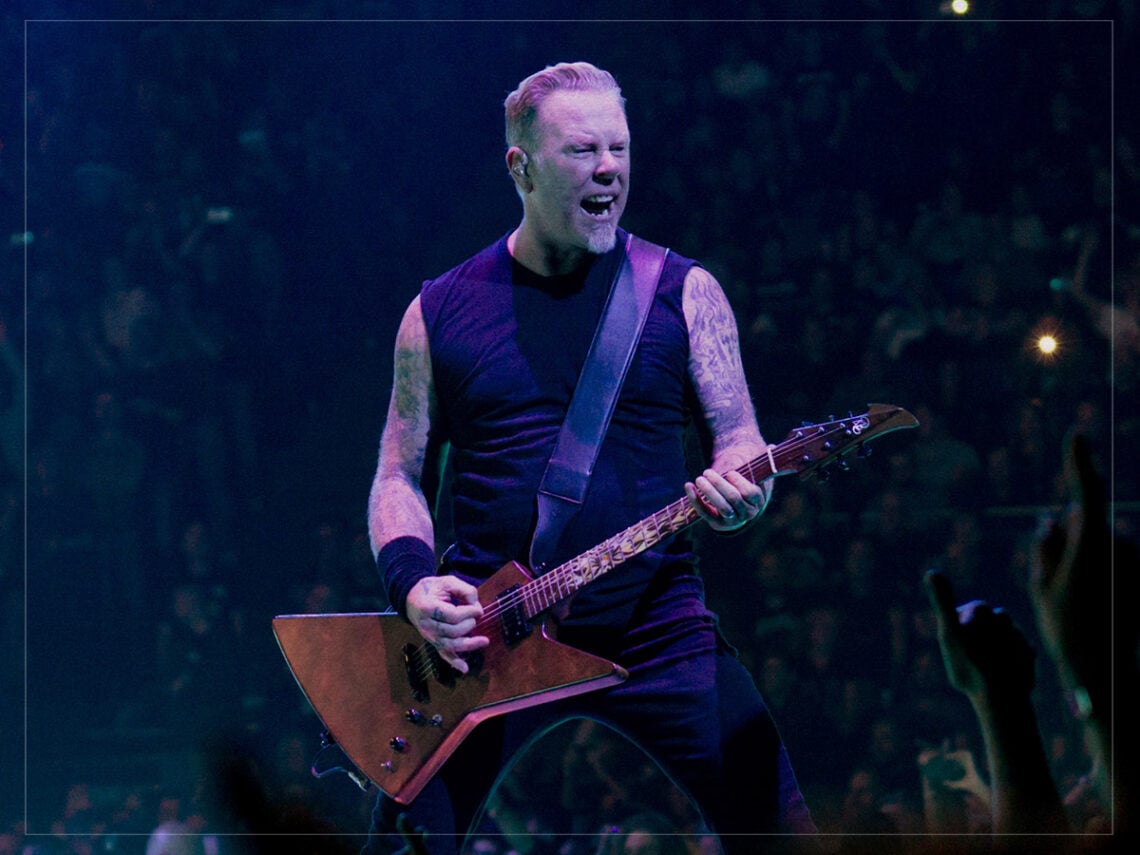
The lyrical genius James Hetfield thought sounded awful: “I hate the fucking music”

No one really needs to dissect every Metallica song to understand what James Hetfield is going for.
He didn’t get to become one of the great warriors of heavy metal to sing about flowers and puppies, and a lot of the greatest songs that he ever penned were all about trying to look at the horrors going on in the world every single day. But even if he needed a great riff to get his point across, not every artist needed the pyro and explosions to leave an impact whenever they sang one of their tunes.
Hell, even some of the darkest Metallica songs didn’t really need that much adornment to be beautiful on their own. It wouldn’t have made any sense for someone to play ‘Master of Puppets’ totally on acoustics or anything, but ‘Mama Said’ would have never worked with a massive band behind it. The Load era might have been a regrettable piece of their history, but it did teach them how to strip things down when they needed to.
And for Hetfield, the entire 1990s was about opening up about his struggles a lot more. Not everyone was going to appreciate the eyeliner that the band had on every time they posed for photos in the late 1990s, but there’s a good chance that it would have become way too boring if all they kept talking about was the atrocities of war and the dangers of drugs, like they had done for the first half of their career.
In fact, a lot of the greatest songs that Hetfield ever wrote around this time are usually the ones that aren’t necessarily metal. ‘The House That Jack Built’ has a lot more to do with straight-ahead hard rock, and when he did break out some of his avant-garde chops for what was to become St Anger, a song like ‘Temptation’ had some semblance of a good idea before it was discarded for emotional vomit.
Not all of it fit under the ‘Metallica’ umbrella, but Hetfield did at least know what made a great lyric sound a bit more unsettling. He had talked about listening to everyone from Nick Cave to Tom Waits when switching up his vocal style, but he drew a line in the sand when talking about listening to Leonard Cohen. He’s an absolute legend in his field, but the singer-songwriter approach wasn’t where Hetfield saw himself.
So if Hetfield was ever caught listening to one of Cohen’s records, he made sure that everyone knew that he was coming for the lyrics rather than focus on him talk his way through some of those tunes, saying, “I wanted to understand other people’s ideas about how to write lyrics. I‘ve even listened to some Leonard Cohen. I mean, I hate the fucking music. But his lyrics are very cool. You do a lot more ‘acting’ with your singing.”
But that kind of acting is the whole reason why Cohen’s voice works in a lot of his greatest tunes. Some of them might be a bit more monotone than others, but being able to appreciate what he brings to the table is the whole reason why Hetfield could work on a project with someone like Lou Reed and understand what he was going for the same way he understood what Lars Ulrich went for when sculpting a metal tune.
Because at the end of the day, nothing mattered more than the music, and even if Cohen’s voice could be like nails on a chalkboard, there’s no better backdrop for his lyrics than what he did on songs like ‘Suzanne’. Not everything was perfect from back to front, but he could understand affairs of the heart better than anyone else could whenever he touched a microphone.
