


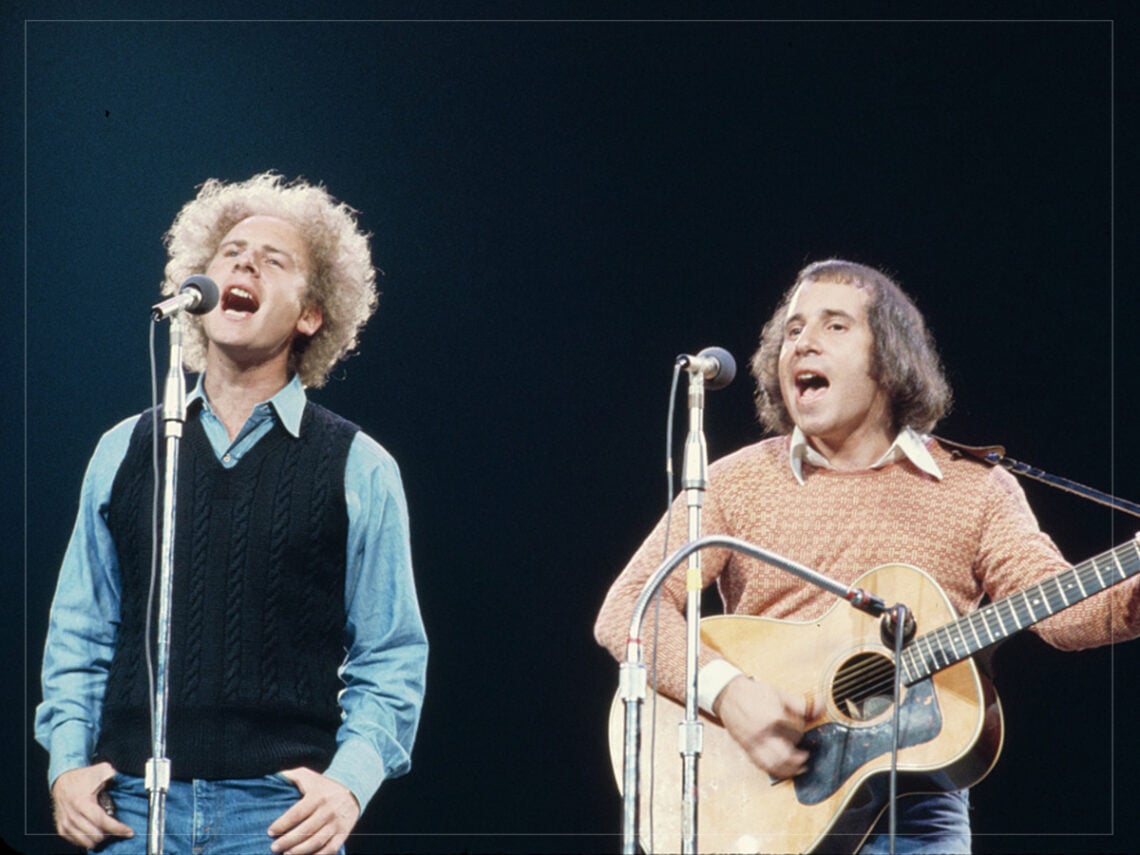
The lyric that “ruined” Paul Simon’s 1970 masterpiece

In the groovy 1960s, Paul Simon was famously bemoaning the straightness of his upstanding songs.
Despite selling an estimated 130 million records with Simon and Garfunkel and a further 55m as a freewheeling solo artist, in 2011, he was still begrudging this earnest element of his oeuvre. “One of my deficiencies is my voice sounds sincere,” he told Rolling Stone.
Many fans would proclaim that same irony-swerving facet is the shimmering zenith of his work, but he lamented it regardless, adding, “I’ve tried to sound ironic. I don’t. I can’t. Dylan, everything he sings has two meanings. He’s telling you the truth and making fun of you at the same time. I sound sincere every time.”
While his songs usually have one meaning, the crux is perpetually so perfectly presented that you can lose sleep turning over the words, nevertheless. Nothing tears or strains to rhyme. At their best, Simon’s songs resonate with such knowable depth that they almost feel like autobiographical edits from your own life.
That Truman Show-like sense of experiential wisdom aggrandises his humble folk songs, transfiguring them into timeless masterpieces. The most hymnal in his whole repertoire, for instance, may well be his most simple and sincere. The message of 1970s ‘A Bridge Over Troubled Water’ is as straightforward and sincere as it gets.
Where does ‘A Bridge Over Troubled Water’ go wrong?
The song is presented as a gospel offering to a friend. It’s a tale of selflessly loving another human, platonic or otherwise, and supporting them when they need it most. From ‘He Ain’t Heavy, He’s My Brother’ to ‘You’ve Got a Friend’, this topic is not uncharted territory for songwriters, especially those with a penchant for collared shirts and sensible footwear; however, nothing in pop history has grabbed the thistle as firmly as Simon’s opus.
At least that’s the case up until the third and final verse. “The song, as I originally wrote it, was just the first two verses,” Simon told Don Heckman in 1972 as he was in the midst of billowing fame, brought about by the song itself. “I just wanted it to be Artie, singing it with the piano accompaniment.”
But as Bach-like grandeur entered the mix, the song continued to grow, like a meadow from a flower. “When we finished those two verses, it felt as though you wanted to hear more,” Simon continued. “So we decided to do a third verse.” This is a decision he still rues.
You never think about studio pressure when it comes to works that have since slipped into the canon of modern traditionals. The business-like notions of ‘deadlines’ and ‘budgets’ feel too incongruous to couple with edifices of art like ‘A Bridge Over’. But that’s purely a retrospective perspective. And in the studio, in November 1969, Simon was under the pump to nail the final track recorded for their album due out in late January.

It would go on to become the title track and live a life of its own, but in that moment, Simon was scratching his head. “I didn’t have any words,” he recalled, “and I’d already said what I wanted the song to say in the first two verses.” In fact, he’d pretty much said it all with the utterance of “I’m on your side when times get rough”. Those eight words say it all, defining the apex of his songwriting in the process.
So, with the newly refurbished version of the song, resplendent with horns and session players, demanding a third verse, Simon was somewhat stuck between a rock and a hard place. To continue a metaphor as straightforward as the one already established for a third go around the Mullberry bush would’ve been frankly belligerent. On the other hand, the beauty of the song is its purity, so anything counter to that might risk sinking the coracle across the troubled water that Simon had painstakingly crafted from the shore when time was on his side.
In the years that have followed, he’s come to feel he, at the very least, rocked the boat. “I mean, it fits in a record sense – it makes the record happen – but, as a song, the metaphor got ruined,” he explained.
While “sail on Silver Girl” is obfuscated enough to be taken as mere melodic license – especially given that it’s a tender nod to Simon’s greying wife-to-be, Peggy – one lyric upends the track. “Your time has come to shine / All your dreams are on their way,” Garfunkel sings, but in the context of the song, it’s hard to know where this hopeful declaration comes from, and it is left feeling hollow.
An offering of love to someone in need suddenly becomes shackled with a rather cheap evocation akin to Artie adding, ‘Oh, and also, chin up, mate, you’re going to win the lottery on Tuesday’, and the ticket is thrown in as a mere afterthought to boot.
While it hardly derails the song half as much as Simon seems to think it does, I suppose when your stock and trade is in sounding “sincere” and sticking to a single meaning, it’s easy to see why he thought his masterpiece was partly “ruined” by this blustering finale in his own self-critical eyes.
The full lyrics:
“When you’re weary, feeling small,
When tears are in your eyes
I will dry them all
I’m on your side
When times get rough
And friends just can’t be found
Like a bridge over troubled water
I will lay me down
Like a bridge over troubled water
I will lay me down
When you’re down and out
When you’re on the street
When evening falls so hard
I will comfort you
I’ll take your part
When darkness comes
And pain is all around
Like a bridge over troubled water
I will lay me down
Like a bridge over troubled water
I will lay me down
Sail on, silvergirl
Sail on by
Your time has come to shine
All your dreams are on their way
See how they shine
If you need a friend
I’m sailing right behind
Like a bridge over troubled water
I will ease your mind
Like a bridge over troubled water
I will ease your mind”.
