


The one guitarist Jeff Beck wished he got to meet: “The biggest unsung hero”

The music industry has never been a fair meritocracy, where talent always rises to the top. In any career, even in the case of the late supremely talented Jeff Beck, luck still played a pivotal role in bringing him to the attention of the masses.
While there’s no doubt that Beck is an undeniable great, there are certainly many others who’ve had the same level of ability that were never given the opportunity to show their talent on the biggest stages. Especially in Beck’s era, there were only a finite number of places to get your music heard, which meant many were starved of the platform to thrive.
Beck was able to speak about this matter with more trust and authority than most, having worked alongside everybody who is anyone in the rock business and beyond. But there was one name, Cliff Gallup, that evaded him.
Gallup, as the lead guitarist of Gene Vincent and The Blue Caps, was one of the pioneers of the early brand of rock ‘n’ roll of the 1950s, which Beck grew up listening to. That generation of musical forefathers were responsible for laying the foundations, which allowed the likes of Beck to subsequently follow his dreams and take the genre to unprecedented heights.
While he was a personal hero to Beck, as well as Eric Clapton, and eventually was inducted posthumously into the Rock and Roll Hall of Fame in 2012, he never received his flowers while he was still alive.
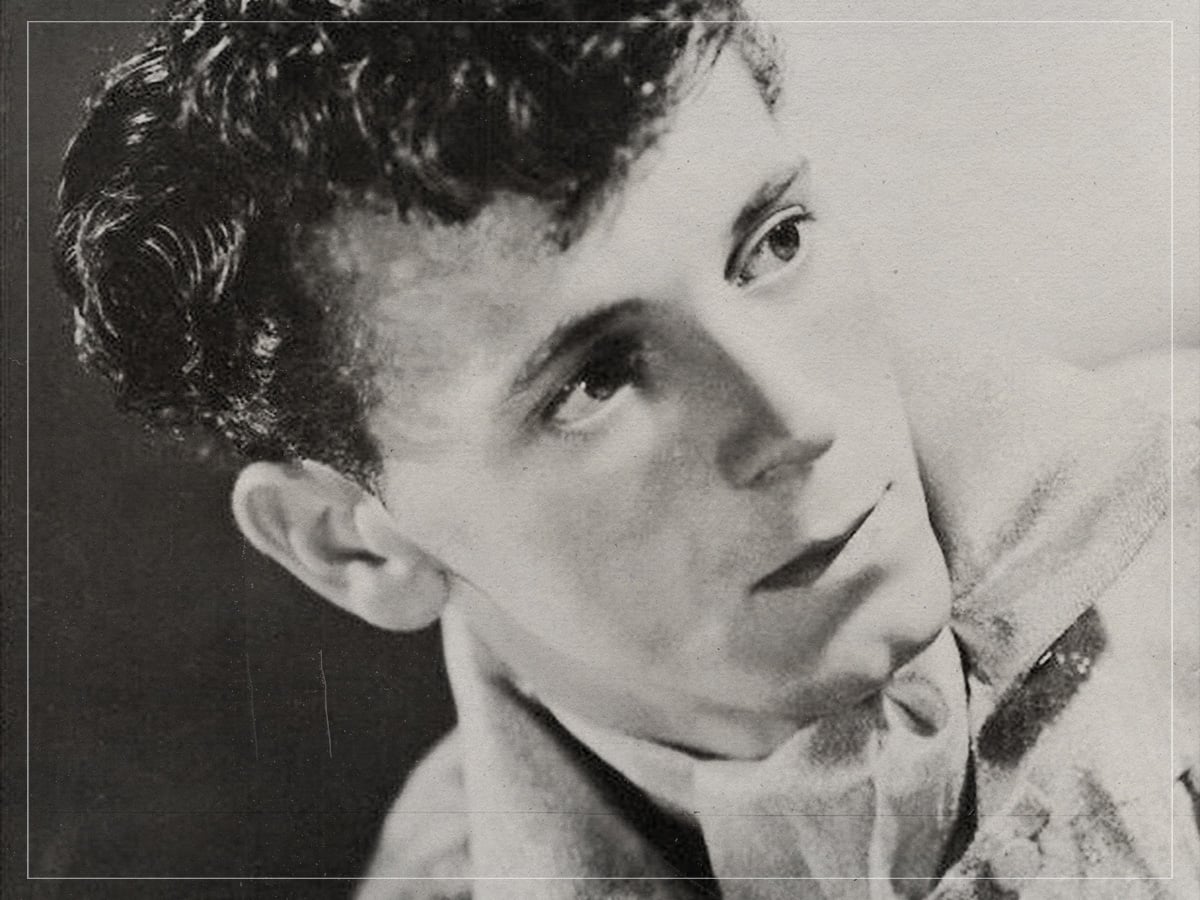
The American was a technical wizard who was a class above his peers during the ’50s. Yet, despite his immense talent, the guitarist dropped out of the limelight during the ’60s after his attempt at a solo record flopped, taking up a regular job in the real world, with his music becoming a hobby on the local band circuit in Virginia.
Sadly, Gallup died in 1988 of a heart attack, preventing him from enjoying a much-deserved career revival and also robbing Beck of the chance to tell the guitarist how much he meant to him.
During an interview with Guitar World, Beck explained why he felt a kinship toward Gallup and wished they were part of the same scene, sharing, “I was getting so depressed by ’65 because I was 10 years too late to be around the Gene Vincent, Cliff Gallup thing, and I bitterly resent that.”
Elaborating on his love of Gallup, Beck added: “He’s the biggest unsung hero of all time, and then he goes and dies. No. He didn’t know I existed. The awe I would have been in of him, and he would have been sitting there, wishing he was fishing.”
“I would have just liked to hear one syllable. His voice would have satisfied me: ‘Fuck off’ or something. I never even got that, unfortunately,” he added.
Additionally, Beck also went on the record as calling him an “absolute genius” while discussing ‘Race With The Devil’ by Gene Vincent and The Blue Caps, conceding of the use of the clichéd term, “There just isn’t another word to describe him.”
He was an early inspiration for Beck, and a guitarist he viewed as a superhuman who was capable of playing in a way that seemed incomprehensible to a teenage rookie. Gallup was also known for making it up on the fly, whereas Beck needed “months and months of practice to get anywhere near what he played.”
All those hours that Beck spent attempting to emulate Gallup improved his craft and proved to be time well spent, helping him forge the lengthy career that his hero never got to have.
There will always be a lingering mystery about what could have been for Gallup. The music industry evolved at such a fast pace in the decade after his arrival that perhaps there was no room left at the inn for Gallup anymore. On the other hand, it’s hard to imagine he didn’t have the talent to evolve with the times, if he really had wanted to, suggesting that he was content with a quiet life away from the music business.
