


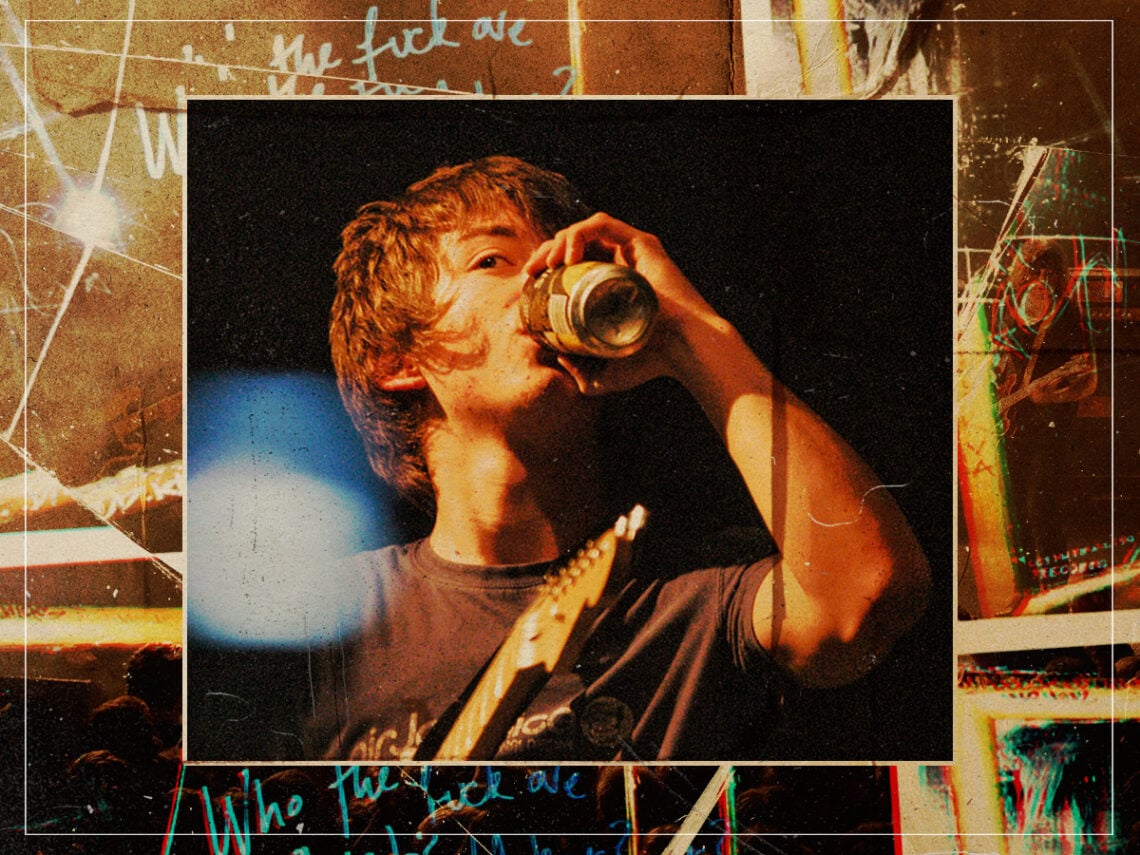
‘Steel Town’: The obscure 2001 EP that made Arctic Monkeys possible

Tony Blair once hitched his political wagon to the promise of ‘Cool Britannia’. It was a strange moment when British guitar music was sold as proof that the country had swagger again. By the time Arctic Monkeys emerged in the mid-2000s, that optimism had reached a souring point. But at least it was a souring point that the Arctic Monkeys were on hand to document.
Their debut album’s title conveyed more than initially meets the eye. Whatever People Say I Am, That’s What I’m Not is a phrase borrowed from the 1951 Alan Sillitoe novel, Saturday Night & Sunday Morning. It is a book that perfectly portrays the blueprint the Monkeys were working from.
“All I’m out for is a good time,” one passage reads, “All the rest is propaganda. I’m me and nobody else; and whatever people think or say I am, that’s what I’m not because they don’t know a bloody thing about me.”
In lilting Yorkshire tones, the prose continues, “Ay, by God, it’s a hard life if you don’t weaken, if you don’t stop the bastard government from grinding your face in the muck, though there ain’t much you can do about it unless you start making dynamite to blow their four-eyed clocks to bits.”
Evidently, that notion of escaping factory life struck a chord with a young Alex Turner. Thankfully, the lingering boon of Cool Britannia’s cultural boom offered a whiff of an alternative.
“Milburn were the first people we saw doing it that were kids our age,” Arctic Monkeys drummer Matt Helders recently mused in the Guardian. “We didn’t think it was a thing that people did where we were from. We had this naive, or even maybe cynical, attitude that all bands were just put together in London and that it doesn’t happen to people like us.”
Yet, there was a mounting circle of ‘people like us’ challenging that mindset, as is forecast by a 2005 interview with the fledgling Milburn with the BBC. “There’s a bit of a community I’d say,” guitarist Tom Rowley – now a de facto member of the Monkeys – explained. “There’s about four or five bands, Bromheads Jacket, Harrisons, Arctic Monkeys and 1984.”

Lead singer Joe Carnall adds, “Yeah, we’re all the same sort of age, so we all relate and get on with each other. The Arctic Monkeys are doing well, they’re gathering good steam, I think all these bands will do well.” Gathering steam, it turns out, was putting it lightly. Within a year, they’d be smashing long-held British records and well on their way to challenging for the title of the biggest guitar band of the 21st century, period.
However, the band members themselves have never lost sight of the fact that without the guiding light of Milburn, none of this would have been possible. Their gritty, gutsy, and just a little on-the-nose debut EP, Steel Town, arrived in 2001 without much aplomb. But as producer Alan Smythe would remark, it provided a work fast and cheap blueprint for the area that a lot of bands would follow.
It would be five years before their first full-length LP arrived, and in that time, Milburn themselves may well have misplaced the memory of their youthful first offering. But Turner, who had just turned 15 when it arrived, has never forgotten it.
In fact, he recalls clamouring aboard the Milburn bandwagon as the inception point behind the Monkeys. “Our first album came out when we were just 20. Where we grew up there were these other kids that had a band, and they used to play in one of the pubs, and we started hanging around with them,” he told Pitchfork.
Those days when knacked converse stuck to beer-sodden carpets like the wrapper to a warm toffee were writ large across what followed, the scene firmly fusing with the music. As Turner adds, “We’d go and watch them and drink cider and be stupid and chase after girls. Then, sitting around chatting on a Friday night, we were like, ‘We should form a band’ – just desperately looking for something to do, I suppose.”
If nothing else, Steel Town felt like the tangible possibility of what “something to do” might mature into. As events would transpire, despite this EP arriving half a decade before Arctic Monkeys swaggered to the fore, when they made it to the microphone, it seemed to the world beyond a small, inspired clutch of folks in Sheffield, like they had beaten Milburn to the punch.
When Milburn’s first full-length LP, Well Well Well, did arrive in 2006, the slight one paragraph review they garnered in the Guardian reflected this, reading, “A gang of Sheffield teens form a band, their vowels flat, their songs bursting with gritty, poetic descriptions of life up north. It’s a plan that must have sounded earth-shattering when Milburn came up with it five years ago, before a bunch of their fans got together and became Arctic Monkeys.”
While decades later, Turner might have sung, “I just wanted to be one of The Strokes”, the truth is that his desires probably lingered a little closer to home – Milburn just doesn’t quite have the same ring to it.
