


Did this number one song start glam rock?

Tracing the history is part of what makes art an enjoyable pastime. Sure, we can enjoy the moment it pops into our lives, but it is the discovery that follows which becomes a hobby instead of an experience. Finding the exact origins of any music genre offshoot involves quite a bit of guesswork.
Usually, disparate individuals on different sides of the planet are doing similar things. It can seem like punk rock, nü metal, neo-soul, and even rock and roll itself sprang up overnight, but there are traces from each style of music that can be found going back years before anyone had ever heard of each genre’s biggest names. The same can be said for glam rock.
Glam rock is one of the more unusual offshoots of the rock and roll tree. It is clearly embedded in the same rebellion, but its means for doing so is slightly bedazzled. Rather than simply subvert what is right and wrong in the eyes of the moral compass of society, like they did in the 1950s, glam looked to switch up the views on fashion and gender, specifically. It relished in the glittering of masculine energy and the androgyny of the female form. For that reason, it became a pivotal point in cultural history.
Theatrical rock and roll has a history as long as rock and roll itself. Little Richard often donned makeup and flamboyant clothing during his stage performances, while progressive rock acts like Hawkwind and shock rock kings like Alice Cooper were putting on eye-catching performances as early as 1969. But the distinct genre entity known as glam rock usually gets traced back to one person: T Rex leader Marc Bolan.
How did Marc Bolan invent glam?

Like then-friend and future contemporary David Bowie, Bolan was originally a folkie singer-songwriter who was having difficulty finding his voice and an appreciative audience. Bolan released four albums as Tyrannosaurus Rex before deciding that it was time for a change. Trading in his acoustic guitar for an electric, Bolan recorded a foot-stomping track called ‘Ride a White Swan’ that had more swagger and energy than all of T Rex’s previous output combined.
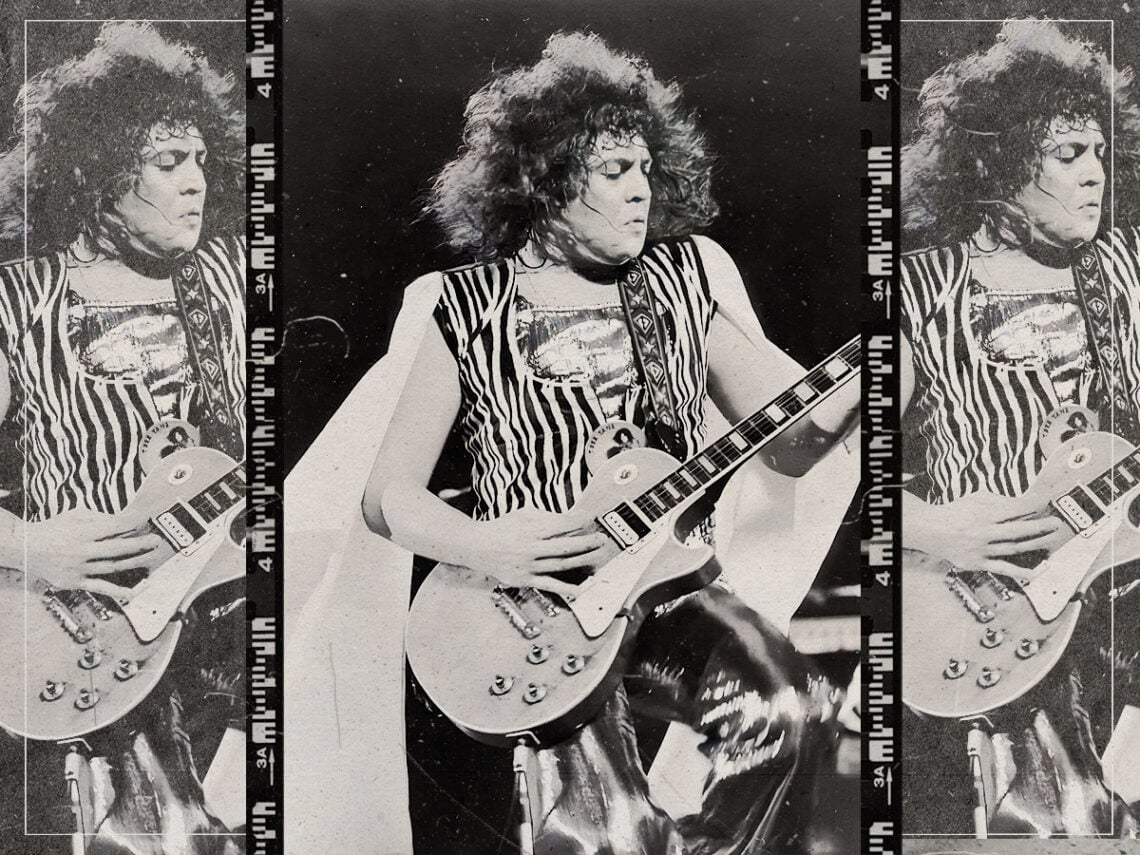
‘Ride a White Swan’ was a number two hit in the UK in early 1971, catapulting Bolan and T Rex into the mainstream. Their follow-up, ‘Hot Love’, would go on to be the band’s first of four number one singles in the UK. When T Rex appeared on Top of the Pops to perform ‘Hot Love’ in March of 1971, Bolan decided to adopt a new stage look – satin clothes and prominent glitter makeup under his eyes.
Was he the only one?
Of course, such scenes are never started by a single moment or person; they are the culmination of a cultural shift, a gathering of tinder ready to be lit. It just so happens that it was Bolan who seemingly had the match in his pocket, ready to be flicked.
1971 suddenly became Year Zero for glam rock, with acts like Sweet, Slade, and Roxy Music adjusting their visual presentation, and musical approach to more closely align with what Bolan was doing. Bowie himself was inspired enough to add some of Bolan’s DNA to his latest creation, Ziggy Stardust, and when The Rise and Fall of Ziggy Stardust and the Spiders From Mars was released in the summer of 1972, glam rock was officially the biggest phenomenon in British music.
Glam began to take over the world
Americans were a bit slower to take up the genre. Cooper had adjusted his style to a more horror-themed approach, while artists like Lou Reed and Iggy Pop were taken under Bowie’s wing to adopt more glam-adjacent styles. It wasn’t until artists like Suzy Quatro and The New York Dolls came around in the early 1970s that glam rock truly came to America, and even then, the genre was less of a cultural phenomenon and more of a foundational text for what would eventually become punk rock.
By 1973, glam rock’s biggest stars were trying to kill off the genre that made them famous. Bolan and Bowie led the charge, with Bolan proclaiming that glam rock was dead in a 1973 edition of Melody Maker and Bowie killing off Ziggy Stardust in July of 1973.
How did ‘Hot Love’ start it all?
It might feel cheap to pull back an entire genre into a single song, but a performance on television meant a lot in those days. Add to this that Bolan’s unstoppably charismatic performance was now being gilded by a completely new sense of fashion, and it is difficult to look beyond this track as a fundamental moment in the proliferation of the genre.
The track flew to the top of the charts and stayed there for six weeks. That kinda time is enough to not only bed in a new sound, but allow Bolan’s performance to be beamed into people’s homes and caught by those who missed it the previous week. It was a ligthbulb moment that would flash brightly and illuminate a pathway to fabulous rock music for generations to come.
The shockwaves from the genre’s popularity continued to influence new generations of rock musicians, however, and it all started when Bolan decided that ‘Hot Love’ needed a little bit of glitter to get it going.
