


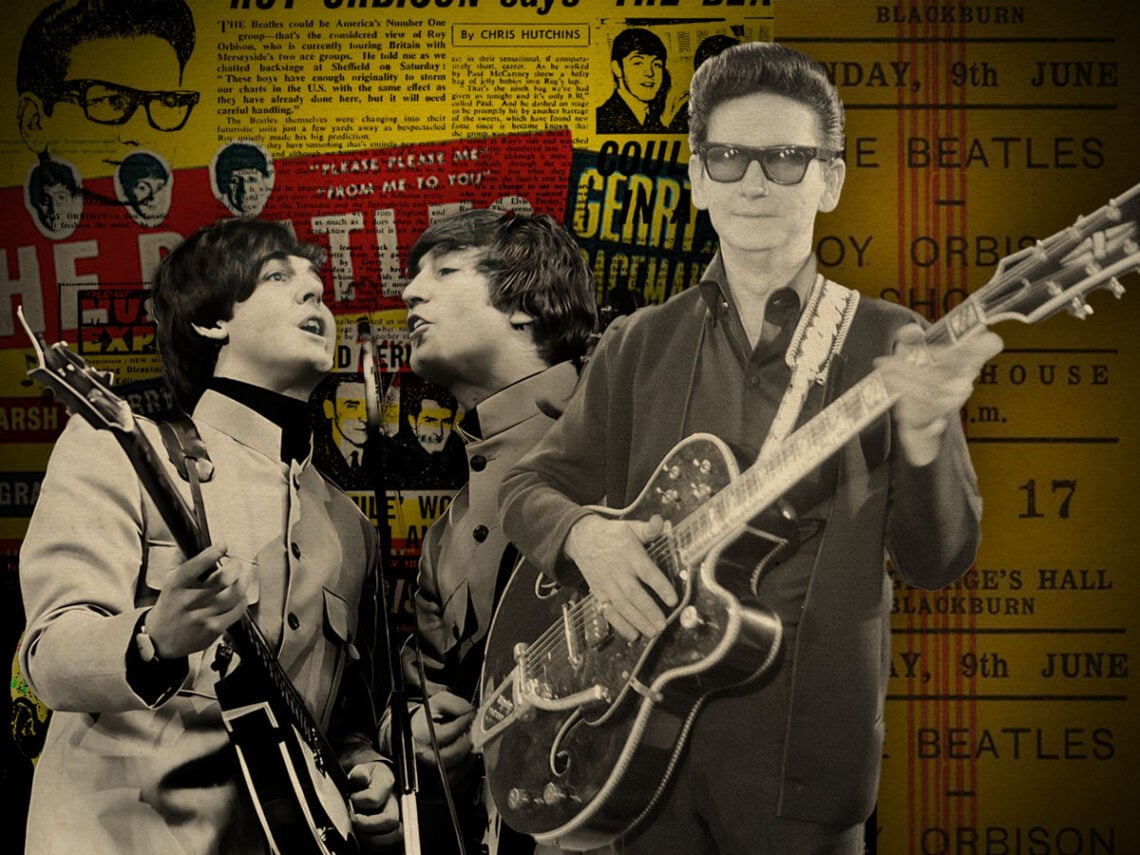
“We want Roy”: The night Roy Orbison blew The Beatles off the stage with 14 encores

“What’s a Beatle, anyway?” Such was the question rhetorically asked by Roy Orbison, once he arrived in Britain for a tour in May of 1963 with the Fab Four.
Having been asked to replace the American guitarist Duane Eddy on this tour, which would be his first in the UK, Orbison was under the impression that he would receive top billing with The Beatles, just as they were on the cusp of Beatlemania that would spread across the United States the following year.
Orbison had been convinced to join the tour by the president of the Roy Orbison Fan Club, who wrote the musician a letter claiming that a tour with The Beatles would be a great idea, getting him more exposure in the UK. Despite the tour selling out in one afternoon, he had never heard of his tourmates, and his question was met with a tap on the shoulder from John Lennon and the simple reply, “I am”.
Orbison’s curiosity towards the then-up-and-coming Beatles was, in a way, justified. For the last four years, Orbison was the top-selling American artist in music, becoming one of the biggest names globally, with his emotive country-tinged version of early rock ‘n’ roll that would come to define the genre. As he co-wrote nearly every top ten hit he achieved, the Texas-born musician was soon known for the sensitivity that coursed through his lyrics, in an era where traditional masculinity projected a contrasting bravado, sung with a singular voice. With his monochromatic look of dyed black hair and all-black clothing, his eyes hidden behind dark sunglasses, Orbison was not an average musician, but was undeniably a foundational presence.
The Beatles, then, idolised Orbison and his songbook. For their debut live radio performance on the BBC programme Teenager’s Turn the year prior, on March 8th, 1962, they played their Paul McCartney-led rendition of Orbison’s single ‘Dream Baby’ (originally composed by songwriter Cindy Walker), which he later received on tape. They’d also modelled ‘Please Please Me’ after Orbison’s ‘Only The Lonely’, in what Lennon called his “attempt at writing a Roy Orbison song” (quoted in The Beatles Anthology). By May of 1963, they had the success of ‘Please Please Me’ and ‘Love Me Do’ to their credit, the slow rumblings of their soon-to-be sensation bringing them to the headline slot of a tour shared with Orbison.

On the opening night of their tour on May 18th, 1963, in Slough, Buckinghamshire, Orbison went on stage first, opening for The Beatles in a surprising twist. “They asked me, could they close the show?” he recalled on Late Night With David Letterman in 1988, “I said, ‘Why?’, and they said, ‘You’re making all the money’.”
Allowing them to close the show, Orbison opened with a six-song set, including hits like the aforementioned ‘Dream Baby’, ‘Only the Lonely’, ‘Running Scared’ and ‘Candy Man’, as well as a cover of Ray Charles’ ‘What I’d Say’. He closed his set with a newer song, ‘In Dreams’, which would go on to chart in the UK for five months during this tour.
Orbison’s performance was met with such a raucous response that the audience demanded an encore. Chants of “We want Roy!” were met with one encore, followed by another, and another, spiralling into a total of 14 encores. According to legend, when the audience continued to chant for his to return to the stage, Lennon and McCartney grabbed and held the musician back, so they could begin their set.
“I was held captive by The Beatles,” Orbison once remembered, quoted in Ellis Amburn’s Dark Star: The Roy Orbison Story.
“It was an opening night to end all opening nights. I walked on stage with my sunglasses on, and all over Europe we were an instant success. Big time.”
Roy Orbison
Ringo Starr later recalled the intimidation he and his fellow Beatles felt at being preceded by such an act. “It was terrible following Roy. He’d slay them, and they’d scream for more,” he admitted, quoted in The Beatles Anthology.
Starr remembered a particular night when the fanaticism for him reached a peak: “In Glasgow, we were all backstage listening to the tremendous applause he was getting,” he recounted, “He was just standing there singing, not moving or anything. As it got near our turn, we would hide behind the curtains whispering to each other, ‘Guess who’s next, folks. It’s your favourite rave!’”
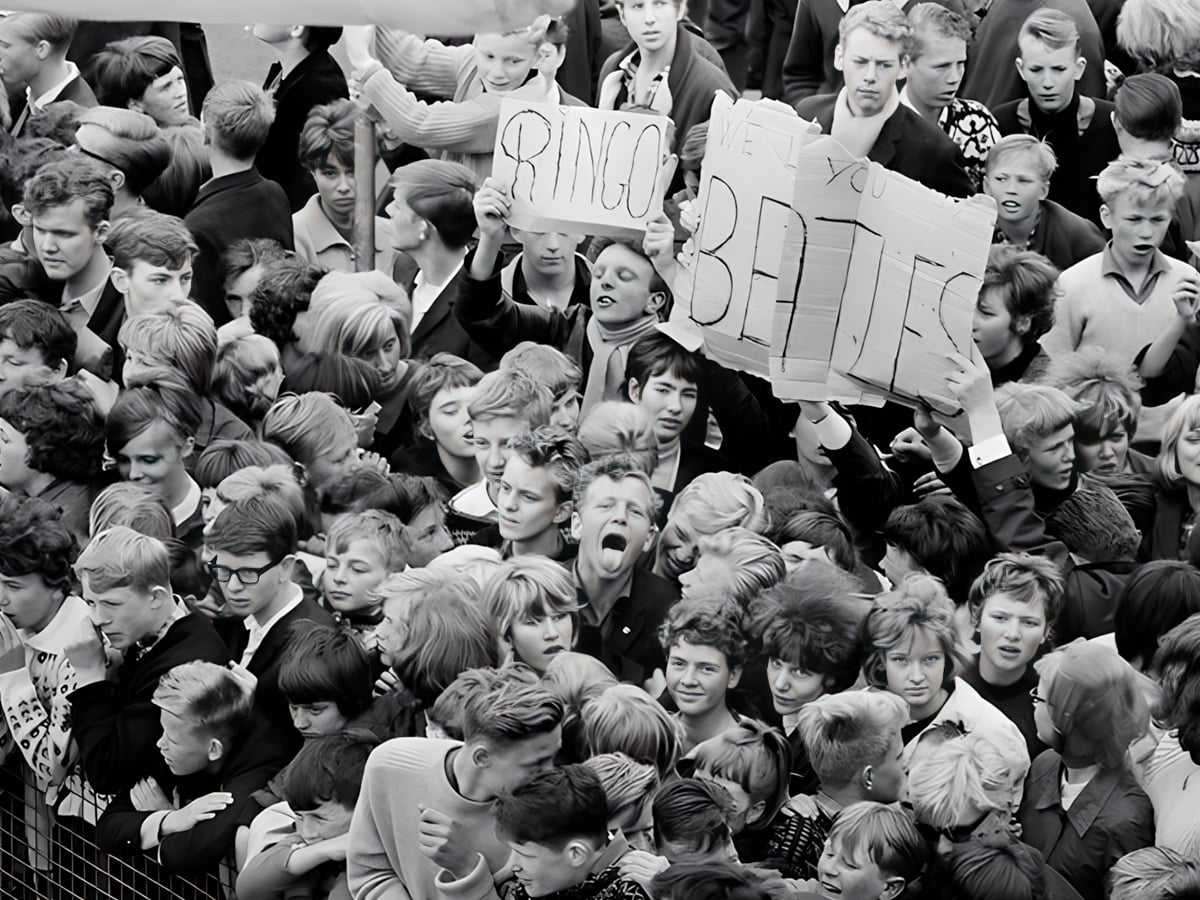
Surely, with Beatlemania already taking shape across the UK, there were plenty of thrilled, and often hysterical, fans waiting to get their glimpse of the four Beatles. Such was a fandom that, from Orbison’s point of view, had the potential to become something unprecedented in its success.
“These boys have enough originality to storm our charts in the US with the same effect as they have already done here, but it will need careful handling,” Orbison told NME, in the midst of their 21-date tour, adding, “You see, they have something that’s entirely new, even to us Americans, and although we have an influx of hit groups at home at the present time, I really do believe your own boys could top our charts as frequently as they seem to be doing here.”
By NME’s account, Orbison and the four Beatles became great friends on their tour, often eating together after the shows and travelling on a shared coach bus. In The Beatles Anthology, McCartney recalled moments when Orbison’s proficiency as a songwriter prompted the four Beatles to feel a sense of positive competitiveness. “He would play us his song, and we’d say, ‘Oh, it’s great, Roy. Have you just written that?’ But we’d be thinking, ‘We have to have something as good’. The next move was obvious: write one ourselves.”
In The Beatles, Orbison found a sense of excitement about where music’s trajectory could shift, into somewhere both rooted in tradition and freshly original. “It’s a change to see new stars who are not just watered-down versions of Elvis Presley,” Orbison told NME, “This seems to be a sound they have made famous all on their own, and I really think it is the greatest.”
In a prophetic moment, consciously or not, Orbison foretold the oncoming fanaticism for The Beatles, which few others could anticipate. “Though you know it as Merseyside music,” Orbison said, “I am sure this will be hailed as the new British sound in America”.

Never Miss A Beat
The Far Out Beatles Newsletter
All the latest stories about The Beatles from the independent voice of culture.
Straight to your inbox.