


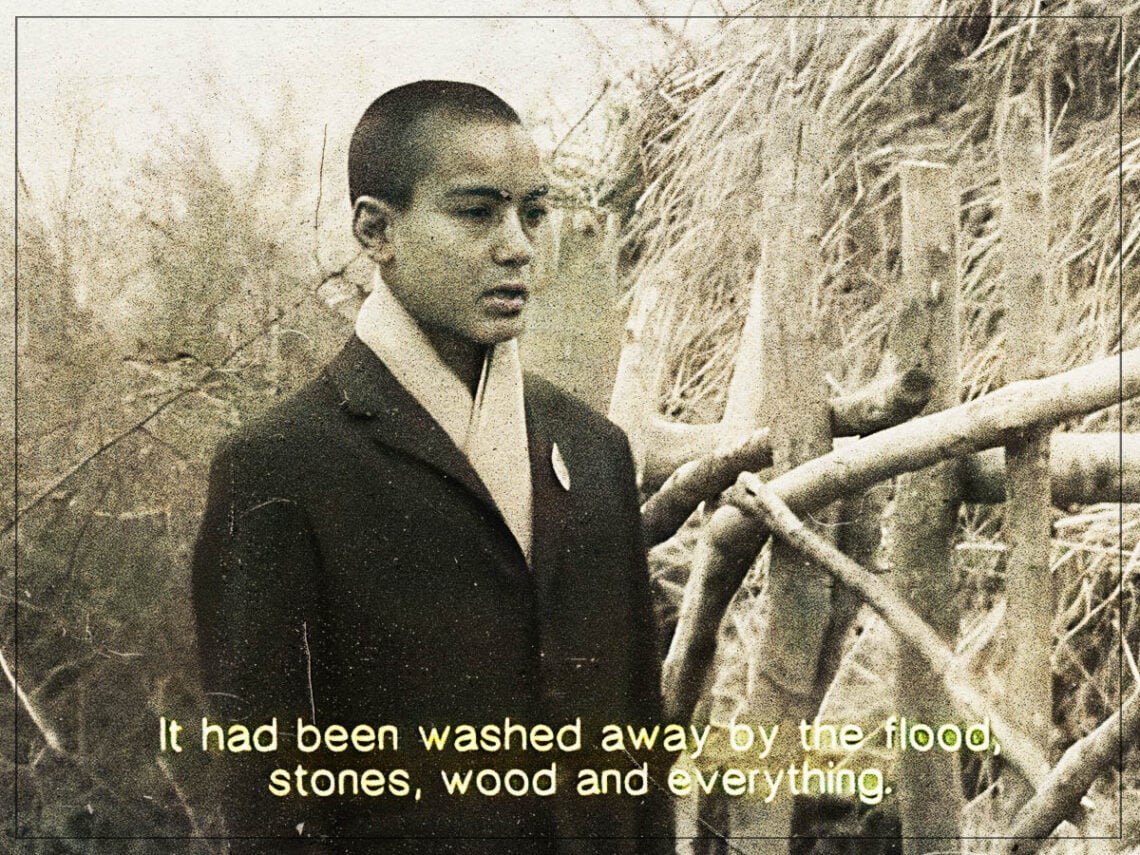
‘The Night It Rained’: Kamran Shirdel’s hilarious study of the media machine

The cinema of Iran has always been a major form of sociopolitical protest, championed by some of the greatest auteurs from other parts of the world. When we talk about the most influential works that have shaped global filmmaking traditions, it’s almost impossible to ignore the contributions of Iranian pioneers like Abbas Kiarostami and Mohsen Makhmalbaf. One particularly important figure who doesn’t get mentioned nearly enough is their compatriot, Kamran Shirdel.
Known for his incisive social commentaries, Shirdel had developed a fascinating cinematic background before he even started his directorial journey in Iran. Having studied both architecture and film in Rome, the Iranian artist also served as the AD on John Huston’s The Bible. However, it’s obviously his efforts as a filmmaker that definite his legacy within the rich tapestry of Iranian cinema and the emergence of the Iranian New Wave.
While the movement is often viewed in tandem with the Iranian Revolution, the national cinematic apparatus had already been producing subversive, politically charged works since the 1960s. In a decade full of seminal masterpieces like Dariush Mehrjui’s The Cow, one film that stands out is Shirdel’s 1967 documentary The Night It Rained – a hilarious investigation of a local myth and the shapes it morphs into after coming in contact with the public consciousness.
Drawing frequent comparisons to Akira Kurosawa’s Rashomon, The Night It Rained sounds like a pretty straightforward assignment on paper. It’s an exploration of a news story that claimed a village boy saved 200 people by stopping a train on a rainy night when a part of the train tracks had been washed away by the excessive flooding. However, it’s the ingenious narrative structure that makes the film a hilarious experience.
Shirdel interviews the various people involved in the incident, ranging from the journalist who broke the story to editors of rival publications to railway personnel to the boy himself. Completely contradictory stories intersect each other, with the railway employees claiming that the boy doesn’t even exist while the boy’s neighbours and teachers insist that he has never lied in his life. Each segment is cut with flashing scenes where someone proclaims, “It’s a pack of lies, sir!”.
Delving deep into the structures of mythopoeia and the mysterious machinations of media apparatuses, The Night It Rained demonstrates Shirdel’s incredible ability to take simple ideas and transform them into complex reflections on sociocultural conditions. Playing around with the frameworks that define the mythologised figure of Rizali Khajavi, Shirdel’s work is one of the glaciers from which the later Iranian meta-documentaries like Kiarostami’s Close-Up derived their life force.
Watch the film below.
