


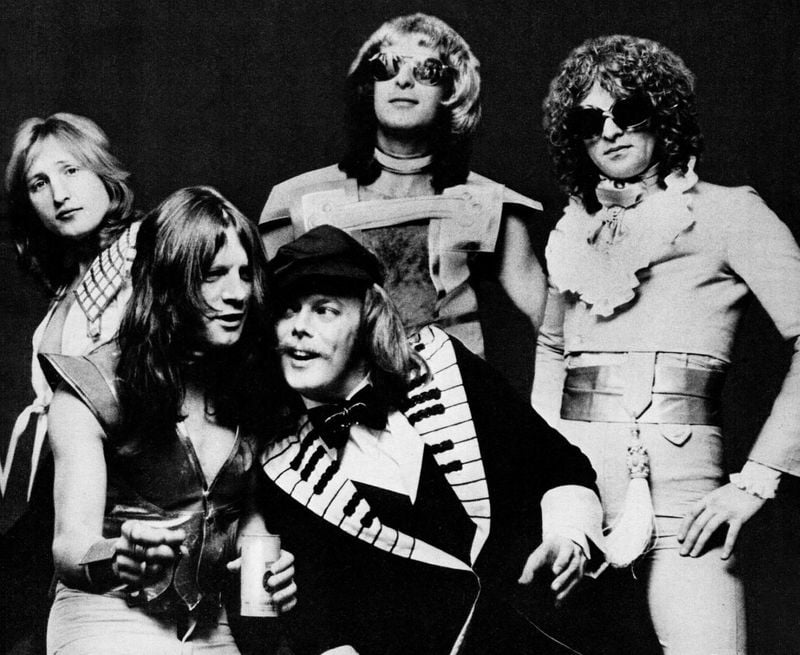
The musician Mott the Hoople’s Ian Hunter called “Van Gogh in a rock band”

When Ian Hunter of Mott the Hoople released Diary of a Rock n Roll Star, people’s reaction to it immediately told them whether or not a music career was in their future. While a lot of readers cringed at the stories, others read with their mouths open and hearts beating frantically to a rhythm only they could hear. The majority of the punk era pioneers got their first taste of wanting to be a rock star within the pages of that book, and it still stands as one of the most quintessential musical memoirs ever written.
Mott the Hoople are considered by many the band that got away. While they have a lot of excellent music and were incredibly popular at the time, their name hasn’t become synonymous with rock music in the same way the likes of Rolling Stones or David Bowie have.
Brian May has previously commented on the band’s potential, saying, “They should have been bigger if they hadn’t broken up, I think they would have been like The Stones or whatever.” May also admitted that when Queen supported Mott the Hoople, watching their live show helped them grow as a band, leading to the excellent live performances that made Queen famous.
May isn’t the only musician with Ian Hunter and Mott the Hoople to thank as inspiration. Many people who read Hunter’s book, which detailed life on the road following the success of ‘All The Young Dudes’, realised there was nothing else they wanted to do in the world other than become a rock star. It’s hard to blame them either. Hunter’s descriptive abilities throughout the book are pretty enticing; even how he describes a flight makes it sound like the most luxurious experience ever.
The aspect of the book that Hunter takes the most time to talk about is his fellow bandmates. Each member gets an in-depth paragraph about them, highlighting their talent and vulnerabilities, painting a detailed picture of them in a short space of time. One of the most in-depth and complicated descriptions, though, goes to organist and vocalist Verden ‘Phally’ Allen. Ian Hunter leaves no stone unturned in the complex tapestry that is Phally’s mind.
“It would take a book to describe Phal. He continually goes insane and comes back for holidays. Hypochondriac, fanatic, self-dramatist, Gemini,” he said, “When he’s down, he’s down, when he’s up he’s within reason… Phally’s head is continually troubled, and he has great difficulty in living, the reason being he wants everything right – not a tall order, you might say, but almost impossible to fulfil.”
Hunter went on to talk about Phally’s writing ability, as at the time, he was working on several Mott the Hoople tracks, a task that seemed to take its toll. “He’s just started to write. The songs are in the main good and sometimes exceptional, and each one takes countless hours of sleep away from him,” he says, “A Van Gogh in a rock band’s a difficult thing to be, but somehow Phal, with the help of God, and Elaine, and a C3, manages to keep on an even keel.”
The pressure of constant creativity likely contributed to the band’s premature split, and Phal’s attitude, along with the stress he felt when writing, will have been significant factors. However, regardless of whether they did or didn’t reach their full potential, the music we have of Mott the Hoople is available and timeless, some might even say, a work of art.
