


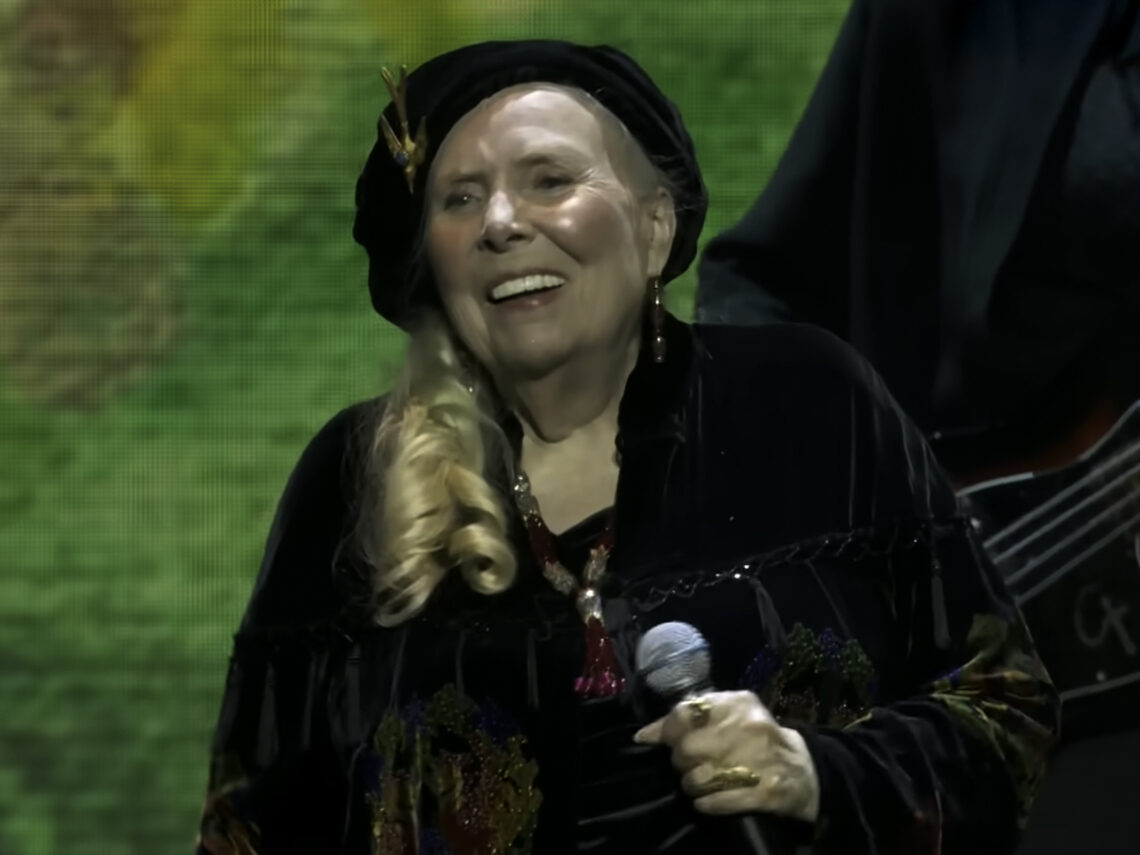
Where Africa met European classicism: The musician Joni Mitchell crowned as “the most exciting”

The music of Joni Mitchell doesn’t really have a place in time very often.
This is the same person who wrote a documentary song like ‘Woodstock’, and yet when you look at the rest of her discography, some of the tunes are so timeless that they could have come out today. But whereas most of her other folk-rock brethren have been timestamped in the late 1960s back in the day, Mitchell was always making timeless music because of how much she was focused on stretching herself on all of her records.
She didn’t want to stay in one spot for the rest of her life, and switching up her styles was what all of her favourite musicians ended up doing after getting their foot in the door. Her music didn’t cater to traditional pop means, and some of the biggest parts of her discography came from when she was working outside of the traditional musical parameters and began working with jazz musicians.
Because when you look at the people that she wanted to be in the same conversation with, you aren’t going to find a whole lot of rock bands in Mitchell’s catalogue. Her muses were people like Miles Davis and Charles Mingus when she started performing, and while Duke Ellington was well before her time when she first started working on her records, a lot of the best moments on her records are indebted to the kind of music that Ellington played.
Mitchell wasn’t the first person in popular music to shout Ellington’s praises, but even the pop artists of her time who talked about Ellington were pushing the boundaries as well. Stevie Wonder held him in high regard as one of the most brilliant musicians that he had ever heard, and when he namechecks all of the other musical legends like Ella Fitzgerald in the song ‘Sir Duke’, it’s not hard to see how Mitchell’s music fits into that kind of framework.
Admittedly, her songs weren’t going to have the kind of shout chorus that you hear in a lot of big band arrangements from that time, but her interest had a lot more to do with the way the harmony worked. No other rock and roll artists would have thought to use some of these complex chords, but it was second nature for Mitchell to gravitate towards chords that had a lot more strange notes in them.
Music had grown a lot since then, but as far as Mitchell was concerned, the era of Ellington was where everything felt right for her, saying, “Talent is a pain in the ass. We need to go back and listen to Duke Ellington – his work is where Africa met European classicism. It was one of the most exciting times in the history of music. All those African rhythms started to match up with the polyphonic harmony of Bach. Gershwin came out of that.”

And while Mitchell would be happy to talk about how music has gone to hell ever since people like Madonna were taken seriously, it’s not like that era of music is gone for good. There’s still room for standards in music, and if someone like Lady Gaga is any indication, there will always be artists that are willing to make more retro-sounding music that captures the essence of what that musical time was like even if it isn’t considered the coolest thing in the world.
There are certain pockets of the music world that still care about the complexities of music, but even though Mitchell isn’t seeing many of them on the charts, there will never be a shortage of people willing to make music that they haven’t heard before. A lot more tools are available to the younger generation, and while it might take them a while to catch up to the likes of Ellington, it’s every musician’s dream to carry on music that strikes the right nerve in them the same way Ellington did with Mitchell.
