


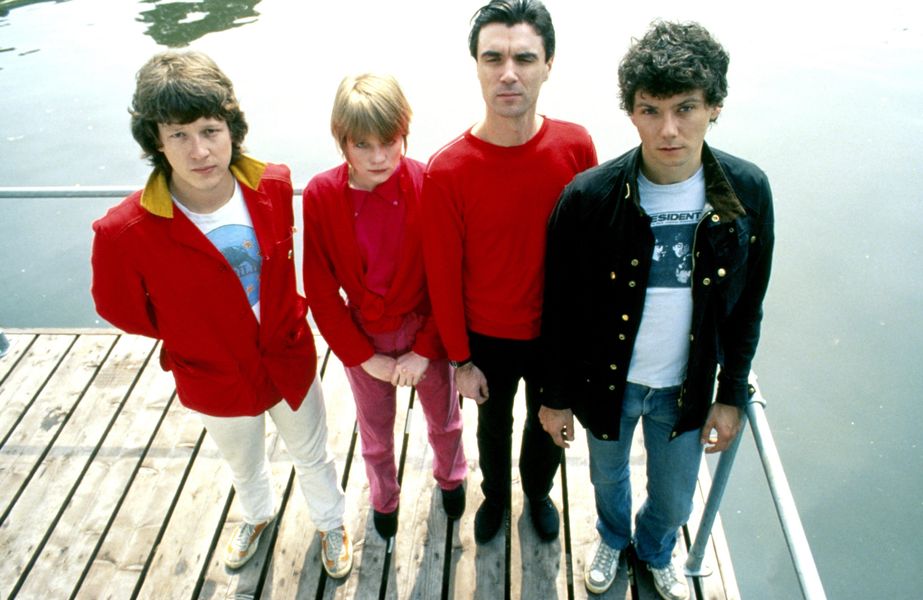
The music that inspired Talking Heads seminal album ‘Remain in Light’

After the release of their debut album, Talking Heads: 77, new wave pioneers Talking Heads began working with the legendary producer and musician Brian Eno for a three-album run. More Songs About Buildings and Food was released in 1978, followed by Fear of Music which experimented with a broader scope of sounds, including African-inspired disco, which is present on the opening track ‘I Zimbra’. The making of the song was a catalyst for the ideas that came into full bloom on Remain in Light.
Talking Heads wanted to prove that they were a creative unit, not just a vehicle for frontman David Byrne, who was frequently accused of being controlling when making music. Drummer Chris Frantz and bassist Tina Weymouth even considered leaving the band because of Byrne’s obsessive nature. Instead, the married couple decided to take a holiday to the Caribbean, where they found themselves deeply inspired by the music surrounding them. They played native percussion instruments, socialised with reggae musicians Sly and Robbie, and involved themselves in Haitian Vodou ceremonies, which often contained lots of drumming, singing, and dancing.
The couple decided to retreat to the Bahamas for an extended period, eventually joined by the rest of the band and Eno, with Byrne stating that he felt under too much pressure to lead the group. The solution couldn’t have been more straightforward: work together. Instead of writing music around Byrne’s lyrics, the band jammed, helmed by a communal spirit that is present in African music-making. The frontman later said: “Even though the music didn’t always sound particularly African, it shared that ecstatic communal feeling.”
An album that was played on constant rotation during this period was Afrodisiac by Nigerian multi-instrumentalist and Afrobeat pioneer Fela Kuti. Eno was a massive fan of the musician and shared the album with Talking Heads, which eventually became the framework for Remain in Light. The producer once described the first time he heard Afrodisiac: “I remember the first time I listened and how dazzled I was by the groove and rhythmic complexity. My friend Robert Wyatt called it ‘Jazz from another planet’ – and suddenly I thought I understood the point of jazz, until then an almost alien music to me.”
In fact, he played it to them during his first meeting with the band: “The first time I ever met Talking Heads, I played them a record by Fela Kuti, the African-Nigerian musician who’d invented that thing called Afro-beat…I thought that was just the most exciting music going on at the time.”
Weymouth also underscored the importance of hip-hop to the album, which was emerging simultaneously. “It influenced us in different ways to realise that things were shifting,” she said. Suddenly, music was becoming less rock-heavy – instead, synths and inspiration from world music were all the more common in the popular sphere. Harrison stated that the band wanted to blend rock music with global influences rather than imitating and white-washing African music.
Byrne detailed the creation process to Rolling Stone, explaining: “We were listening to African pop music – such that was available – like Fela Kuti and King Sunny Adé, and some field recordings. But we didn’t set out to imitate those. We deconstructed everything and then as the music evolved, we began to realize we were in effect reinventing the wheel. Our process led us to something with some affinity to Afro-funk, but we got there the long way round, and of course our version sounded slightly off. We didn’t get it quite right, but in missing, we ended up with something new.”
Remain in Light is a stellar album that features classic Talking Heads tracks such as ‘Once in a Lifetime’ and ‘Crosseyed and Painless’. ‘The Overload’ was even the band’s attempt to sound like Joy Division solely through reading reviews of the band and never actually listening to them. Meanwhile, on tracks like ‘Born Under Punches (The Heat Goes On)’, Weymouth’s basslines are groove-inducing and rich, and Byrne often sings with a rap-like inflexion, inspired by The Breaks by Kurtis Blows, which Weymouth had gifted the singer.
Since its release, Remain in Light has been a significant influence on countless artists, such as Radiohead, who used the album as inspiration for their electronic-heavy Kid A. Beninese singer Angélique Kidjo paid homage to Remain in Light with a track-by-track reimagining of the album, featuring the likes of Blood Orange, Tony Allen and Ezra Koenig of Vampire Weekend.
