


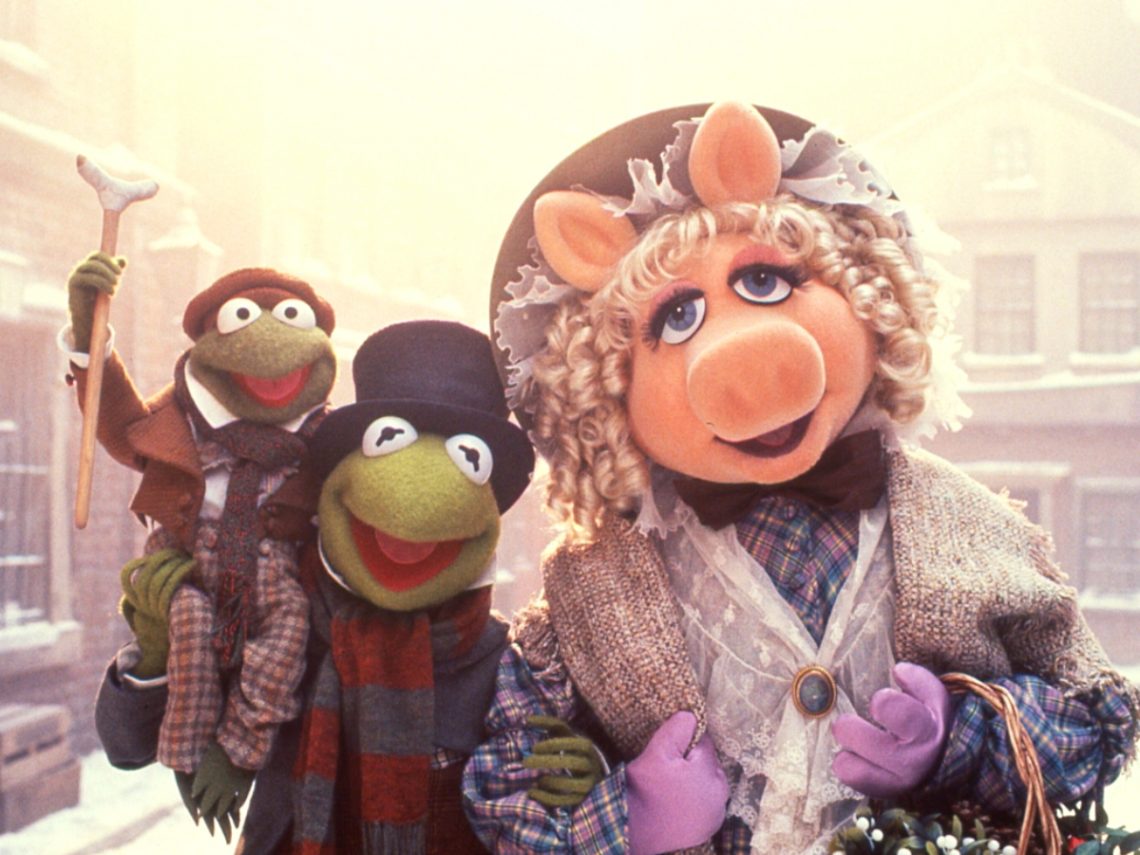
Is ‘The Muppet Christmas Carol’ the greatest Dickens adaptation?

On publication in 1843, Charles Dickens‘ A Christmas Carol was almost immediately adapted for the stage. Just two months after it hit the shelves, three productions opened in London, with Edward Stirling’s authorized stage play running for over 40 nights. By the end of February, eight rival theatrical productions were playing in the city. Since then, the festive parable was been adapted for film, television and radio countless times – more than any other of Dicken’s works, in fact. Of all those reimaginations, one stands head and shoulders above the rest, The Muppet Christmas Carol.
Sure, it’s a kid’s film, but the 1992 picture possesses something so many other adaptations lack: genuine hilarity. Charles Dickens was something of a workaholic. He rarely took days off and was almost constantly strapped to his desk, which is presumably how he got A Christmas Carol written in just six weeks. Like so many people who have managed to pull themselves out of poverty, Dickens was determined to retain financial security at any cost. In fact, the only time he let himself relax was at, you guessed it, Christmas.
Come December 24th, the author would rise from his desk and spend time with his family, performing plays, telling jokes and playing games with his children. Christmas, in the Dickens household, was perhaps knowingly Saturnalian. The normal order of the day was replaced with a playfulness and absurdity that Brian Henson captures beautifully in the scenes at The Cratchit’s abode and that fleeting scene in which market-bound melon (potentially a cabbage, it’s hard to tell) calls out: “help, we’re being stolen.” You don’t get that in A Miracle on 34th Street.
The Muppet Christmas Carol also benefits from having two wonderful narrators: Gonzo, our “omniscient” guide, who manages to educate younger viewers while enchanting older ones, and his hungry companion, Rizzo, who vocalises the qualms of more reluctant viewers. Gonzo’s presence is especially important because it allowed Henson to include those flourishes of prose that make Dicken’s A Christmas Carol so enchanting. “Nobody had ever captured Dickens’s prose – the wonderful way he described the scenes,” Brian Henson told The Guardian. “So we had to put Charles Dickens in the movie. Who’s the least likely character to be Charles Dickens? Gonzo! So we made him this omniscient storyteller, with Rizzo his pain-in-the-neck sidekick. Ninety-five per cent of what Gonzo says in the movie is directly taken from the book.”
Of course, the film’s greatest asset is Michael Caine. Ebeneezer Scrooge’s fearsome and miserly reputation is undermined by the fact that Caine is the only human actor in a cast full of muppets. And yet, somehow, he is still absolutely terrifying. “When I met Michael Caine to talk about playing Scrooge,” Henson continued, “one of the first things he said was: “I’m going to play this movie like I’m working with the Royal Shakespeare Company. I will never wink, I will never do anything Muppety. I am going to play Scrooge as if it is an utterly dramatic role and there are no puppets around me.” I said: “Yes, bang on!” He was intimidating to start with, but he’s a delight.
The Muppet Christmas Carol is, if not the best Dickens adaptation of all time, certainly the greatest screen adaptation of The Christmas Carol. Cosy without being corny, humorous and yet frequently spooky, it taps into Dickens’ dynamic range to stunning effect. You can keep your Scrooged and your It’s A Wonderful Life with its undercurrent of darkness. I’ll choose the Muppets every time.

Never Miss A Tale
The Far Out Michael Caine Newsletter
All the latest stories about Michael Caine from the independent voice of culture.
Straight to your inbox.