


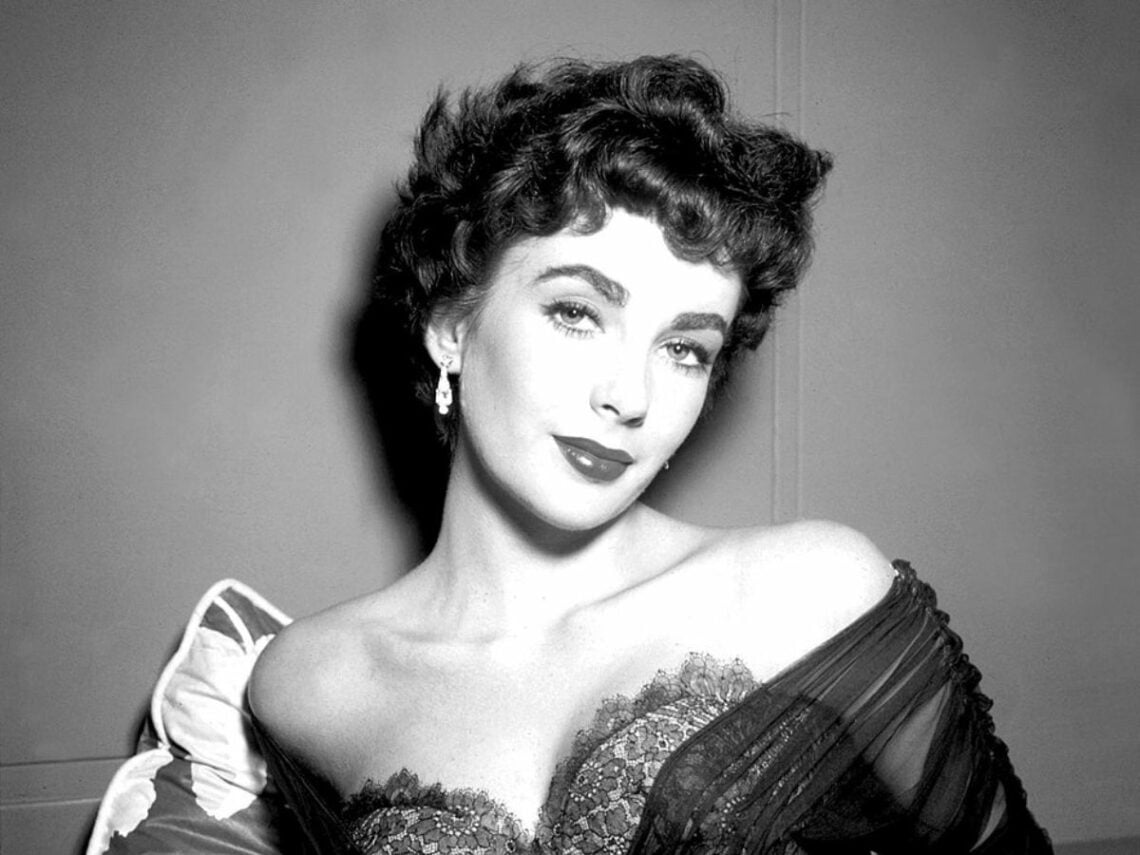
A career in three acts: The movies that define Elizabeth Taylor

Elizabeth Taylor is a classic example of a celebrity’s personal life taking over their professional endeavours. There will be people out there who can name you more of her husbands than her films, who think of her as little more than a dolled-up socialite, a parody of a bygone Hollywood era.
But she was so much more than that. A double Oscar winner, she was deemed so valuable that she became the first movie actor to demand a $1million price tag for a single film. Her roles represent several facets of the complicated portrayal of women over the years, and she remains a queer icon years after her death.
For all the discussion surrounding her public persona, marriages, looks, and impact on celebrity culture, there is just as much to say about her impact on the world of film. The actor was a definite beauty in the ever-changing world of cinema. As the industry migrated from the stringent studio system into something more freely resembling the counterculture movement erupting in the 1960s, Taylor operated as a conduit between the old and new.
To condense her career into three movies is almost an insult, but consider this a snapshot of one of the most remarkable women to have ever graced the big screen.
The three movies that define Elizabeth Taylor:
National Velvet (Clarence Brown, 1944)
Though not her first film, Clarence Brown’s National Velvet was the one that made Taylor a household name. At the age of just 12, Taylor landed the role of Velvet Brown, a girl who dreams of racing in the Grand National. Naturally, as this is the 1940s, her ambitions are shot down. Horse racing is a man’s game.
Even when sharing the screen with heavy hitters like Mickey Rooney, Donald Crisp, and Angela Lansbury, Taylor stole the show. Most of the attention was placed on her physical appearance, an outcome that studio MGM encouraged by, among other things, having two of Taylor’s baby teeth removed. They wanted to make more alterations to her body, but the young star and her parents stood firm.
The studio system wasn’t dead by 1944, but it was on thin ice. Taylor was being groomed for a world that was about to evaporate, so she never got the full benefit of MGM’s employment as an adult. What this must do to a young mind is incomprehensible and might go some way to explaining the performer’s turbulent existence in later years.
National Velvet was a major success, and suddenly, Taylor was a sensation. This laid the groundwork for everything that came after, every success, failure, award, and condemnation. Without this movie, there would be no Elizabeth Taylor. It really is as simple as that.
Cleopatra (Joseph L Mankiewicz, 1963)
Once she came of age, Taylor began to pick up more adult roles. She was nominated for ‘Best Actress’ at four consecutive Academy Awards, finally winning the gong for 1961’s Butterfield 8. It wouldn’t be for another two years, though, that she would take on the role that would stay with her for the rest of her life – the Queen of the Nile.
Made following Taylor’s split with MGM, Cleopatra was a historical epic that still holds up today. Taylor who was now in her late 20s, dazzled as the beguiling Pharoah, winding both Julius Caesar and Mark Antony around her little finger. No awards followed this performance, but the image of Taylor, her hair and eye makeup done immaculately in the Ancient Egyptian style, meant more to her career than any statuette ever could.
Of course, this is where she met Richard Burton (Antony) and began an affair with him. The pair married in 1964 (for the first time) and worked together on more movies, including a version of The Taming of the Shrew and Who’s Afraid of Virginia Woolf? This scandal did wonders for Cleopatra’s publicity, and off the back of events both fictional and real, Taylor was now one of the most famous people on the planet.
Cleopatra and the subsequent fallout represent Taylor’s peak as a movie star and a celebrity. However, with every peak, there must be a trough. Slowly, at first, the Queen’s star began to fade, and her screen roles began to dry up. Her film career wouldn’t collapse entirely, though.
The Flintstones (Brian Levant, 1994)
Sadly, for a generation of people, the only new movie they ever saw Taylor in was the live-action adaptation of The Flintstones. Starring John Goodman as Fred and Elizabeth Perkins as Wilma, the movie pits the hapless caveman against an evil executive at his company. Taylor plays Pearl, Wilma’s mother and the stereotypically discerning mother-in-law to Fred.
On the one hand, The Flintstones was a box office smash, raking in over $340million on a $50m budget. On the other hand, it was utter drivel. Taylor’s performance, in particular, was singled out, as she was awarded the Golden Raspberry for ‘Worst Supporting Actress’, the final ‘prize’ of her decorated career.
The Flintstones marked the final big screen appearance of the classic Hollywood icon. She mainly stuck to TV, plays, and charity work until her death in 2011 aged 79. Starring in a commercially successful, yet critically savaged film is just the bittersweet ending that Taylor’s life encouraged. She had reintroduced herself to a new audience but at the cost of her dignity and respect.
A woman of contrasting fortunes, an icon for reasons good and bad, Elizabeth Taylor’s story is just as extravagant and entertaining as any of her finest roles. As the era she personified drifts further and further away, her folklore will continue to expand. Just remember that, on her best day, she was truly one of the greats.
