


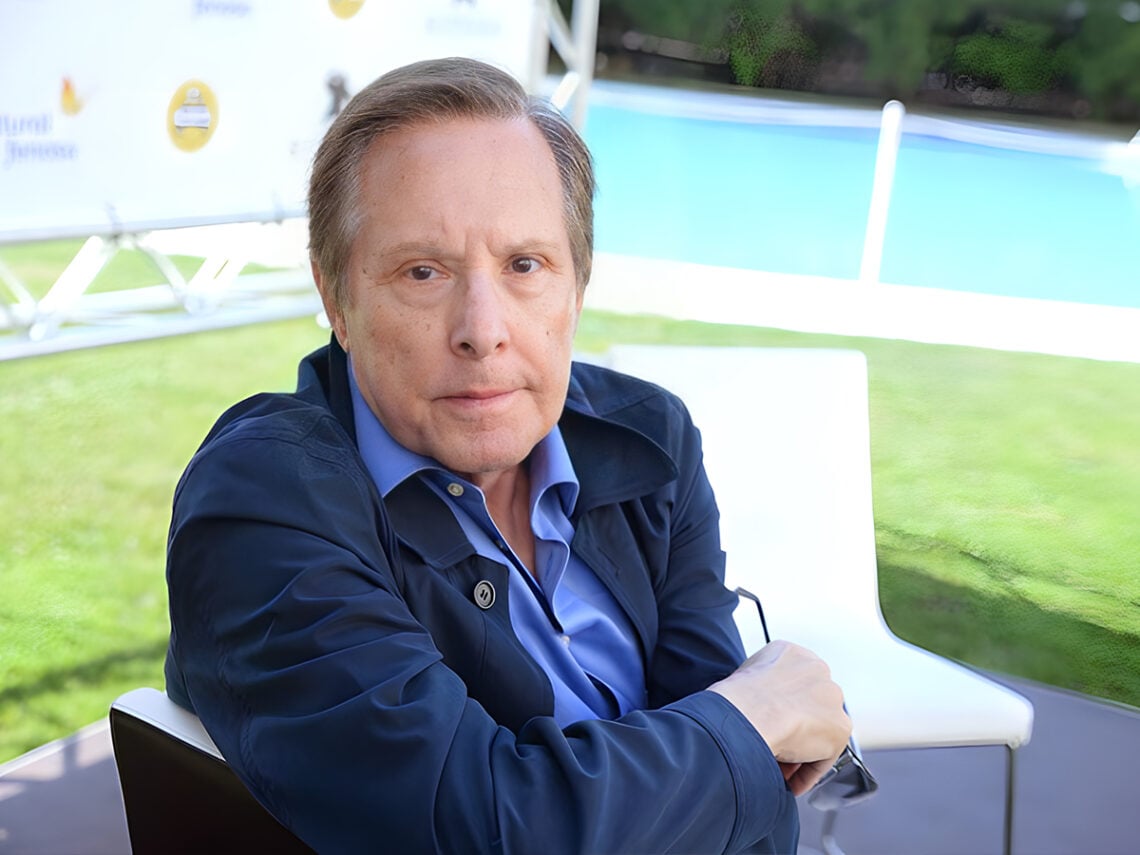
“I was completely mesmerised”: the movie William Friedkin watched for 10 hours straight

When a director like William Friedkin tells you that a movie is so good that he watched it hundreds of times, then it’s a fair bet that the movie is worth watching.
At his peak, Friedkin was a colossal talent, a director who doesn’t get mentioned anywhere near as much as he should, and the film of which he speaks might be the best ever.
Aside from the fact that he directed quite possibly the greatest horror movie of all time with 1973’s The Exorcist, he was also responsible for one of the most outstanding films to emerge from the young directors of the New Hollywood movement, certainly the best thriller, in the shape of 1971’s The French Connection, starring Gene Hackman.
That movie stands up as well today as it did 53 years ago, a fiercely engrossing tale of international drug deals, New York shake downs, surveillance, cars chasing trains through the streets of Manhattan and at the centre two superb performances from Hackman and Jaws’ Roy Scheider.
Critics agreed when the movie was released: not only did Hackman win ‘Best Actor’ at the following year’s Oscars, but Friedkin picked up ‘Best Director’, and the film won both ‘Best Picture’ and ‘Best Screenplay’ too. His follow-up was The Exorcist, the seminal, global hit horror that shocked movie goers and critics alike, again winning him a ‘Best Director’ nomination from the Academy and winning him a Golden Globe.
Friedkin was, in some way, not done there, however. Never afraid to upset the establishment, he had already directed The Boys in the Band in 1970, considered a milestone in queer cinema, when he led Al Pacino in 1980’s Cruising, a film that shone a light on gay subculture and would prove hugely controversial.
Although he directed Scheider again in the massively overlooked Sorcerer in 1977, his final hit was probably 1985’s To Live and Die in LA, the brilliant cop thriller with a young Willem Dafoe as an insane counterfeiter.
In terms of his own inspiration, the director spoke especially fondly of one classic title, a movie that pushed one man’s creativity and vision to the limits while employing technical advances and influencing filmmakers for decades to come.
As recoded in Robert J Emery’s book The Directors: Take Two, Friedkin recalled, “When I was about 17 or 18 years old, I was working in the mailroom at this television station in Chicago right out of high school. One day, I went to see a film called Citizen Kane. I went to see it on a Saturday afternoon and I stayed in the theater from noon until about ten at night when they ran the last show. I was completely mesmerised by that film. A day or so later, the idea formed in my mind that that’s what I wanted to do. I have by no means made a film that even came near that, and that’s what keeps me working at it. I’ve seen that film now maybe 200 times.”
Orson Welles’ historic 1941 masterpiece is a staggering, innovative, game-changing piece of work utterly unlike anything that had been seen before to date. The epic story of a newspaper magnate’s journey from childhood to industry domination to unspeakable wealth to regret-soaked death, Welles, who was 25 at the time, co-wrote it, directed it, produced it and starred in it, and many of the camera shots used techniques that simply hadn’t been witnessed previously in Hollywood. It received nine Academy Award nominations and was expected to win them all, but in the end only picked up the statue for ‘Best Screenplay’, inspiring actors and filmmakers for the ages.
