


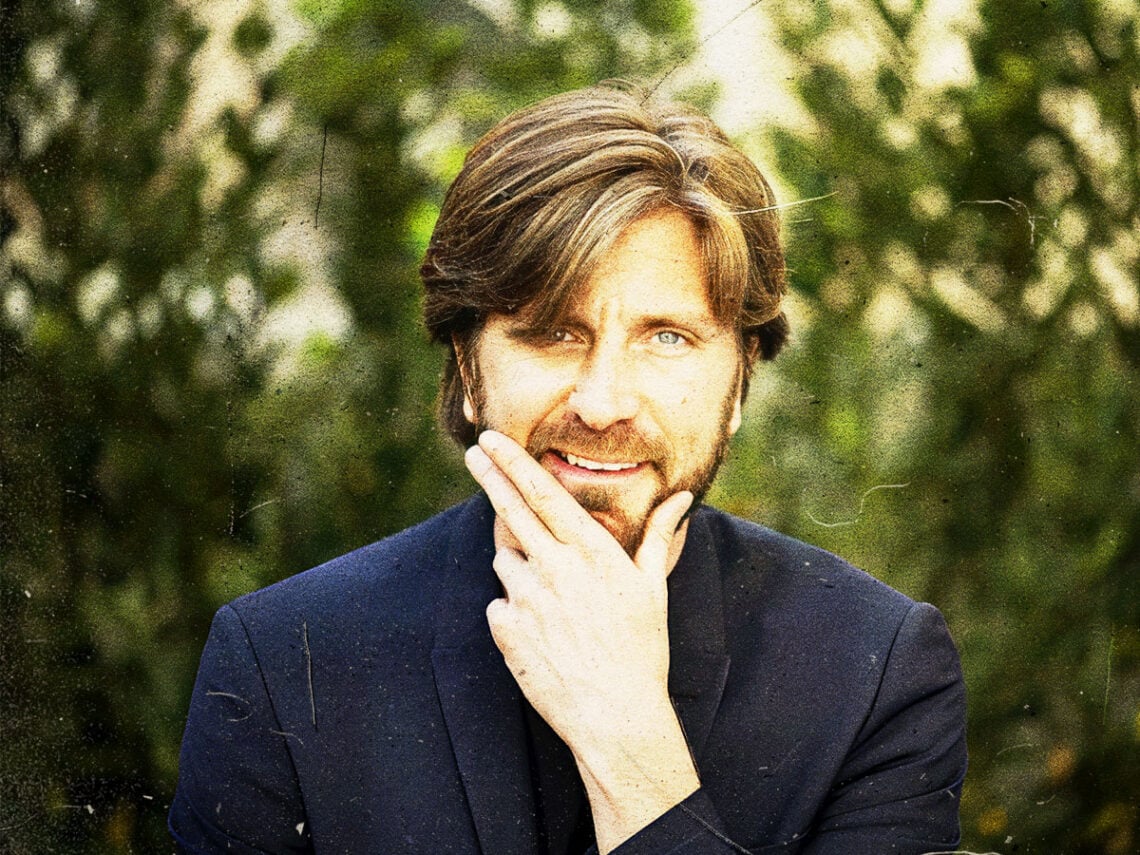
The movie Ruben Östlund called an “ambitious failture”

Some of the greatest and most innovative filmmakers currently working in the contemporary industry are operating outside of the mainstream. Greek filmmaker Yorgos Lanthimos has impressed with such films as The Lobster and The Favourite, British director Jonathan Glazer continues to challenge the industry with complex cinematic masterworks and the Swedish creative Ruben Östlund has become known for his darkly comic satires.
A truly contemporary filmmaker, Östlund made his first feature movie, Gitarrmongot, a 2004 comedy anthology that painted a unique picture of modern Sweden. Such set a template for his later career with his 2008 follow-up Involuntary, continuing in this anthology format, exploring several stories about characters who failed to put their foot down and felt the personal consequences.
From then on, he quickly took to the fringes of mainstream popularity, helming the twisted skiing drama Force Majeure in 2014, followed by back-to-back Palme d’Or victories at the Cannes Film Festival for The Square and Triangle of Sadness. The latter film was the director’s very first fully English release, with stars including Woody Harelson, Harris Dickinson and Dolly De Leon.
Ever since, the director has become beloved among film fans across the world, with many praising him for his alternative approach to cinema, with Östlund having previously admitted that he gets much of his inspiration from YouTube.
Even still, the director has a great knowledge of the history of cinema and, in 2017, spoke to Criterion about ten of his all-time favourite arthouse flicks.
Choosing such alternative cinematic hits as Volker Schlöndorff’s The Tin Drum, Catherine Breillat’s Fat Girl and Lars von Trier’s Antichrist, Östlund’s most intriguing choice was that of Jacques Tati’s 1967 film Playtime. The classic French comedy is not a surprising pick, yet what Östlund had to say about the film was most revealing.
“This film is the most ambitious failure,” he stated, “I love Tati as an actor, and I love the way the scenes are made; they’re so intelligent and funny, and the timing is fantastic in each and every moment. It has a Chaplin-like precision. But it’s also a black hole that sucks energy from the audience. I also really love his short films, like the one where he’s teaching actors how to walk into a wall properly. For me, Tati took acting to a level comparable to sports. His performances are very direct, and you can see his skill as an actor”.
A lover of alternative comedy himself, with humour being injected into each and every one of his movies, there’s no wonder that Östlund is such a fan of Tati’s work.
