


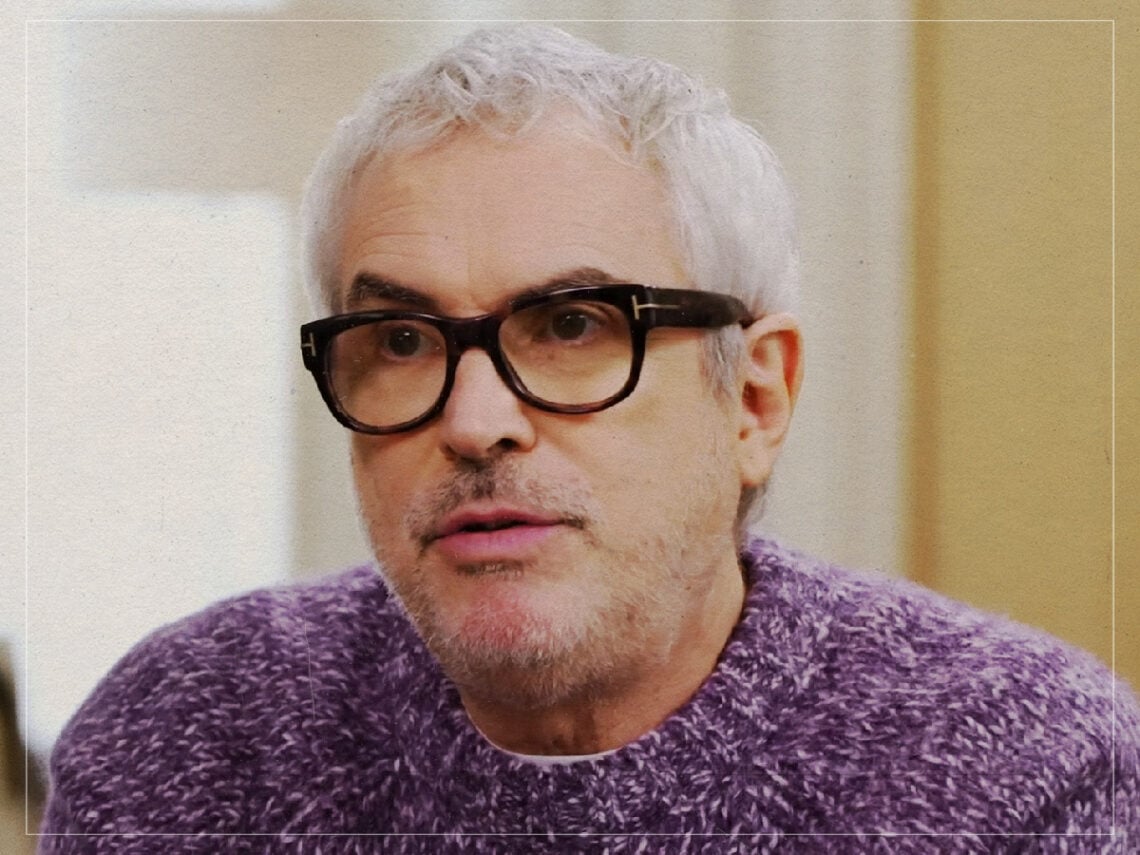
The “transcendental” movie Alfonso Cuarón crowned as cinema’s “unattainable benchmark”

Alfonso Cuarón is a creative shapeshifter, moving so seamlessly between genres that you’d struggle to find a common thread.
From the 1995 children’s fantasy A Little Princess to the erotic, 2001 coming-of-age road movie Y tu mamá también, he’s been surprising and delighting audiences for more than three decades, branching out even further in Hollywood by taking on an unfathomable scale in 2013’s Gravity and spearheading the best film in the Harry Potter franchise, so it is quite difficult to pinpoint the influences for a director who seems to constantly seek new cinematic territory.
Having worked with both enormous and minuscule budgets, returned to Spanish-language filmmaking, and collaborated with some of Hollywood’s biggest stars, the range of his career is striking. It becomes even more remarkable when you realise that, over more than 30 years, he has made fewer than a dozen feature films.
In 2018, the director wrote an essay for Entertainment Weekly that provided the answer to his greatest inspirations. It was the 50th anniversary of Stanley Kubrick’s 2001: A Space Odyssey, and the Gravity director had a lot to say about it, noting of the experience of seeing the film for the first time, “From the first frame I felt I was witnessing something transcendental. I also recognised that I was witnessing an unattainable benchmark”.
He pointed out that the film’s elusive, almost contextless meandering produced something purely cinematic and highlighted its inconclusive prodding at metaphysical questions. Ultimately, none of them is answered; they just escalate further and further until, in the final sequence, a giant baby in a shiny bubble floats above the Earth, representing… what?
Kubrick’s unabashedly impenetrable film is so frequently cited as a masterpiece that it can be easy to forget just how avant-garde it is, with very little plot, and most of the developments that are put forward as potential plot points are left a mystery.
The marker of its success isn’t in how baffling it is, but in how thought-provoking and visually mesmerising it has proven to be for so many generations of cinemagoers, wherein anyone who thinks they have definitive answers about it is missing the point, and those who simply marvel at it are on the right track.
For Cuarón, it became an inescapable influence on Gravity, even though he tried to avoid it; in fact, he refused to watch the film in the lead-up to the production, fearing that it would paralyse him, instead focusing on watching documentary footage of space in an attempt to ground the film (no pun intended) in reality. While Gravity does have a much clearer narrative, following the lone survivor on a space shuttle who tries to return to Earth after a catastrophic event, it features many of the same themes as Kubrick’s film.
For one thing, there is very little dialogue, and instead of following the standard survival movie trope of flashbacks, it simply puts the audience in a spacecraft with Sandra Bullock and lets them watch her try to manage the physical and emotional wreckage of her predicament. On a more philosophical level, it also deals with huge, existential questions about persistence, isolation, and the will to carry on when there is every reason not to. Although he might have been trying to distance himself from 2001, Cuarón’s film is one of the few that does Kubrick justice.
