


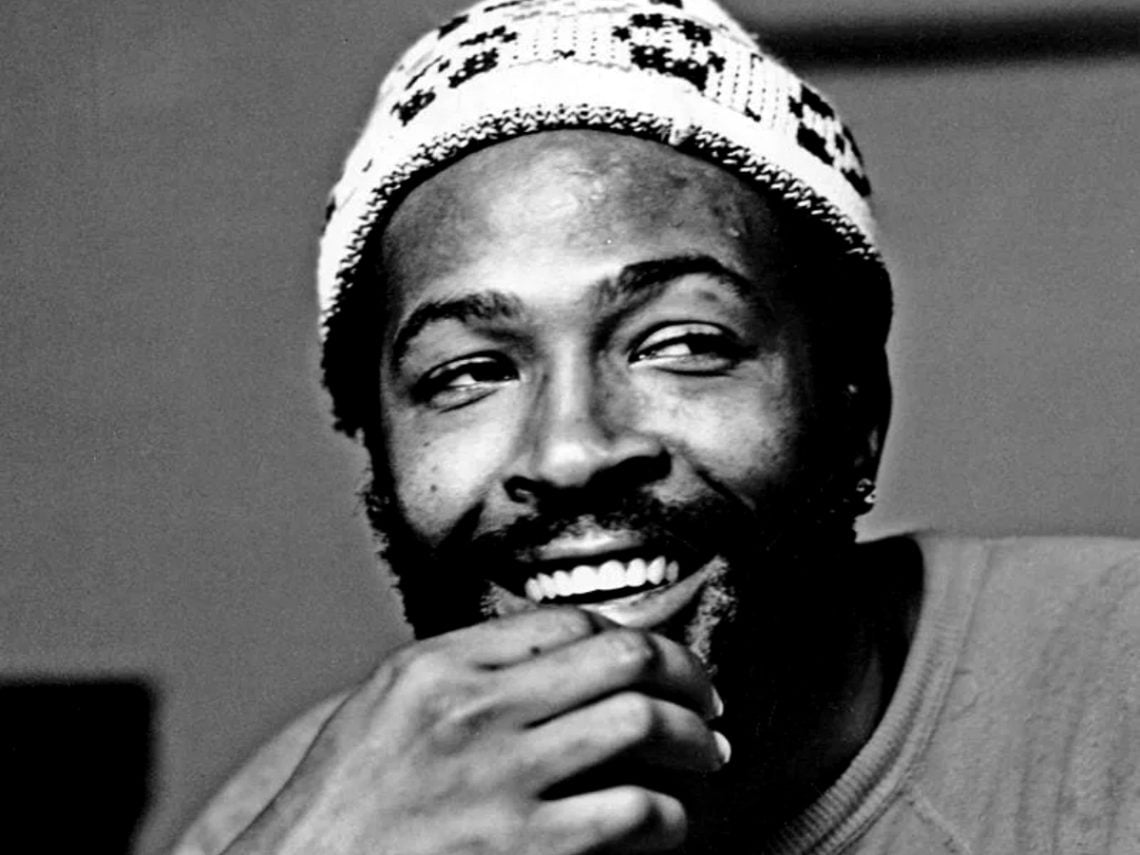
The Motown classic Marvin Gaye wrote before solo fame

When Marvin Gaye was first employed at Motown, he struggled to get himself in front of a microphone. Originally moving to Detroit from Washington D.C. as a backup singer and session musician, Gaye’s initial singing stint with Motown went nowhere. Largely due to the fact that Gaye was uninterested in pop or R&B music, preferring instead to sing jazz standards, he failed to find commercial success with his initial musical output.
To stay in the good graces of Berry Gordy, Gaye returned to his side gig as a session musician, playing drums on a number of Motown singles. By the time 1963 rolled around, he took on a second gig as an in-house songwriter as well as performing drums on major pop singles like The Marvelettes song ‘Beechwood 4-5789’ and Stevie Wonders’ ‘Fingertips’. This allowed Gaye the opportunity to restart his singing career, eventually notching popular singles like ‘Hitch Hike’ and ‘Pride and Joy’.
In 1964, Gaye began transitioning out of his role as a session player and songwriter. One of his final songwriting-only contributions to Motown would be one of the label’s biggest songs ever had. Along with fellow songwriter Mickey Stevenson, Gaye took images of kids opening fire hydrants on the streets of Detroit and transformed it into ‘Dancing in the Street’.
As was typical of Motown’s process, Gaye recorded a demo that would be shopped around to the label’s roster of artists. Martha Reeves had unsuccessfully auditioned for Motown but was employed as the label’s receptionist while singing on the side. With a strong connection to Stevenson and a good report with Gaye, Reeves was tapped to give ‘Dancing in the Street’ a go.
“Marvin Gaye had recorded ‘Dancing in the Street’ when I first heard it, and he had put a real smooth vocal on there,” Reeves told the Dutch TV programme Top 2000 a gogo. “And for some reason, Marvin said, ‘Let’s try this song on Martha.’ I was in the office, and they let me hear the song, but I couldn’t quite feel it that way. I had been to Rio De Janeiro. I had travelled to New Orleans during Carnival time. So I just knew it had to be somewhere about dancing in the street. I said, ‘Can I sing it the way that I feel it?’ And they said, ‘Go ahead.'”
“So, I sang it ‘Calling all around the world are you ready for a brand-new beat,’ and they loved it,” Reeves added. “There was all kinds of congratulatory hand slaps and ‘Hey man, we got a hit in that window up there,’ and the engineer, Lawrence Horn, looked and said, ‘I didn’t turn the machine on.'”
“I had to sing it again. So, the second time I sang it, there’s a little bit of anger there because I had to repeat it,” Reeves explained. “It was a straight performance, and that’s why it sounds live. I think that’s the secret of the success of the hit – the fact that I had to do it again, and I did it without a mistake or without any interruption, and the feeling was just right on that song.”
Although she didn’t write the song, Reeves gave ‘Dancing in the Street’ its urgent and celebratory feeling. The decision to highlight cities with large black populations helped ‘Dancing in the Street’ become a Civil Rights anthem during the mid-1960s. But in Reeves’ estimation, Gaye wasn’t attempting anything revolutionary with the song. Instead, Reeves read Gaye’s intent as being completely literal.
“The words are very simple: he wanted everybody to dance in the street. Everybody to rejoice and have a very good time,” Reeves explained. “It was a hot, #1 hit, and it spread love all over the world. When you play it today, people get up and do what? Dance!”
Check out ‘Dancing in the Street’ down below.
