


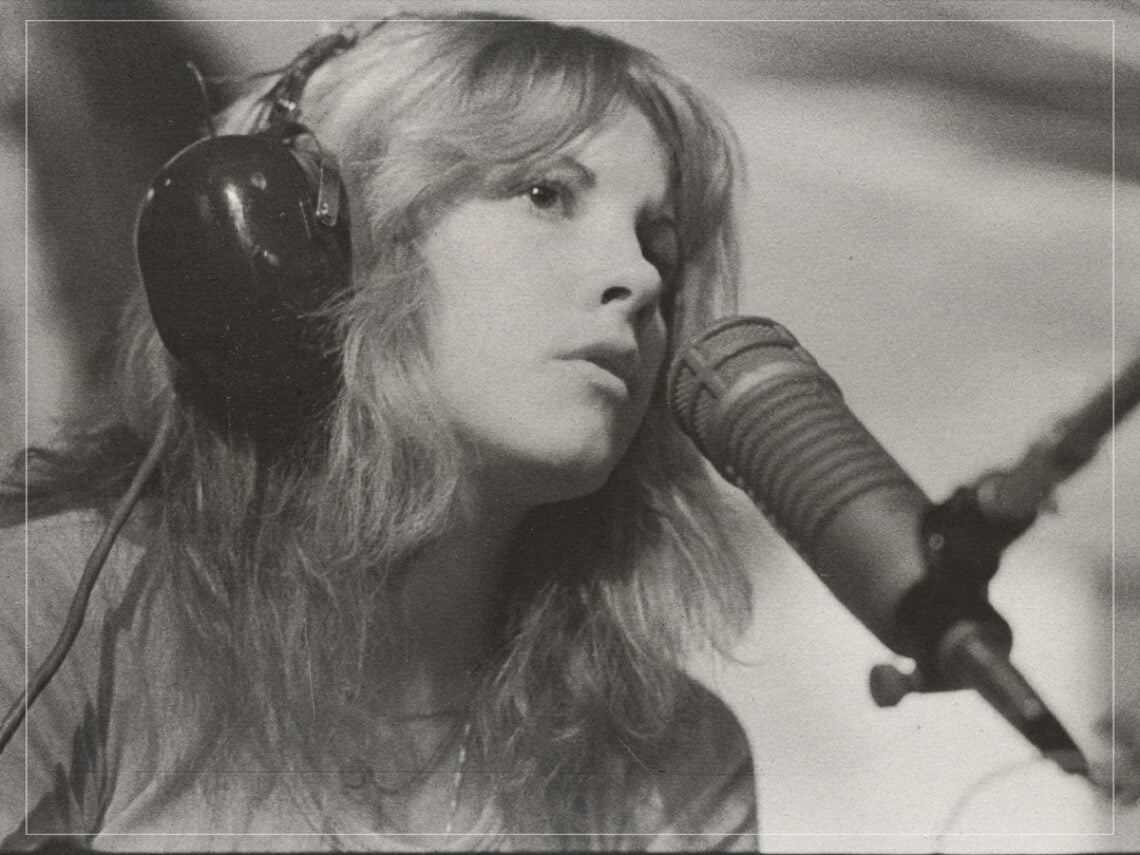
The most heartwrenching lyric Stevie Nicks ever wrote

It’s easy to make a case for Stevie Nicks being one of the greatest songwriters of all time.
It’s simply to make that case because whenever the topic comes up, it’s hard to find the right place to start. Her audacity in the studio whenever Lindsey Buckingham opposed her ideas? Her knack for talking about her feelings in a way that felt less confessional and more poetic? The ability of her words to transcend all eras, at any given moment in time? It’s impossible to put into words the genius of someone whose worlds and wordplay will always shift beyond the triviality of words themselves.
She once said her many muses for songwriting were Jackson Browne and Joni Mitchell. When we look at how Mitchell wrote songs, we can start to understand Nicks’ approach, too. She said, “Things stick in my craw and they rotate endlessly, and if I don’t clear them, I could go mad. And I wanna clear them in an interesting manner, and the arts seem to be the answer to that. Yes, I do smoke endlessly, I do not so much rewrite as write copiously and then condense.”
While Nicks has certainly had moments when she’s allowed her feelings and experiences to bleed out of her like some kind of diary entry, she also inherently sees things differently than most. Which, put simply, means she has a way of prophesying about things before they’ve even happened. Granted, it’s not always hard to do this when you understand the cause-and-effect nature of being a human, but it’s the specificity of Nicks’ words that land the hardest, and yet the timelessness of them that also brings you back again and again.
Take ‘Silver Springs’ as an example. It might be an obvious choice, but it’s one of Nicks’ best lyrical creations for two main reasons: the way she transforms love and revenge into some kind of spellbinding tale about fate and being forever bound to someone, and the way she also unknowingly predicted just how true her statements would end up being. “You’ll never get away from the sound of the woman that loves you,” she sang, a double-meaning about the haunt of her music and her presence, and also a premonition about how much Buckingham would lament Nicks however many years later.
Fans of their first venture, Buckingham Nicks, will also understand how integral the project was – lyrically – to the rest of their journey together. A story famously filled with more downs than ups, Nicks and Buckingham’s whatever you might call it these days started in the lovelorn expressions on Buckingham Nicks, a record that also holds the most heartwrenching lyric Nicks ever wrote.
Now, that might be a strong statement considering, well, she’s one of the greatest lyricists on the planet and there are countless gems to choose from. But all things considered, it’s hard to think up anything she’s ever done better than the one line that captures all her joys and insecurities, occurring on ‘Crystal’: “I have changed, but you remain ageless.” A simple statement with a hell of a lot to unpack, this singular line covers all things we love about Nicks – her love for mystical whimsy and the romance she feels towards all that she’s lost. It’s also incredibly succinct, proving Nicks’ ability for writing things that strike a chord in only so many words.
Nicks once said she wrote the line about her father. The song itself is about how love changes through time and how it changes you in turn. “How the faces of love have changed, turning the pages,” she sings in the previous line, a fitting sentiment for later featuring on the Practical Magic soundtrack, about how, through varying twists and turns, love remains ageless. But beyond those obvious interpretations, it’s easy to see the tragedy, too – in how, when you lose someone, literally, their ageing process stops, and you continue on, while your memory of them forever remains the same.
Nicks might not have meant it to be a lament on death, but there’s something heavy about eulogising your feelings towards someone in a way that renders them in a light of finality. You might continue to move and shift, but they’re stuck, or your memory of someone or something is frozen in place somehow, by forces you might not ever understand. But that’s also where the romantic element lifts it. Because Nicks is saying she’s changed, but there’s brutal poetry in how things once were, especially in hindsight, when all those factors cease to exist anymore.
