


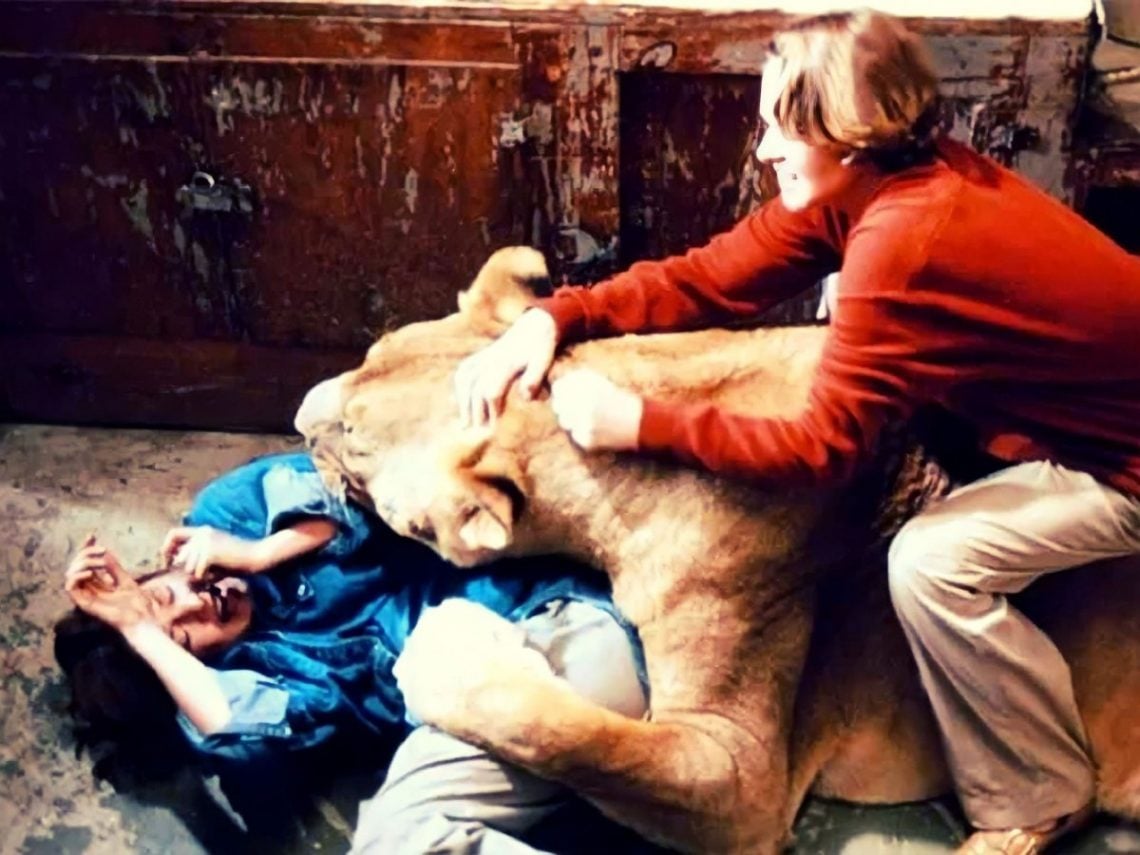
The most dangerous movie ever made

In 1981, Noel Marshall released his adventure film titled Roar, a project littered with issues which would come to be known as one of the most dangerous movies ever made.
A family-made movie, Roar took five years to film and 11 long years to complete. The project was directed by Marshall – who produced The Exorcist in the early 1970s – and produced by both Marshall and his wife Tippi Hedren. Both an iconic actor and model, Hedren most notably featured in Alfred Hitchcock film The Birds in 1963, winning a Golden Globe for her performance. Hedren starred in Roar alongside Marshall and their real children.
John Marshall, the son of director Noel Marshall, recalls that Hedren provided the inspiration for the concept of Roar. She had previously starred in films in Africa and, while she was there, had embarked on a safari that passed a house overrun by lions. During an interview with Grantland, he explained: “They thought, ‘That’d be pretty cool. Why don’t we make a movie about that? We’ll get the whole family together, just rent some lions and we’ll do this movie.’”
Quickly, the team started developing a script in the early 1970s. The plot of the movie follows Hank, a character played by Noel Marshall himself, and his family as they deal with a pack of lions who have taken over his house.
To prepare for the film, the family began illegally raising lion cubs in their family home in Sherman Oaks in an attempt to domesticate them before filming. John reflected on the experience, stating: “I think we probably raised 30 of them in the house…sleeping in bed with us. Running around the house”. The family even had a plan in place for when the authorities came knocking, which included launching the lions over their fence and into the neighbour’s garden.
Though the Marshalls learned to live amongst the lions, even claiming to have gained mutual respect with the animals, John notes that the problems started as soon as filming began. While the real family knew how to handle the lions, the characters in the film were written to fear them: “We do all the things you’re not supposed to do,” Marshall explained. “You shouldn’t show fear. You shouldn’t run from them. Don’t play hide and seek. And we’re running and we’re trying to hide from them and we’re playing hide-and-seek, and all of a sudden it became a lot more dangerous”.
In total, over 70 members of the cast and crew were attacked by the animals, coming away with a list of near-fatal injuries and ailments that included blood poisoning, head wounds, and broken bones. Hedren even developed gangrene as a result of her encounters with the lions. Part of the reason filming was so extended was to allow those who had been attacked some recovery time, but production was also waylaid by a flood on location, further compounding the misery.
Roar has now gained a legacy as one of the most dangerous movies ever made. A documentary was made about the production of the film in 2004, and the film had a theatrical re-release in the mid-2010s with the sensationalised tagline, “No animals were harmed in the making of this film. 70 cast and crew members were”.
Though its primary cast has noted that they don’t regret making the film, Roar remains the first and only movie that Marshall directed. Shortly after, Hedren turned to animal rights activism and founded the Roar Foundation to care for the cats who featured in the film.
Fortunately, since the release of Roar over 40 years ago, the development of CGI has removed the need for filmmakers to bring real animals on set. Movies like Ang Lee’s Life of Pi and the live action remake of The Lion King have used blue screens and VFX to create life-like animal characters on screen without putting their cast and crew at risk.
