


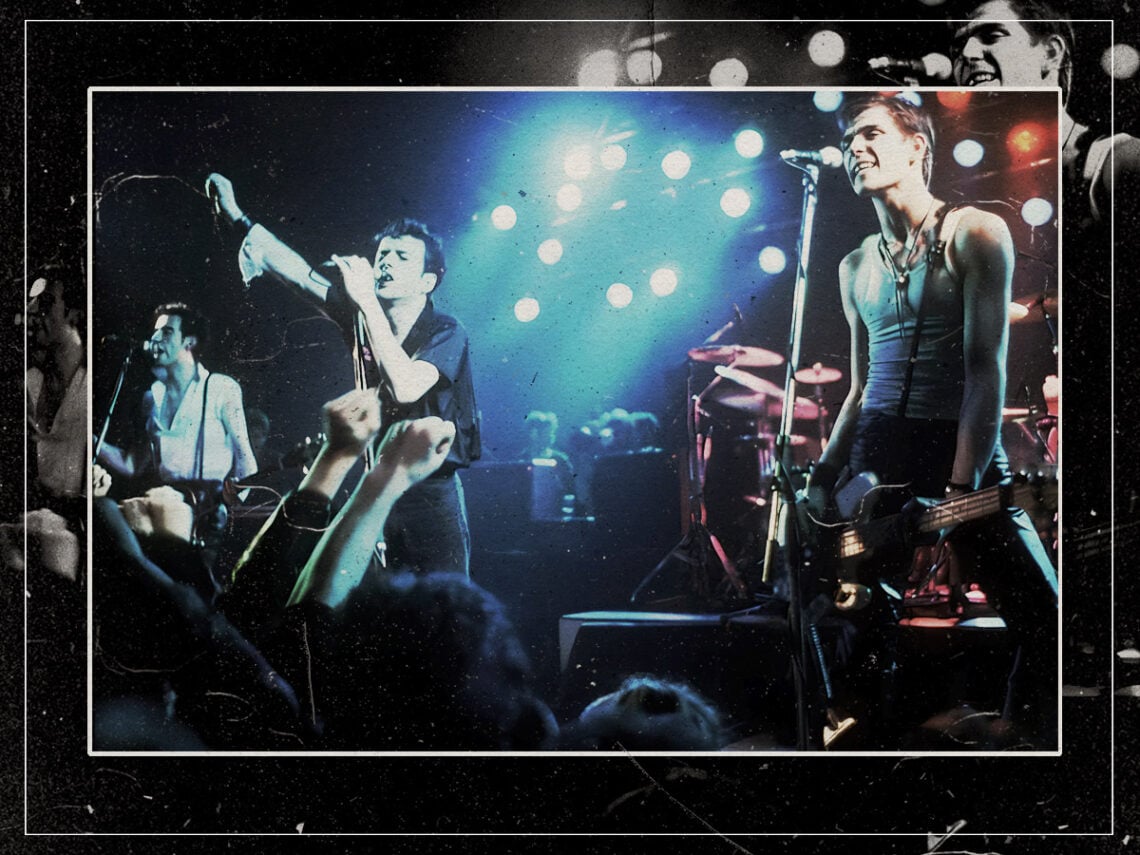
The moment Joe Strummer knew The Clash had made a classic: “We had just done something really great”

“I’m trying to write songs with a message and talk about the realities of life,” Joe Strummer said in 1984, “but I understand that it’s also got to be entertaining”.
No one knew it at the time, but the 1984 version of The Clash had nearly communicated all the messages they had left in the tank, as the band would only manage one more album, 1985’s unfortunate and forgettable Cut the Crap. Even after the release of 1982’s commercially and critically successful Combat Rock, however, some fans were at least beginning to wonder if the group was losing some of its edge. While out touring that record, Strummer, then in his 30s, became a first-time father, and he was starting to show a bit more care and restraint when publicly discussing his views on certain social and political issues.
“I have to keep pointing out that we’re not Communists,” he said in that 1984 interview, “Communists say that everything Russia does is good, and I can’t go for that party line”.
The biggest hit off Combat Rock, ‘Rock the Casbah’, certainly still had a loose message of rebellious self expression to it, but the record’s finest example of vintage Clash political messaging can be found on ‘Straight to Hell’, a song which was also released as a double A-side single with Mick Jones’ politics-free ‘Should I Stay or Should I Go?’
‘Straight to Hell’ didn’t get an enormous amount of attention in its own time, and millennials still recognise the guitar line more for its brilliantly sampled re-use in MIA’s ‘Paper Planes’ 20 years later. But when the song was recorded in New York City on New Year’s Eve, 1981, Strummer instantly felt that it had found that perfect balance of entertainment and meaning, that it was essentially destined to be a classic.
“I’d written the lyric staying up all night at the Iroquois Hotel,” Strummer recalled in 1991, “I went down to Electric Lady [Studios], and I just put the vocal down on tape. We finished about 20 to midnight. We took the E train from the Village up to Times Square. I’ll never forget coming out of the subway exit, just before midnight, into a 100 billion people, and I knew we had just done something really great.”
It was almost too great, by some measures, as the original version of ‘Straight to Hell’ was over seven minutes long, and was eventually trimmed to five minutes and 30 seconds, cutting out an extra verse. It’s hard to imagine what more Strummer might have aimed to cover in a song that already tackled the plight of British steelworkers, abandoned wartime kids in Vietnam, and the cruel treatment of Puerto Rican immigrants in New York, with the consistent thread basically an observation of a lack of empathy, a disregard for people’s humanity.
“It could be anywhere, most likely could be any frontier / Any hemisphere / No man’s land / There ain’t no asylum here”.
Even at this stage in their career, Strummer felt The Clash had an important role to play in rock n’ roll, noting, “Without The Clash around, when people talk about ‘wild rock ‘n’ roll’, they’re talking about Van Halen, and that’s not rock ‘n’ roll as I knew it as a child and what I want to play. That kind of music has no morals.”
