


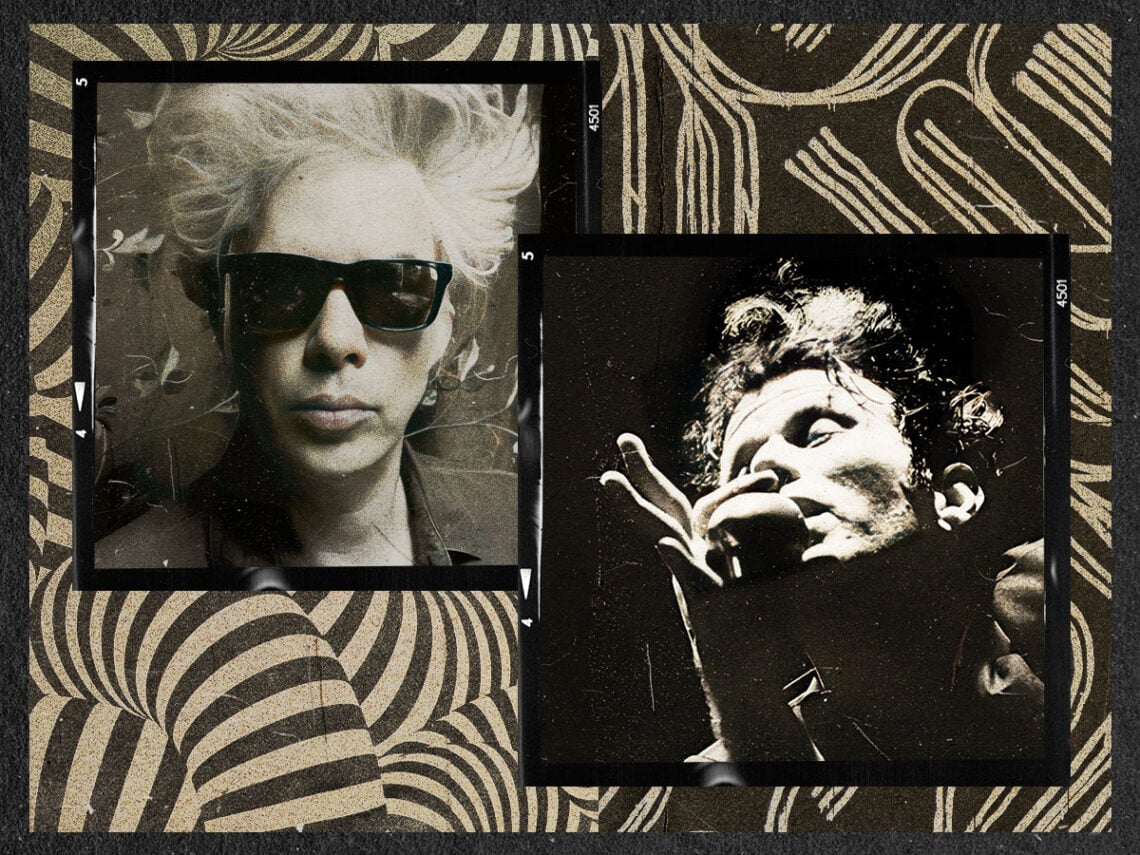
The moment Jim Jarmusch met Tom Waits: “There’s no other species like him”

“Tom and I have a kindred aesthetic,” Jim Jarmusch once said about his good friend Tom Waits. “[We both have] an interest in unambitious people, marginal people.”
In the mid-1980s, both Jarmusch and Waits found themselves on significant career trajectories: Jarmusch achieved recognition with the indie hit Stranger Than Paradise, catapulting his career, while Waits underwent a transformation from a piano crooner to embracing a rugged sound with Swordfishtrombones. Jarmusch was quick to perceive Waits’ aptitude for acting – characterised by his distinctive voice and ability to embody unconventional outsiders and eccentric characters – leading to his casting in the 1986 film Down by Law.
Since then, Waits has maintained a parallel Hollywood pursuit, gracing a diverse range of films, including Bram Stoker’s Dracula, Seven Psychopaths, and the Coen brothers’ creation, The Ballad of Buster Scruggs. Amid this trajectory, Jarmusch has astutely harnessed Waits’ potential as a character actor, fostering a fantastic collaboration with the enigmatic singer that surpasses that of any other filmmaker.
“If you don’t know Tom Waits’ work, you’re missing a lot,” Jarmusch said in 1996. “I don’t know how to describe Tom Waits because to me, he’s like some strange, very rare mushroom or something, growing out in the forest, and there’s no other species like him. You know, he is a kind of poet, troubadour musician, and there’s almost something like carny about him too.”
Jarmusch’s fondness of Waits started with a shared sense of ‘otherness’, a worldview that no one else saw or understood. The pair actually first met in the early 1980s at a party hosted by Jean-Michel Basquiat. In a crowd of glamorous art figures, both found themselves grappling with feelings of awkwardness and shyness. To break free from the discomfort, they decided to ditch the party scene and go on a bar crawl together instead.
As with many kindred partnerships, it’s often too hard to describe precisely what draws you to a person. Instead of trying to explain Waits’ allure in a straightforward way, Jarmusch refers to one anecdote to summarise Waits’ character: “When he was living in New York in, I guess, 1985, he was living in a kind of burnt-out loft on 14th Street, and I went up to visit him,” he said.
“He had a black suit laid out on newspapers on the floor and a spray can of yellow paint, and he was spraypainting yellow stripes on the suit,” he added. “And while he was doing that, his little daughter Kelly Simone was drawing all over the walls. So all around the loft, whatever her height was at that time, there were drawings up to that height. And I remember walking in and Tom spraypainting yellow stripes on a black suit that he bought on 14th Street, and his daughter saying, ‘Look, Daddy, I made a horse,’ or a dog or something, and ‘Oh, that’s good, Honey. I’m making stripes on the suit.'”
He concluded: “He can use storytelling in a very beautifully simple, poetic way. In one of his songs, a line is: ‘I bought a second-hand Nova from a Cuban-Chinese and dyed my hair in the bathroom of a Texaco.’ And that’s like, oh wow, that’s the start of the movie, you know, or a whole little movie right there, in just a couple lines. I don’t know how to describe him. You have to just listen to him, and it becomes very apparent that it’s a very rare kind of perspective on the world.”
One of the projects that best showcases the pair’s profound camaraderie is The Garage Tapes, which offers a glimpse into a relaxed side of Waits, even as he engages with Jarmusch, who is characteristically exploring the surroundings with a camera in hand.
