


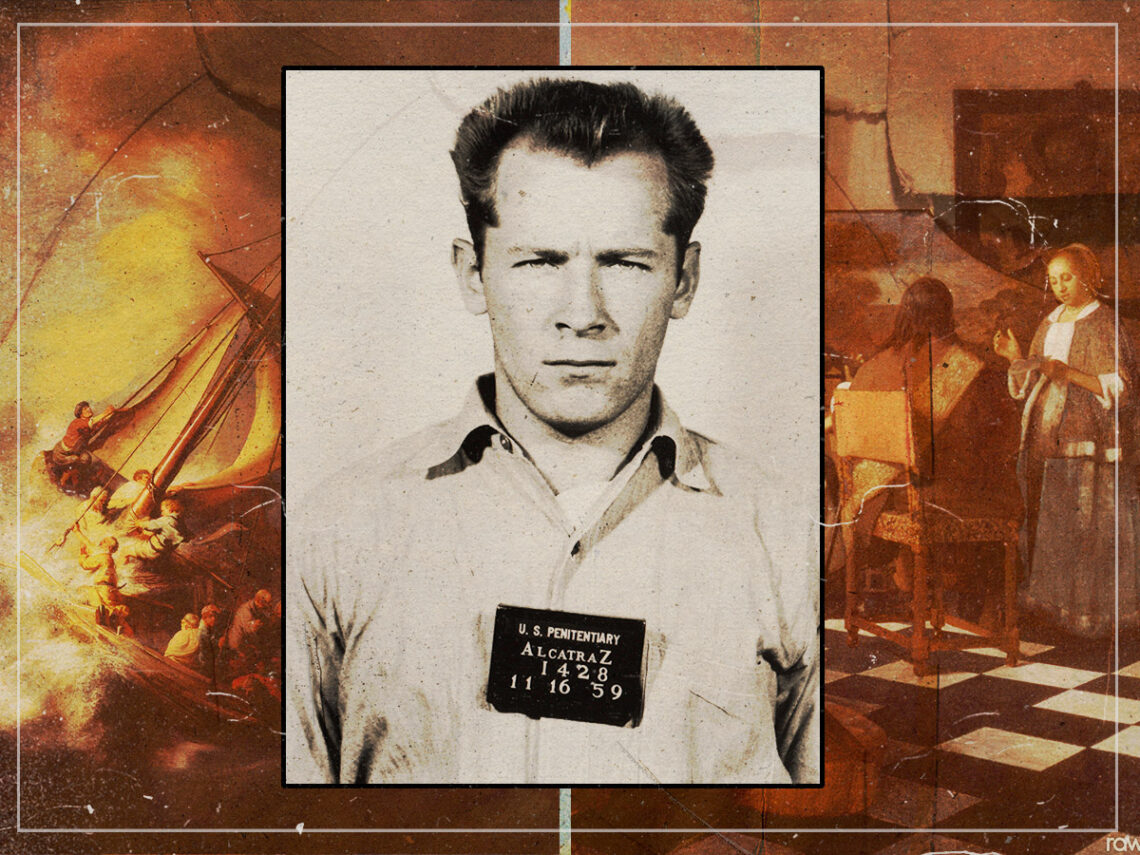
The mobster and FBI informant suspected of an art heist

It’s saying something that when the FBI raided the home of James “Whitey” Bulger, it was a disappointment when all they found was 30 assorted firearms and $800,000 in cash. It says something else entirely that it was art lovers, not often famed for their links to the criminal underworld, who were the most let down. Bulger had been a regular face on the FBI’s most wanted list for over a decade, and his 1995 arrest dashed hopes of long-lost paintings ever being recovered.
Evidence of his mob association is well publicised and largely evident in his interactions with such characters as: “Joe the Barber” and “Balloonhead”. In any case, Bulger was the ringleader of Boston’s Winter Hill Gang, with a laundry list of convictions ranging from racketeering to murder. It was his own murder in 2018 that sparked a conversation about his possible involvement in the Gardner Museum heist.
The heist itself was infamous, and in a loot that only took 81 minutes to pull off, two men stole 13 paintings worth nearly $500 million. Among them was Christ in a Storm on the Sea of Galilee, which art fans took particular issue with, it being the only seascape Rembrandt had ever painted in his career.
After Bulger’s arrest, he was pressed on the Gardner robbery, which has long been thought to be mob orchestrated. That said, and with two life sentences ahead of him following a string of murders, he didn’t give up any information, even with a more lenient sentence dangled in front of him.
The year Bulger was murdered in prison, a former Scotland Yard detective made a strong case for Bulger’s involvement in the theft. Charles Hill had skin in the game, having recovered Edvard Munch’s The Scream as well as a handful of stolen Johannes Vermeer and Francisco Goya works. As Hill put it to the Guardian, “even the dogs in the streets of south Boston” would vouch for the fact that Bulger had some connection to the case.
Both Hill and the canines of Boston believe the stolen paintings were shipped to Ireland as part of an IRA deal, largely because in 1984, a shipment full of weapons named Valhalla that Bulger organised was intercepted. “[He] was an IRA sympathiser, he loved to associate himself with ‘the cause’, and was involved in arms deals and drugs shipments to the Republic,” said Hill, adding that he felt “he owed one to his friends in the Republic.”
His expertise in recovering stolen paintings does come with a caveat, however, which Hill fully admits. “There is no hard evidence for this, but I combat art crime both rationally and irrationally, intellectually and viscerally,” he said. “That technique serves me well as a style and measure of success.” However true that may be, hopes of a confession or at least a recovery of the paintings seem to have lived and died with Bulger.
