


The grave “feminist” misunderstanding of Ari Aster’s ‘Midsommar’

Contemporary horror filmmaking is all about symbolism, meaning, reflection and allegories. Filmmakers of this genre take to cinema in a bid to exert coded representations of broader socio-political issues and concerns, employing horror iconography, themes and events to represent these contextual landscapes. One director who demonstrates this in modern horror is Ari Aster, a filmmaker known for his unsettling yet stylised features, including Hereditary, a disturbing exploration of repressed grief using possessive imagery, and Midsommar, a story of manipulation and pain told through cultic themes.
Midsommar, released in 2019, is a folk horror starring Florence Pugh and Jack Reynor as a dysfunctional couple, with the boyfriend looking for a chance to break off the relationship. When timing works against him in the worst way possible, the pair travel to Sweden with a group of friends for a midsummer festival. Everything appears welcoming, safe and informative at first. However, Pugh’s character soon realises that she has fallen victim to a sinister cult practising Scandinavian paganism.
The filmmaker designed and executed the film to read as “The Wizard of Oz for perverts”, with additional inspirations, including Lars von Trier’s Dogville and Albert Brooks’ Modern Romance. Aster’s film is plagued with symbolic imagery and sequences constructed with the utmost detail to execute underlying themes. However, despite the calculated effort and thought the director put into his work, Midsommar has been grossly misinterpreted by film fans online, who express their grave misunderstanding via Twitter memes and online discussions.
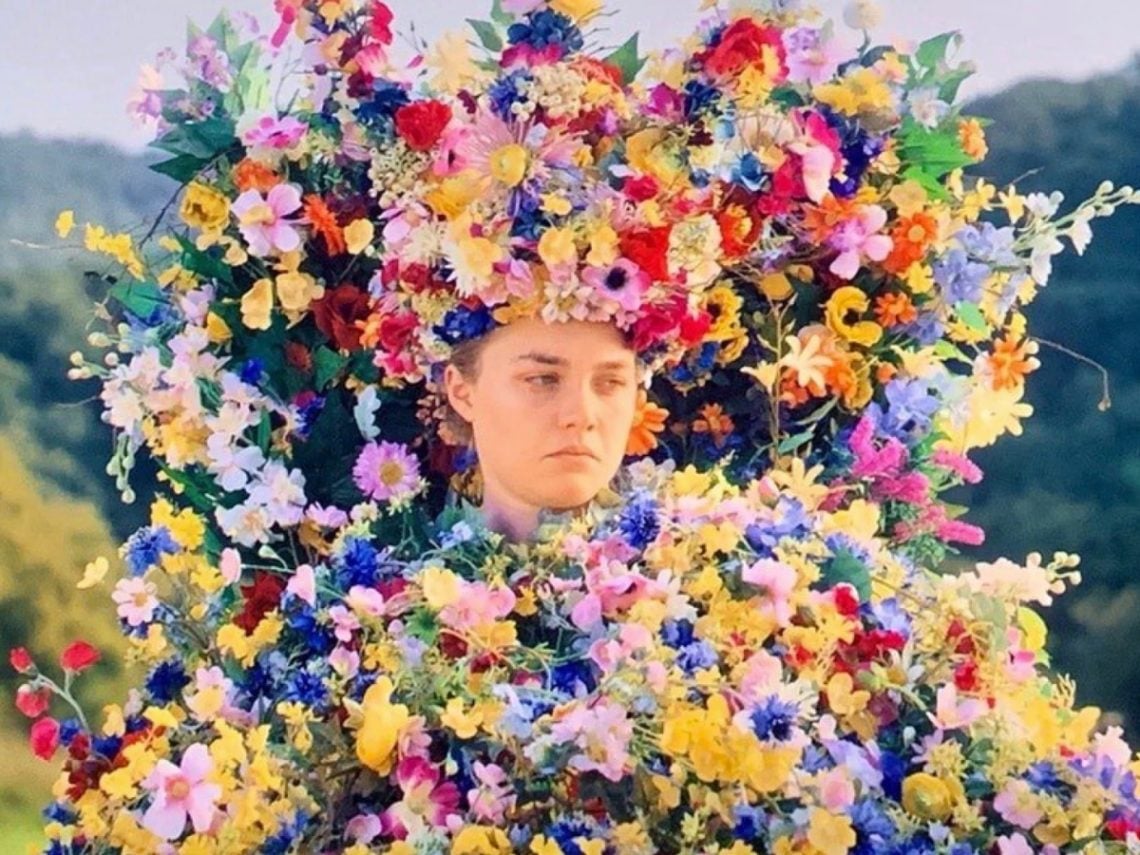
This misconstruction is directed towards Danni’s arc and fate in the film, tying with what happens to her boyfriend. Aster’s picture concludes with a startling and shocking ending, one that sees Christian, the boyfriend, stuffed into a dismembered bear and placed into a wooden temple set alight. Danni stands outside, donned in flowers, having been crowned May Queen, watching the sight in horror. Her distraught expression eventually turns to a smile, an unnerving image that has become the face of Midsommar.
Viewers situate this concluding image against the context given throughout the narrative: Danni and Christian were experiencing a fractured and unhealthy relationship that intensified throughout their stay with the cult. In the worst moments of this deterioration, Christian gives Danni the cold shoulder in an environment she is already alienated in. In a deleted scene, he even exercises an emotional outburst against Danni when she voices her concern and discomfort towards the environment, showing signs of gaslighting and negligence towards her emotional well-being.
Given the character’s distasteful approach and actions, audiences need little push in disliking Christian, citing him as a toxic boyfriend and Danni as a victim of an emotionally abusive relationship. Thus, the fate each character meets is initially interpreted to appease a twisted exertion of justice. Essentially, viewers are pleased to see Christian suffer such a horrific death and are even more pleased to see Danni ‘happy’ and ‘free’ from a destructive relationship. In turn, Midsommar has fallen to unfitting citations as feminist filmmaking, with too many placing the picture of Danni smiling among other female characters under the title “Good for Her” as a film category.
This is the grave misunderstanding of Midsommar, which jeopardises the intentional messaging of the art direction and thematic concepts. Midsommar does not celebrate what happens to Danni nor what will happen to her following the ending. Danni has not won; she has lost because she has fallen victim to a new relationship that is just as toxic as the one she had with Christian, and that new toxic relationship is with the cult.
It is beneficial for a viewer to understand what a cult actually is and how it operates to obtain recruits, or more fittingly, victims, to understand what Aster’s film is trying to say. Cults feed off of emotional distress, trauma, isolation and a need to belong and find family, manipulating the vulnerability a person experiencing these factors is suffering. From this, the cult creates an illusion of making the victim feel they have found a home and that they are understood. This is precisely what the cult in Midsommar does to Danni. They manipulate the grief she is drowning in following the death of her family and her problems with Christian to isolate her from other outlets and convince her to join them.

Aster’s film explores manipulation and grief, with the two conjoining against an exterior examination of subcultures and alternative societies and landscapes. The cult detects Danni’s trauma and emotional vulnerability and immerses her in their festivities, leading her into a false sense of companionship.
In the most shocking and disturbing act of grooming, Danni witnesses a drugged Christian being taken advantage of by a female cult member in a ritual but is not aware that her partner has been drugged and has not consented to the act. He is being assaulted, but Danni thinks he is cheating. The rest of the cult has this knowledge, but instead of sharing it with Danni when she has a frantic anxiety attack, they make her believe they are joining her in her pain by performing the shallow gestures of the feeling. They scream in artificial agony to match Danni’s genuine feelings, surrounding and consoling her. This is when the mind of a stressed Danni snaps, and she submits entirely to the cult’s manipulation under the tragic false pretence that they are comforting her and giving her a new home.
Pugh discussed the experience of shooting such a distressing and taxing scene with Indiewire, stating: “I knew I would never be so open and so raw and so exhausted like I was that day ever again,” which highlights the scene’s intensity.
Disturbingly, some audiences interpret this scene as beautiful and liberating. A group of women are seen banding together to exercise their emotions, leading to the misplaced feminist citation. However, that is far from the case. This group has twisted and infected a display of love to groom a victim, hijacking a cathartic and sympathetic image to exert their sinister motive. The women know Danni has no reason to feel the pain of infidelity, yet they allow her to think this is the case to trap her and add insult to injury by mimicking her physical pain. It is a harrowing series of events, and the context doesn’t help.
What is so feminist and girl power about an emotionally fragile woman having her pain and agony exploited as a tool to manipulate her?
With that, the film’s true meaning makes the ending all the more disturbing. After learning that the cult needs to give a sacrifice to rid the group of an evil entity, Dani must choose either Christian or a commune member to be the final sacrifice. She chooses Christian and sends her victimised boyfriend to a painful and agonising death, having been led to believe he has betrayed her and that the cult will provide her with all the emotional support she needs.
This is tragic and upsetting as Christian, despite his unfair behaviour towards Danni, that should receive consequences that were not being raped and murdered, is also a victim of the cult and its emotional abuse. Christian was flawed, of course, as Aster writes and directs real characters who are layered and complicated. However, to cite the brutality he experiences but did not deserve as an extension of the echo chamber ‘girl power’ category of filmmaking shows a lack of critical analysis. You can make a feminist film about womanhood and the suffering and perseverance that comes with it without cheap images of men being tortured. However, that is another issue.
As a whole, Midsommar is misinterpreted and underwhelmed, as the folk and colourful aesthetics and potential memes Twitter created overwhelm the film’s disturbing and upsetting concepts. With every joke parallel between Aster’s film and another movie or piece of media that presents flower crowns and fields, Midsommar’s true meaning slips further away from the audience’s minds.
The last shot of Danni is not one of a victim being liberated and receiving justice. Instead, it is a victim, one to a dangerous force that abuses her trauma to align with its immoral intentions. As desperate as audiences are for women in horror to thrive, challenge prejudice and abuse and become revolutionary icons, Midsommar’s Danni is unfortunately not a contender for such directions. Her story and ending are tragic and disturbing, with additional misinterpretations only adding to the unsettling tone. The last thing you should say after watching Midsommar is, “good for her”.
