


‘The Menu’ Review: A delicious commentary on the bloated nature of the 21st Century

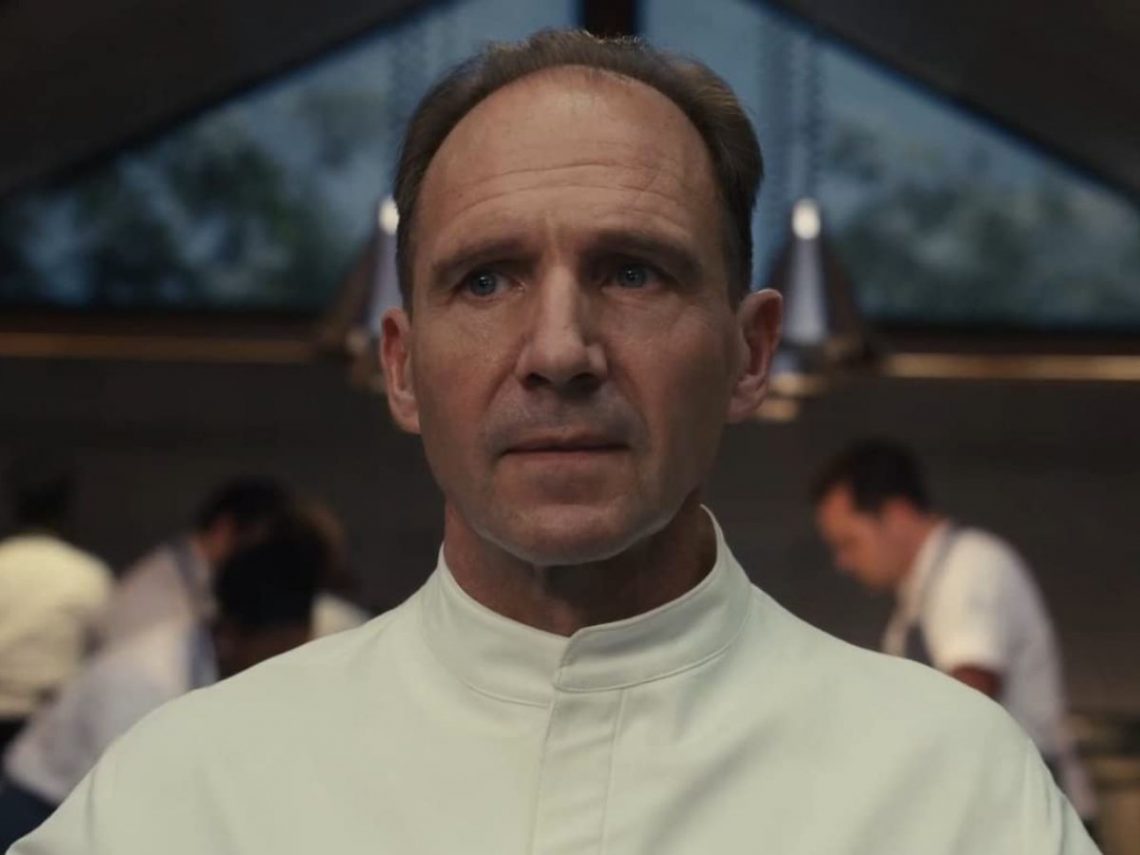
Following the well-worn trope of a group of strangers visiting a mysterious island is a risk in its own right. Yet Mark Mylod’s The Menu completely reinvents the narrative, serving up a moreish combination of comedy, tension and conceptual intrigue in equal measure. The film stars Anya Taylor-Joy and Nicholas Hoult as an unlikely and initially misunderstood couple and Ralph Fiennes as a demented high-concept chef.
The Menu opens with Margot (Taylor-Joy) and Tyler (Hoult) boarding the boat that will take them to the island where chef Julian Slowik’s restaurant, Hawthorne, is located. Tyler is beyond a food fanatic and is utterly obsessed with Slowik’s work, knowing every detail and each of his techniques (or so he thinks). Immediately, there is an evident tension to the narrative, with the far-off, sceptical look in Margot’s eyes contrasting with Tyler’s complete obliviousness to anything other than the excitement he has for finally being able to pay $1,250 to sample Slowik’s highly-coveted tasting menu.
On the island, the tension is ramped up when we meet the restaurant’s staff – headed by its maître d’, Elsa (portrayed exquisitely by Hong Chau) – all of whom are cultishly domineering. Amongst the restaurant’s patrons for the evening are a group of conniving bankers whose boss supposedly owns it, a name-dropping Hollywood star and his PA, and an ultra-pretentious food critic accompanied by the editor of the magazine she writes for. In sum – bar Margot and perhaps a drunken victim of her husband’s infidelity – the group serves as the most reprehensible cross-section of 21st Century society – including Tyler.
Evidently, given what we already know about the film from its trailer, the group’s dining experience will be like no other. Due to Slowik’s unashamedness of his plans, it does not take long for his diners to realise that they are in for more than they had initially bargained. In that sense, both Slowik and The Menu have the admirable quality of not toying with their audiences for longer than necessary.
Any film with tension at its core has the unenviable task of maintaining such pressure throughout its runtime. Upon The Menu’s first big shocking reveal about what the Hawthorne dining experience is really about, I worried that it had arrived too early in too an unsubtle fashion. However, The Menu more than managed to wrangle itself back into captivation through its clever dialogue, excellent moments of humour and a slow peeling back of its mystery – including the true identity of Margot.
With many horror films (although The Menu is admittedly rather slack in any claim of it being called thus), elements of comedy often seem afterthoughts that perhaps arrive impromptu during filming and consequently garner a mere smirk or grin from the audience.
However, The Menu is genuinely laugh-out-loud funny. Whether it be through the apparent mocking of ‘food-porn’ TV shows such as Chef’s Table (which is directly referred to), the witty captions explaining the peculiar ingredients in each of Slowik’s dishes, or the sommelier claiming that a particular wine contains notes of “longing and regret”, The Menu more than delivers in comedic effect. It also refrains from allowing the comedic undercurrents to overshadow the tension and the air of conspiracy.
Rather than merely satirising the notion of the ultra-rich still being unsatisfied with their ridiculously overpriced high-concept food (although, indeed, it does that with great aplomb), The Menu also serves a commentary on the bloated nature of 21st Century culture, and in particular, the medium of film itself. Several times throughout The Menu, there appear to be snippets of dialogue that seem to point to the oversaturation of choice in modern entertainment.
Take, for instance, Slowik explaining that a given artist’s art (in his case, his food) only seems to turn to shit (in his case, literally) inside those who consume it, criticising a regular patron who cannot remember a single dish from his previous visits to Hawthorne. So too, does Elsa cruelly tell a diner, “you will eat less than you desire and more than you deserve”, while a sous chef later teaches part of the group that there must “always be a conceptual ending” to the dining experience “otherwise it just tastes good, and then what’s the point?”
If these aren’t rather obvious references to the fact the contemporary consumption of media is never-ending and ever-longing, then I am unsure as to what might shake the present public audience out of their persistently searching stupor. Let’s not forget the title of the film after all. Is it not true that we spend just as much time looking through The Menu of Netflix and Amazon Prime as we do savouring their content? As Slownik himself professes, “Don’t eat; taste.”
One particularly admirable thing about The Menu is its clear confidence in calling time before it begins to drag. Several recent dramatic releases have tended to aim for that two-hour mark as though that would signify a higher level of internal consideration. However, with The Menu at a respectable hour and three-quarters, when Hawthorne closed its doors for the night, I had an overwhelming hunger to savour its offerings once again.
Fiennes is at his scintillating and fearful best here, as are Taylor-Joy and Hoult in their extraordinarily different roles. There also ought to be admirable nods to the performances of Hong Chau and Janet McTeer, the latter of whom plays the obnoxious food critic with a scathing and simultaneously laissez-faire intensity.
The Menu is an absolute must-watch for those utterly exasperated with the forever onslaught of below-par Netflix-funded pictures and those who are just slightly peckish for a snappy and intelligent mystery thriller too.
