


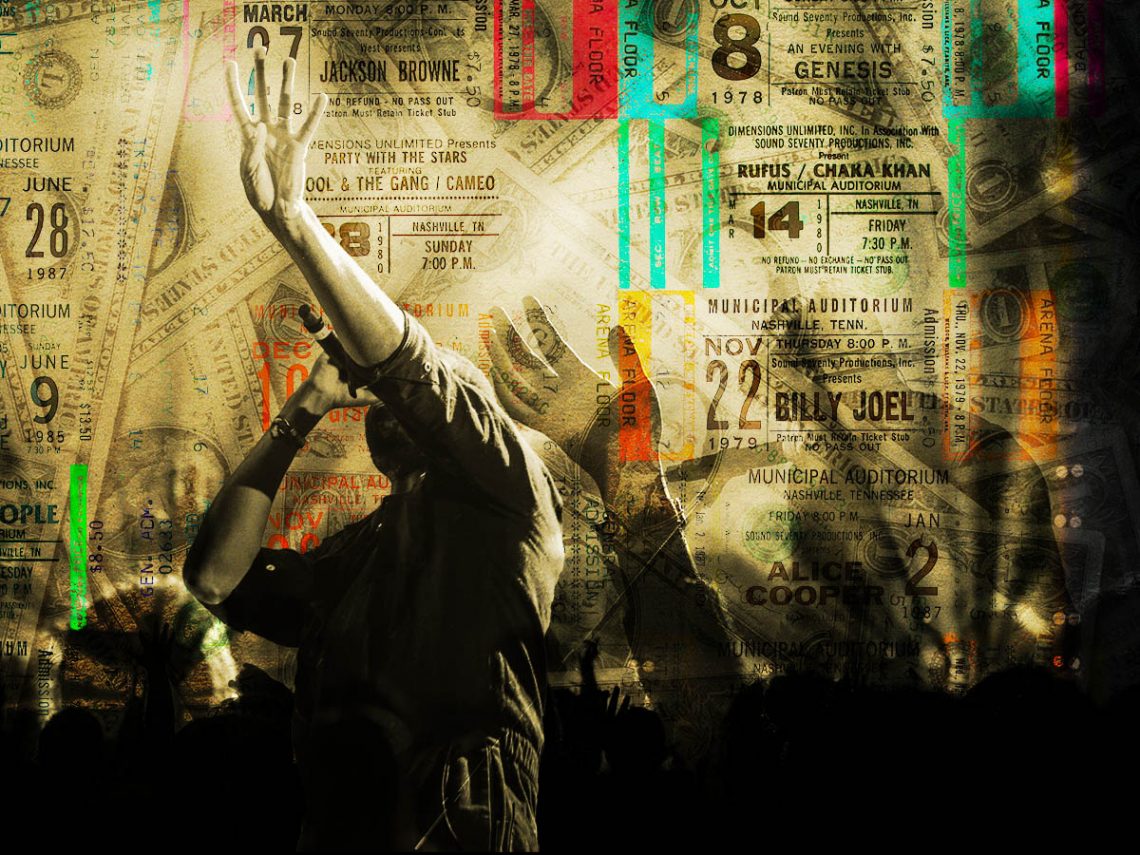
A brief history of chart robbery: The masterpieces that flopped in film and music

The music chart is a big fat liar and it’s a hell of a lot further away from art than a mere ‘ch’. While we are all fairly well aware of the fact that fads and trends can manipulate brief moments in history, and that commercialism is a world away from reverence, sometimes you simply have to look back with bemusement. Firstly, you find yourself aghast at the robbery – the daylight sacrilege – at hand, but moreover, you wonder why you’ve been fed a lie by history for so long.
Take, for instance, the album that is often credited as changing the world: Bob Dylan’s The Freewheelin’ Bob Dylan. It inspired every artist around to take a more spiritual route. It also peaked at a disappointing 22 in the US charts. How do you reconcile those two supposed facts? Why is that Dylan’s outing is dubbed as ground-breaking while Andy Williams’ Days of Wine and Roses, which held the title at the time (and for 16 weeks in total), is all but forgotten in the retrospective history books?
Why is it that ten retrospective years down the line, David Bowie is cast as the artist who apparently bestrode the 1970s like a kaleidoscopic colossus and yet the single that smashed the hinges off of things and thrust him into the spotlight was ‘Space Oddity’—a track that rocketed to a hardly earth-shattering number five in the UK? That masterpiece was kept off the top spot by Thunderclap Newman’s ‘Something in the Air’, which in retrospect is like Muhammad Ali being fended off by a light spring breeze.
Likewise, The Rise and Fall of Ziggy Stardust and the Spiders from Mars reached number five in the UK album charts and a mind-bending 75 over in the US. Both Dylan and Bowie’s albums are in with a solid chance of being crowned the greatest of all time, and once more any open-minded music fan may well agree with that verdict, but that is far from reflected in the numbers they garnered. Bowie only had one album in the 50 best-selling of the ’70s and it was Spiders from Mars which only picked up the pace after the fact lingering down in 42nd place alongside Leo Sayer.
So, is this proof that great art doesn’t always get off the ground too quickly, but gladly it endures? Or are the charts just a mishmash that have never told us anything? They say that history is written by the victors, well, the same can be said when it comes to culture. The course of cultural history requires an angle, some sort of arc that allows us to follow it through neatly. That angle is usually a pack of fat lies and we barely even know it.
So, Bowie and Dylan might have been ahead of their time and escaped the catch-net tropes of commerciality only to slowly gather up a following and usurp the industry censors who want to cajole trends into manufacturable fads. This is why when their stories are written, they are cast as the victors and often the lengthy battles they faced to reach the top are forgotten. So, we might look back at current artistic tripe that proves to be a cash cow and despair, but it has always been the same.
Recently, Martin Scorsese penned an article for Harpers Magazine titled Il Maestro. What was intended as an ode to the great Italian arthouse director Federico ‘Il Maestro’ Fellini quickly departed from the province of eulogy and descended into the plashy depths of a diatribe about streaming services and the multifaceted modern-day threats to the quality of cinema in general. Besides the obvious irony that his movie, The Irishman, was hosted and funded by a $159 million Netflix budget was a second, subtler sort of contradiction.
If Scorsese had glanced at the US box office’s commercial revenue figures in 1963, he wouldn’t even find 8½ in the top 25. In fact, according to IMDb, 8½ grossed only $195,950 worldwide. Whereas the 1963 equivalent of a Marvel sequel, Son of Flubber, the long-awaited follow-up to beleaguered Ned Brainard’s goofball antics in The Absent-Minded Professor, grossed $22,129,412 in the US alone, according to box office archive site The Numbers.
The point is: the fervent nostalgia with which Scorsese beautifully describes the billowing art scene of the 1960s has a hint of Stanley Kubrick’s one-point perspective about it. And we are all prone to this cultural meshuga. Everywhere in the arts, we see history play tricks on us time and time again.
In the UK singles charts, Oasis’ ‘Wonderwall’ and the Pulp masterpiece ‘Common People’ both failed to grasp number one and they were prevented from the centre of the podium by the same artist: Robson & Jerome. Now, if you turn on the radio or walk into a pub, there is a chance that ‘Wonderwall’ or ‘Common People’ will be playing, but you don’t often hear the acting duos versions of ‘I Believe / Up on the Roof’ or ‘Unchained Melody’ very often (okay maybe you hear the latter occasionally).
In literature, Herman Melville, the man who wrote one of the most famous and beloved works of fiction of all time with Moby Dick, died destitute and out of print. It is clear that the rising battle between art and commercialism, one that seems at times to be wrapped around the fickle finger of fate, is nothing new. More often than not, though, the prevalent ratio is decided by public opinion, which has remained unchanged since a cave dweller got sick of carrying rocks, drew a mammoth on the wall, and told everyone that they were now an artist. And the art we love has nothing to do with the fad we fell into.

Never Miss A Tale
The Far Out Bob Dylan Newsletter
All the latest stories about Bob Dylan from the independent voice of culture.
Straight to your inbox.