


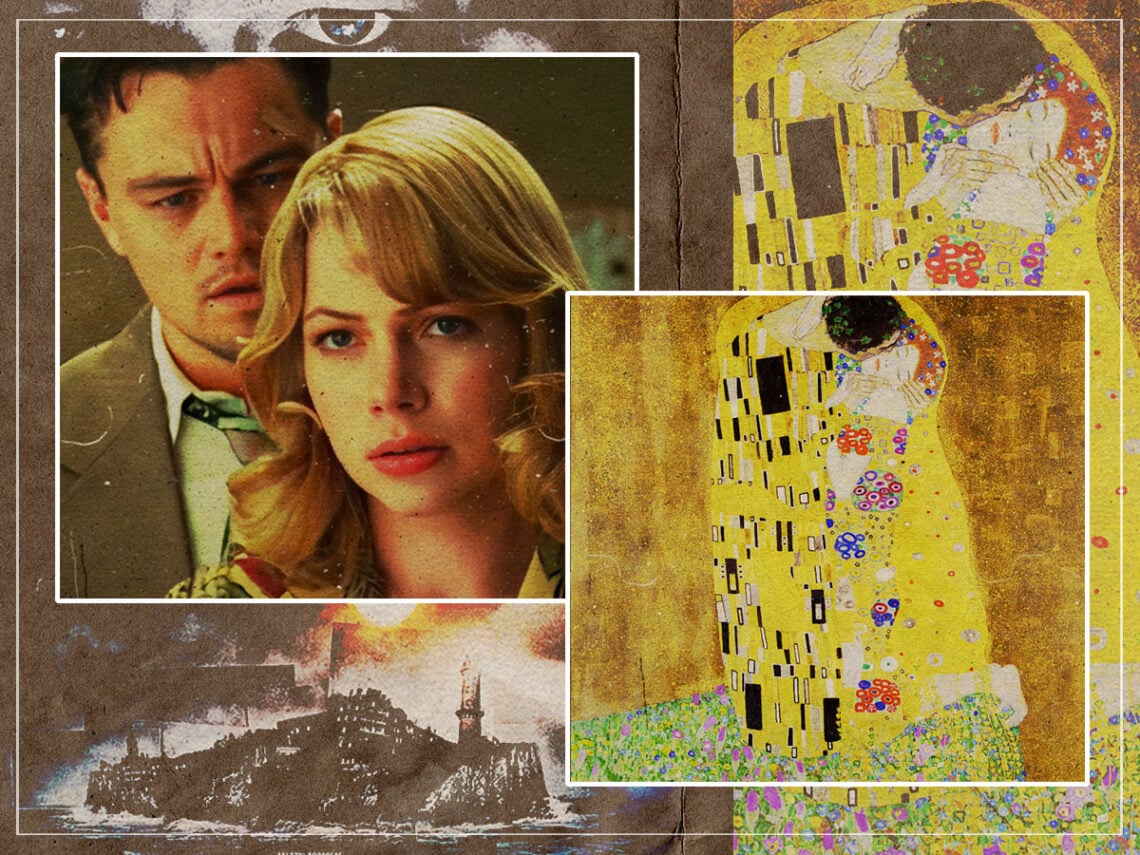
The Martin Scorsese scene inspired by Gustav Klimt

Martin Scorsese is an unrelenting proponent of the arts. From criticising the commercialism of the Marvel Cinematic Universe to setting up The Film Foundation in aid of cinematic preservation and restoration, he’s one of the leading filmmakers looking to protect artistic integrity in film. But Scorsese’s interest in art extends beyond the medium he works within – the director has often taken inspiration from art in the more traditional sense.
Though they often tell sordid stories of crime and masculinity, many of Scorsese’s films contain beautiful frames that could easily be hung in a gallery. From the contrasting city shots of Taxi Driver to the mountainous landscapes in Silence, his cinematography is thoughtful and faithful to the story it depicts.
One of Scorsese’s most gorgeous shots, however, comes in the 2010 psychological thriller Shutter Island. The film follows the story of Teddy Daniels, played by long-term collaborator Leonardo DiCaprio, as he investigates the disappearance of murderer and Ashecliffe Hospital patient Rachel Solando. As Teddy falls further into the case, his sanity is questioned.
By the end of the film, it’s revealed that Teddy is actually a patient at the hospital. After his wife, Dolores, drowned their children, he murdered her. Plagued by guilt, he created a new life for himself as Teddy Daniels. This reveal is preceded by dreams which hint at Teddy’s past, which spawns one of the film’s most beautiful shots.
As Teddy dreams of their burning flat, we see him and Dolores embracing in the centre of the room. She declares, “You have to let me go”, while he laments, “I can’t”. As DiCaprio embraces her, his face pressed into hers from behind, she turns into ash. The shot is seemingly borrowed from a piece of art by Gustav Klimt entitled The Kiss.
An oil-on-canvas painting from Klint’s golden period, it features two people embracing, one kissing the other as he holds her. It’s an overwhelmingly golden image, with small details in blues, greens, and purples. The 1908 painting has been referenced in various other pieces of modern media, including Buffy the Vampire Slayer and This Means War. It’s currently displayed in Vienna’s Österreichische Galerie Belvedere.
Scorsese’s replication of the imagery is similarly golden but contains far more contrast. It’s darker, both in colour and emotion, taking the peace and bliss from the original and turning it into pain. As DiCaprio and Michelle Williams replicate the position from the artwork, their faces look distraught.
This shot isn’t the only time Scorsese has been inspired by a work of art – he previously spoke about the inspiration of Caravaggio to Andrew Graham Dixon on The Culture Show in 2005. The artist has a particular influence on the bar sequences in Mean Streets, and Scorsese suggested that “he would’ve been a great filmmaker, there’s no doubt about it.”
The idea of art pervades Scorsese’s filmmaking. In order to tell stories in the most effective and moving way possible, he looks to the visual storytelling of the past. Through this, he also preserves the presence of art in modern cinema as the landscape becomes increasingly commercial.
