


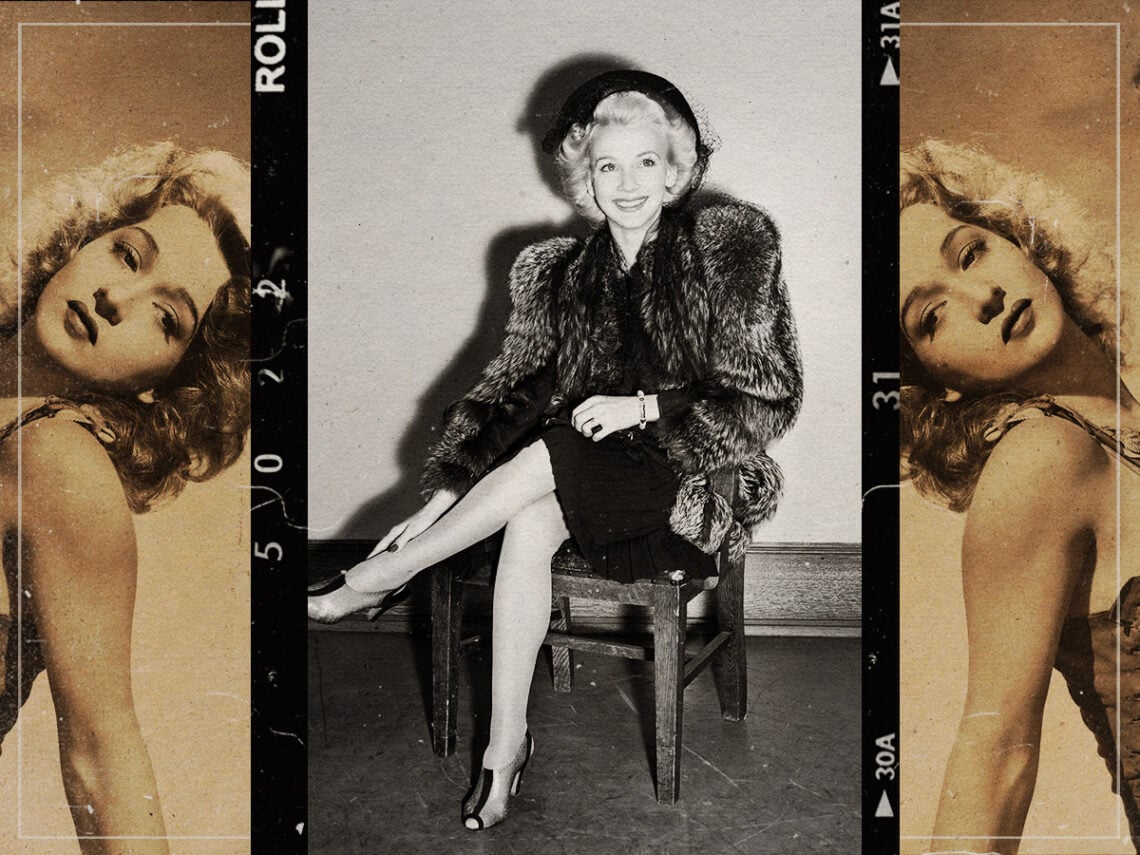
The life and mysterious death of fleeting Hollywood star Carole Landis

During the golden age of Hollywood, countless actors tried their luck in an industry that was still relatively new, with some finding considerably more success than others. For Carole Landis, her star status was relatively short-lived, peaking in the 1940s before passing away at the end of the decade aged 29.
Born in Wisconsin, Landis moved to San Francisco when she was just 15 and became a hula dancer and club singer. Determined to make it in the industry, she cut her teeth in low-paying jobs before relocating to Hollywood, where she secured a small role in 1937’s A Star Is Born. Despite the name of her debut film appearance, it took Landis another few years to reach the star status she had dreamed of. Yet, after she played a cavegirl in One Million B.C. in 1940, she soon became a well-known member of the industry.
From this point, Landis starred in many movies, such as Moon Over Miami, Dance Hall, I Wake Up Screaming, Cadet Girl, The Powers Girl and A Scandal in Paris. She also became a prominent performer in the USO troupe, providing entertainment for American soldiers across the world. Well-respected due to her dedication to the troops, Landis became one of the most well-known Hollywood stars to help contribute to these morale-boosting efforts.
Yet, in 1948, Landis’ body was discovered in her Californian home by Rex Harrison, with whom she was having an affair. He was married to Lilli Palmer, and Landis was frustrated that Harrison would not leave his wife to be with her. Thus, Landis’ death was ruled a suicide, with officials believing that she killed herself out of despair due to Harrison’s lack of commitment.
However, Landis’ family think otherwise, using her official website to suggest that Harrison was responsible for Landis’ death. An article written by Landis’ great-niece, Tammy Powell, asserts, “I want you to know that my family has NEVER believed that it was a suicide. We are 100% convinced that Rex Harrison is to blame for her death.”
Harrison was a Tony and Academy Award-winning actor who appeared in films such as Blithe Spirit, My Fair Lady, Cleopatra and Doctor Doolittle. Landis’ family refuse to believe that the actor’s relationship with Harrison caused her to commit suicide, stating that during the weeks leading up to her death, she claimed to be very happy and made future plans for events and celebrations.
Powell writes: “My grandmother Dorothy begged the police to investigate more, but they refused. Desperate to find answers she hired a private detective. All he could tell her was that people were paid off and evidence was destroyed.” Upon discovering Landis on the bathroom floor, it took Harrison several hours to call the police, leading many people to theorise that something more sinister was at play.
“Maybe Rex put secanol in Carole’s food or drink without her knowing,” suggests Powell. “Another possibility is that Carole did threaten to kill herself as a dramatic gesture…something she had done in the past to get attention. She took the pills then called Rex to save her. He found her and instead of calling a doctor, he just let her die.”
Powell also discusses the fact upon arriving at Landis’ house, the family found photo albums, diary entries and notes missing, and a few years later, her police file was mysteriously lost. Harrison asserted that their relationship was merely platonic despite it being a well-known open secret within the industry. Whether or not Harrison was responsible for Landis’ death remains a mystery, and we will perhaps never know if the actor’s death was self-inflicted or otherwise. One thing is for certain – Landis’ family want justice. Powell writes, “Carole didn’t want to be remembered as a pathetic woman who died on the bathroom floor…she deserves better.”
