


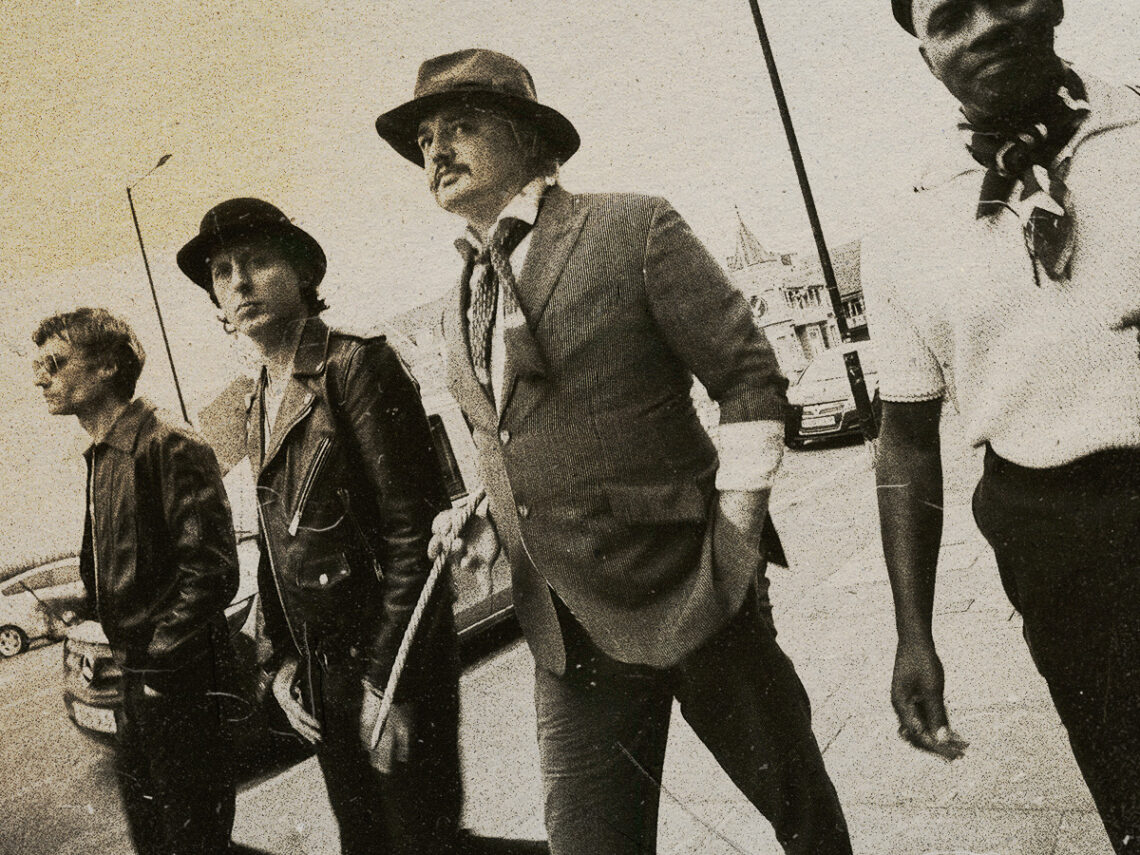
The day The Libertines recorded in the presence of a snake pit: “If snake bites you, you die”

Banned substances and backstabbing bastards are all part of the lore when it comes to The Libertines. But their most dangerous encounter may well have been reptilian.
The former perils had already taken their toll on the beleaguered band by the time 2014 swung around. By that point, the indie group hadn’t released a new album for a decade, and there was more water under bridges than the bloody city of Hamburg. Pete Townshend sat holed up in the Hope Rehab Clinic in Thailand.
Dispatches were reaching his old buddies that rehab in the tropics wasn’t so bad. So, that November, his old buddy Carl Barât flew out to see him. Their bond proved to be firmly intact, and without really thinking, they had written five new songs together. It quickly became apparent that a new album was calling.
That new album would turn out to be 2015’s Anthems for Doomed Youth, their first for 11 years at that point. But getting the bastard thing to tape would not be easy. Things were uncharacteristically harmonious among the group, so the trademark foe in the midst seemed missing. Soon enough, one would come slithering into view.
They assembled for a five-week stint at Karma Sound Studios, a half-hour drive from roaring Pattaya City, a metropolis singularly built around ‘partying’, which may well have factored heavily into their thinking. They were flush with a new recording deal from EMI in their pocket, probably alongside a deck of potent Thai cigarettes.

They soon came to realise that nowhere and nothing is perfect, though. As they settled down to begin work on their comeback, they got talking to a local. His account of their whereabouts was far from comforting to Barât.
“The studio was built on an old snake pit,” he told NME.
This fact may well have lent an edge to the album because it certainly unnerved the shaken frontman. But the local wasn’t about to spare him all the details. “The snake god Nāga had a shrine. You could still find snakes there.”
They were spotted in the grounds, and a panicked Barât recalled, “I said to the guy there: ‘Do you have anti-venom for the snakes?’ He said: ‘Anti-venom?’ I said: ‘Yeah, anti-venom for snake bites.’ He said: ‘No, if snake bites you, you die.’ I thought: ‘Ok, what about going to hospital?’ He said: ‘No! You die!’ It scared the life out of me. They’re called pit vipers. Nasty buggers.”
He wasn’t joking either. A pit viper bite is one of the most unpleasant things that can happen to a person outside of Wigan. Symptoms include a sense of dread, internal bleeding, a bulbous swelling of the lymph nodes, a numbness of the tongue and scalp, a metallic taste, and, naturally, shock.
Unfortunately, not one of the symptoms relates to being conducive to making good indie music. Fortunately, only about one third of the bites prove venomous, but the breif wait while you discover whether you got lucky can’t be overly pleasant. Thankfully, the Libertines returned unscathed with a record that might not have quite usurped what had come before, but it certainly served to embolden their legacy as a vital addition to modern youth culture.
