


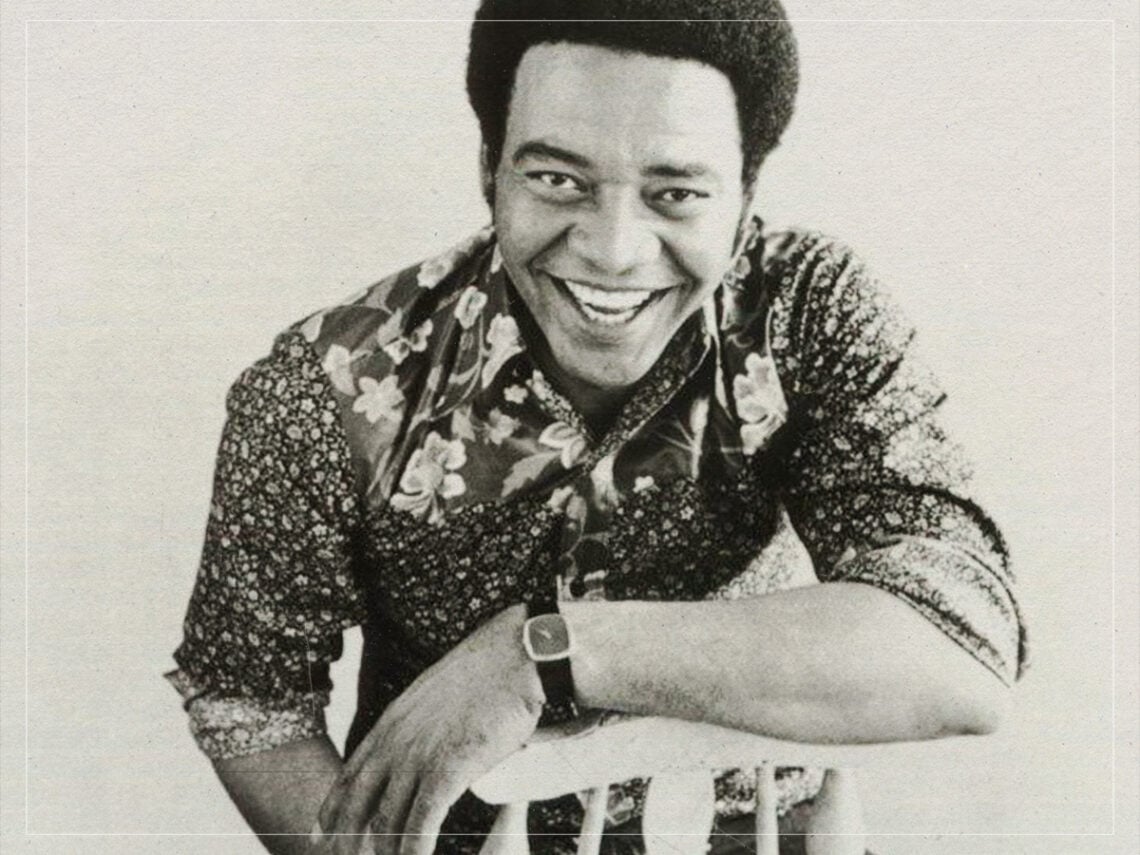
The legendary Bill Withers lyric that was never meant to be heard

While the world of soul music has produced many extraordinary male voices over the years, one performer who finds himself frequently overlooked in the conversation for the all-time greats is Bill Withers.
Yes, the likes of Otis Redding and Marvin Gaye are perhaps a cut above Withers, but that shouldn’t mean he’s so easily dismissed, and while the aforementioned duo are rightly regarded as being two of the greatest icons not just within their genre but on a wider scale, Withers doesn’t seem to hold the same degree of recognition.
It’s evident from some of his best-known performances that he had an incredible vocal range on him, which enabled him to hit both high and low notes with an extraordinary amount of precision. This is usually what helps elevate an artist to the upper echelons, but for some reason, it’s only a handful of records from the West Virginia native that tend to reach a higher amount of acclaim.
Not only could he hit these notes at polar opposite ends of his range, but he could sustain them as well. Given how he holds the record for the longest note ever held naturally in a top 40 single in the US for his 32-count sustain of a single continuous note in the outro of ‘Lovely Day’, which was beaten only by Morten Harket of A-ha in the UK, there ought to be no hiding from the fact that Withers was a formidable vocalist.
However, vocal ability doesn’t necessarily always translate into songwriting ability, and while he was pretty damn good in this regard as well, there were moments in his career where he found it hard to come up with the right set of lyrics for his songs.
Even the greats encounter moments of writer’s block from time to time, and when frequently under pressure to finish records as was so often the case in the 1970s, you’ll often have to lean into cliches and settle for placeholder lines that don’t seem to feel as though they fit.
Despite this, ‘Ain’t No Sunshine’ features a perfect example of him finding this issue, and yet his throwaway adlibs ended up being the element that made the song so memorable, even though they were supposed to be replaced later on in the recording sessions.
His 1971 hit contains a bridge section where a large portion of the instrumentation comes to a halt, and Withers is left repeating the phrase, “I know”, a total of 26 times. Withers himself later acknowledged that this was never supposed to make the final cut of the song, and that he had always intended to replace this repetitive segment with something more meaningful, but his peers ended up convincing him to keep this intact after hearing it, claiming that it added an unexpected layer of feeling and tension as they waited for him to erupt back into the verse.
Given how it ended up landing Withers his first top ten hit on the Billboard chart, placing at number three, it’s fair to say that, despite it having been unintentional, Withers had created something masterful without even trying. Not only do his repeated lines fit the song perfectly, but his vocal performance on the track is sumptuous, and does just as much to prove how he was a flawless talent who ought to be celebrated for every facet of his artistry.
