


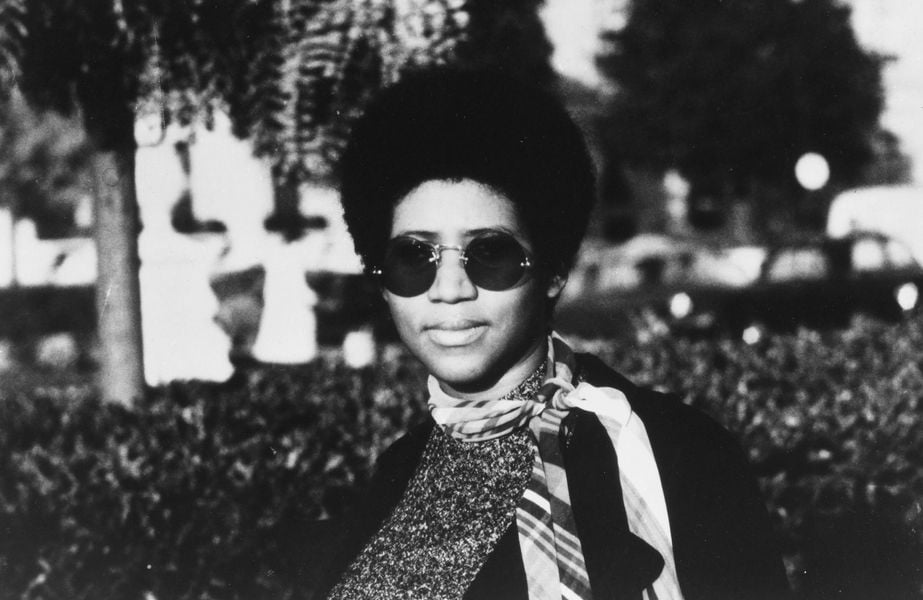
Respect: The enduring legacy of Aretha Franklin

Today, on August 16th, marks the third anniversary of the death of one of history’s most iconic women, Aretha Franklin. Dubbed ‘The Queen of Soul’, she had one of the most distinguished voices in all of music, lending her powerful set of lungs to some of soul’s most enduring hits. These include, ‘I Never Love a Man (The Way I Love You)’, ‘Respect’, ‘(You Make Me Feel Like) A Natural Woman’, ‘Think’ and ‘I Say a Little Prayer’, to name just a few.
In a testament to her skill, Franklin has sold over 75 million records worldwide and remains a household name. In fact, her funeral in her hometown of Detroit was attended by a string of some of the most prominent members of American society. She was so beloved by her immediate and national community that thousands of people flocked to the ceremony. Such was her status that her coffin was made out of gold.
It may have pipped your interest that so many people from across society would be touched by her passing. Whilst a lot of this can be attributed to her undeniable musical talent, there existed another reason why Aretha Franklin’s death touched so many. She was a defender of all thing’s righteousness. She was an activist to the very core.
Before we dive in, we have to get a sense of the woman – starting with her birth. In fact, Franklin wasn’t born into poverty as many soul singers were, but the opposite. Born to parents Barbara and Clarence, her father was a famous Baptist minister who travelled the country giving emotive sermons. He made thousands from his endeavours and was widely hailed as the man with the “million-dollar voice”. Aretha’s parents would split when she was six, owing to Clarence’s infidelities. Tragically, Barbara passed away from a heart attack only weeks before her 10th birthday. After the cataclysmic event, she would primarily be taken care of by the other women in her family, namely her Grandmother, and this would also be significant in informing her opinions.
Looking back, it is almost as if the young Aretha was destined for stardom. From an early age, she was surrounded by some of the most prominent African-Americans of the day. Clarence’s sermons attracted the popular gospel musicians of the time in Clara Ward, James Cleveland and Inez Andrews. In fact, Ward even became a lover of Clarence’s from around 1949 up until his death in 1973. She served as a strong role model to the young Aretha; however, Aretha “preferred to view them strictly as friends”. Even more astoundingly, among Clarence’s friends were Martin Luther King, Jackie Wilson and Sam Cooke. Their influence would have a life-changing impact on Aretha Franklin’s future.
Despite all of the stardom surrounding her formative years, it was actually her father’s status that opened the doors of possibility to her musical career. At the early age of 12, she began touring with her father, who acted as her agent. He was instrumental in securing her first recording deal with J.V.B. Records in 1956. According to the iconic producer, Quincy Jones, Dinah Washington, “the most popular black female recording artist of the 1950s”, told him that the young Aretha was the “next one”.
Of course, Washington was spot on. This initial success provided a firm footing for Aretha’s development. Soon after she turned 18, she revealed to her father that she wanted to follow in the footsteps of Sam Cooke, and make pop music. Clarence agreed with his daughter, so they moved to New York. There he helped her produce a two-track demo that caught the attention of Columbia Records. Before too long in 1960, they signed her as a meagre “five-per cent artist”.
This was to be the true start of her long and decorated career. The success of which would lend her voice a highly-respected angle amidst the socio-political turmoil of the day. Capturing the essence of the vocalist at her funeral, Rev. Al Sharpton remembered: “Aretha never took orders from nobody but God. She stood for something, she never shamed us, she never disgraced us… she represented the best in our community, and she fought for our community until the end.”

Aretha Franklin stood for many things, and this has not been forgotten. It wasn’t just her father’s musical connections that stood her in good stead, as we teased this point earlier on. Given that her father was such an integral part of the African-American community, right from birth, she was thrust into the civil and women’s rights movements.
Being an African-American woman during this period was to be given the worst lot in life, a time in which white men and the deeply racist Jim Crow laws were the de jure and de facto rulers of the day. Franklin became a defiant figure in the struggle against them. Having found true stardom by the mid-1960s, she leant whatever she could to help the cause. She performed at protests and even covered the payroll of civil rights activists from time to time. Famously, she told Elle that her recording contract included a clause that stipulated that she would never perform to a segregated audience. A pioneering step when you note that the era for African-Americans was characterised by combatting segregation.
The most defining point of her career, however, arrived in 1967 when she released ‘Respect’. The song became an anthem for the civil rights and feminist movements, a legacy that still endures today. In her 1999 autobiography, Aretha remembered how the song captured the essence of the era: “It (reflected) the need of a nation, the need of the average man and woman in the street, the businessman, the mother, the fireman, the teacher—everyone wanted respect.” She characterised the song as “one of the battle cries of the civil rights movement,” she said, before adding: “The song took on monumental significance.”
Substantiating her stance and support for strong African-American women, Franklin weighed in on the arrest of popular activist and philosopher Angela Davis in 1970, stating: “Angela Davis must go free … Black people will be free. I’ve been locked up (for disturbing the peace in Detroit) and I know you got to disturb the peace when you can’t get no peace. Jail is hell to be in. I’m going to see her free if there is any justice in our courts, not because I believe in communism, but because she’s a Black woman and she wants freedom for Black people.” She didn’t stop there and, in her next move, Franklin would end up funding the bail for Davis.
The singer didn’t limit her activism to solely African-American/feminist issues, however. Throughout her life, albeit less explicitly, she was a supporter of a vast array of movements that supported the plight of the Native American’s and other indigenous peoples worldwide. A leading light in bringing the attention to the downtrodden, Franklin would continue with this attitude right up until her death in 2018. Her final act came in 2017 when she, along with other American icons, declined to perform at the inauguration of then-President Donald Trump. The Queen of Soul abhorred his politics and remarked that “no amount of money” could persuade her to take the stage.
Shifting from one President to another, in 2015, then-incumbent Barack Obama wrote of Franklin: “Nobody embodies more fully the connection between the African-American spiritual, the blues, R. & B., rock and roll—the way that hardship and sorrow were transformed into something full of beauty and vitality and hope. American history wells up when Aretha sings.”
He tactfully captured her importance, adding: “That’s why, when she sits down at a piano and sings ‘A Natural Woman,’ she can move me to tears—the same way that Ray Charles’s version of ‘America the Beautiful’ will always be in my view the most patriotic piece of music ever performed—because it captures the fullness of the American experience, the view from the bottom as well as the top, the good and the bad, and the possibility of synthesis, reconciliation, transcendence.”
We couldn’t have said it better ourselves. Aretha Franklin‘s legacy will continue to endure, as in life and music she captured the most important elements of American society. Not afraid of discussion and protest, she helped to drag America out of the past and into the future. For this, she will never be forgotten.
Listen to the defiant ‘Respect’, below.
