


The Last Dinner Party song the world will still be listening to in 100 years

It’s not even been 100 years since the very first song by The Beatles. That’s just how long a century is in musical terms. To last in the memory of fans for longer than their own existence is no easy feat, but ultimately, that is the power of music: to extend beyond a lifetime and exist forever.
Now, contrary to what many critics may tell you, there is plenty of contemporary music with the power to make a century’s worth of impact. Streaming may have made the landscape relatively bleak, and musicians may be under more pressure than ever to make a genuine living, but isn’t that where music thrives? Under the pressure of systematic oppression.
So on the surface, it might not seem as though we are living in a golden age of music, but if you dig a little deeper, you’ll be rewarded with musical gold in droves. And one such band proving that point right is The Last Dinner Party.
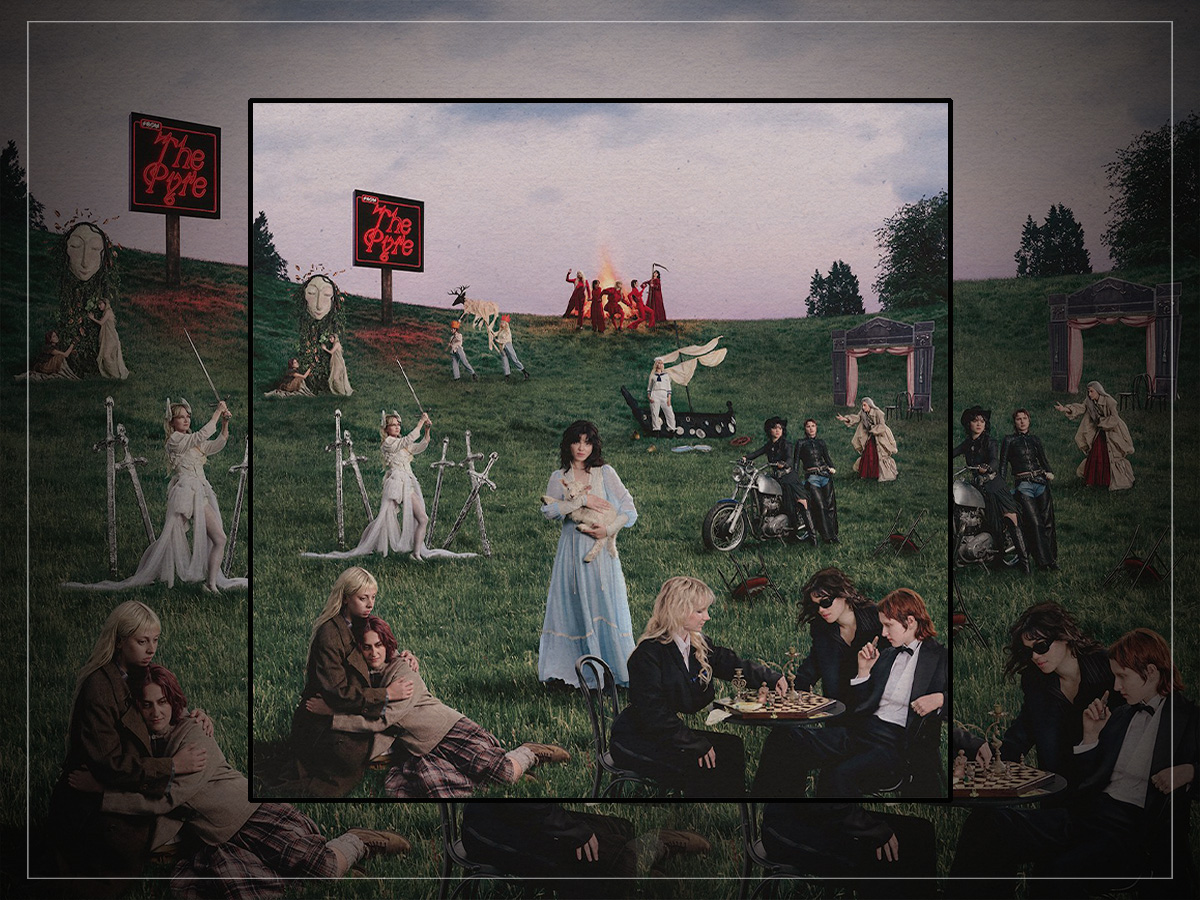
Their most recent album, From The Pyre, just went to prove how unique their current musical voice is, operating in their own lane of creative freedom that takes tinges from the greats to paint a wider, distinctive picture. As a collective, they’re completely symbiotic and contribute to a wider sound that can fluctuate from punk to ballad with seamless ease. But moreover, each member of the band is completely compelling.
Lizzie Mayland, Georgia Davies and Aurora Nishevci provide more than just a solid backdrop for the melodies to soar above. They are soulful multi-instrumentalists who have a canny knack of bringing esoteric ideas to life. Emily Roberts is a guitar-playing powerhouse who crunches every song into the caustic planet of rock. A world custom-made for Abigail Morris, who, with every dramatic utterance of a syllable, is proving to be one of the most captivating vocalists in world music.
All of that praise would have easily fit a description of their debut album and specifically lead single ‘Nothing Matters’, which in no time became a timeless anthem. But as great bands always do, they followed it up with an album that once again struck like a lightning rod through the industry. ‘This Is The Killer Speaking’ and ‘Count The Ways’ were two triumphant lead singles for an album that followed suit, but there was one song in particular that immediately marked itself out as an all-time classic.
‘The Scythe’ was a heavy-hitting ballad, packed with a level of sonic and lyrical nuance that allowed it to avoid reductive descriptions of heartfelt. As much as the John Lewis brigade would be keen to adopt it as one of their own, ‘The Scythe’ was something more entirely. Morris’ voice guides us through the tumultuous landscape of the break-up story like an emotional aware tour guide, using her voice to ride the long draws of the string section with caution that lets us immediately know, it’s all going to be okay.
While rudimentary on paper, the lyrics “Don’t cry, we’re bound together / Each life runs its course” feel inherently profound when delivered through Morris’s timbre and provide a small sense of hope in this otherwise despondent world. It’s the sort of lyric that, no matter how bleak times get in the next century, which I hate to say they inevitably will do, a warm light at the end of the tunnel will remain visible.
Morris and the tender backdrop created by the band would be enough as it is. But, honestly, how could The Last Dinner Party write an anthem as timeless as this and prevent Roberts from getting in on the act? As expected, she marks the conclusion of the track with a solo that cascades us down the ladder of sentiment and proves that, whatever the era, she is a guitar player well worthy of a seat at the table of all-time greats.
This is a band who have taken all the puzzle pieces of music gone by, and fit them together in a bid to create something desperately needed for now. They’ve achieved that and become a band of our time. But in doing so, they will remain in the musical ecosystem for at least another century.
