


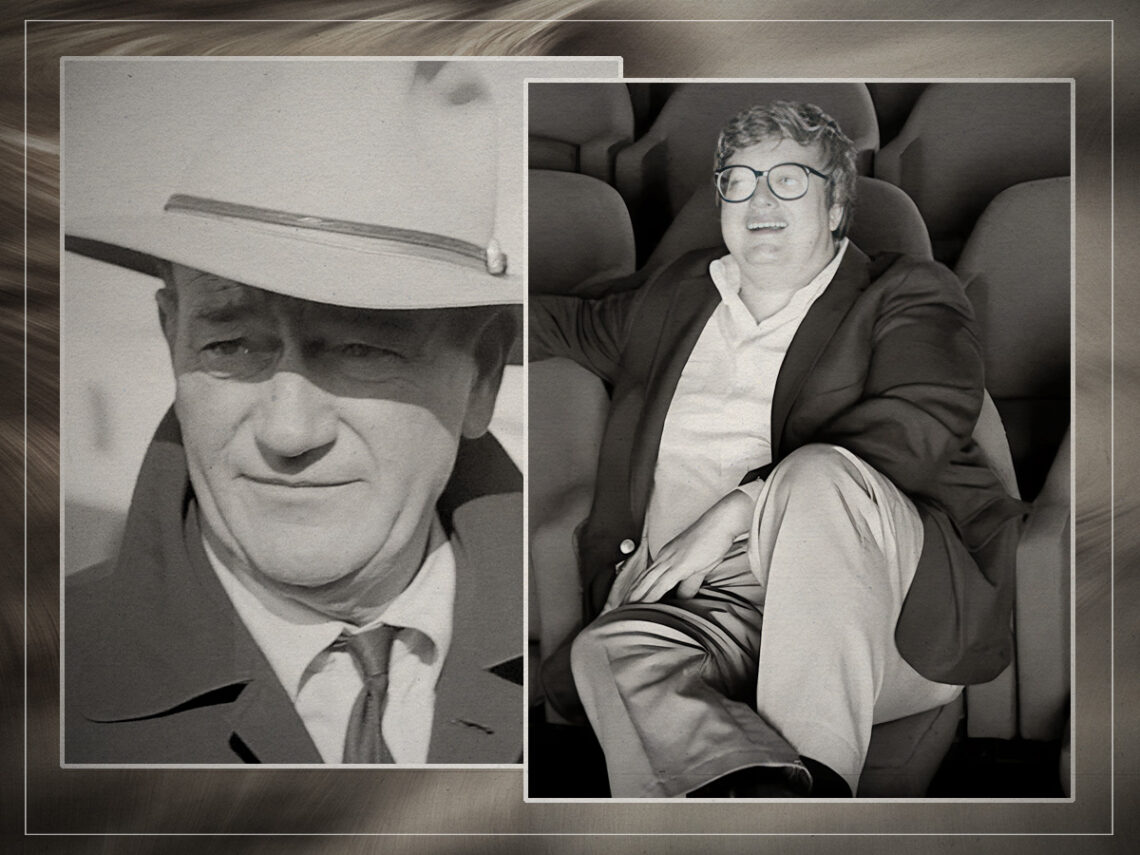
The John Wayne movie Roger Ebert hated with a passion: “Cruel and dishonest and unworthy”

Legendary film critic Roger Ebert had many strong opinions throughout his more than four-decade career. One of the reasons readers loved and trusted him so much was that he never bothered with diplomacy or self-important aloofness – when he loved a movie, you knew it, and when he didn’t, well, hopefully, no one involved in the project saw his review.
Over the years, he tore into many a cinematic faux pas, eviscerating everything from Happy Madison to the blockbuster smash Armageddon. Ebert was a diehard cinema enthusiast, but he wasn’t a snob. Sure, he adored Citizen Kane, 2001: A Space Odyssey, and Raging Bull, but he was also a huge fan of several films that most other critics dismissed as celluloid rubbish. We fawned over the nearly universally reviled JLo, Ice Cube action movie Anaconda, for example, and he even found some way to be won over by Home Alone 3.
Even early in his career, Ebert wasn’t afraid to vocalise his opinions, no matter how powerful the target was. That was particularly true when he went after a John Wayne movie in 1968, ripping apart one of the most beloved actors of all time for being morally reprehensible.
The movie was The Green Berets, which stars Wayne as an American colonel who recruits two elite groups of soldiers for a mission during the Vietnam War. Known for being staunchly pro-war and anti-communist, the film was released at the height of the US’s controversial involvement in the conflict and clashed with the pervading view that America had no business fighting and committing atrocities there.
Ebert was among its harshest critics. “The Green Berets simply will not do as a film about the war in Vietnam,” he wrote in his review. “It is offensive not only to those who oppose American policy but even to those who support it.”
He went on to explain that the film was reminiscent of a simplistic western about cowboys and Indians and criticised it for removing all political complexity in favour of clichéd, anonymous war sequences that could have portrayed any conflict.
“If I were a soldier in Vietnam, I would not want to be represented by The Green Berets,” Ebert said, concluding, “I would prefer a more realistic film, in which I was seen not as a hero but as an individual human being trying to act ethically in a difficult position.”
Wayne had worked hard to get the film made, even going as far as producing and co-directing it. The story perfectly aligned with his pro-war values. At a time when many celebrities were protesting the war in Vietnam, Wayne was singing its praises and visiting South Vietnam to pay tribute to the American soldiers there. For him, there was no political complexity.
Lest you assume that Ebert was simply of a different generation to the Duke and predisposed to dislike anything the Old Hollywood icon brought to the screen, it’s worth noting that the critic was, overall, a huge fan. He loved Red River, El Dorado, and the actor’s final film, The Shootist. He was even a defender of the atrocious 1969 film True Grit, giving it a mind-blowing four out of four stars. When it came to the overt propaganda of The Green Berets, however, Ebert drew the line.

Never Miss A Tale
The Far Out John Wayne Newsletter
All the latest stories about John Wayne from the independent voice of culture.
Straight to your inbox.