


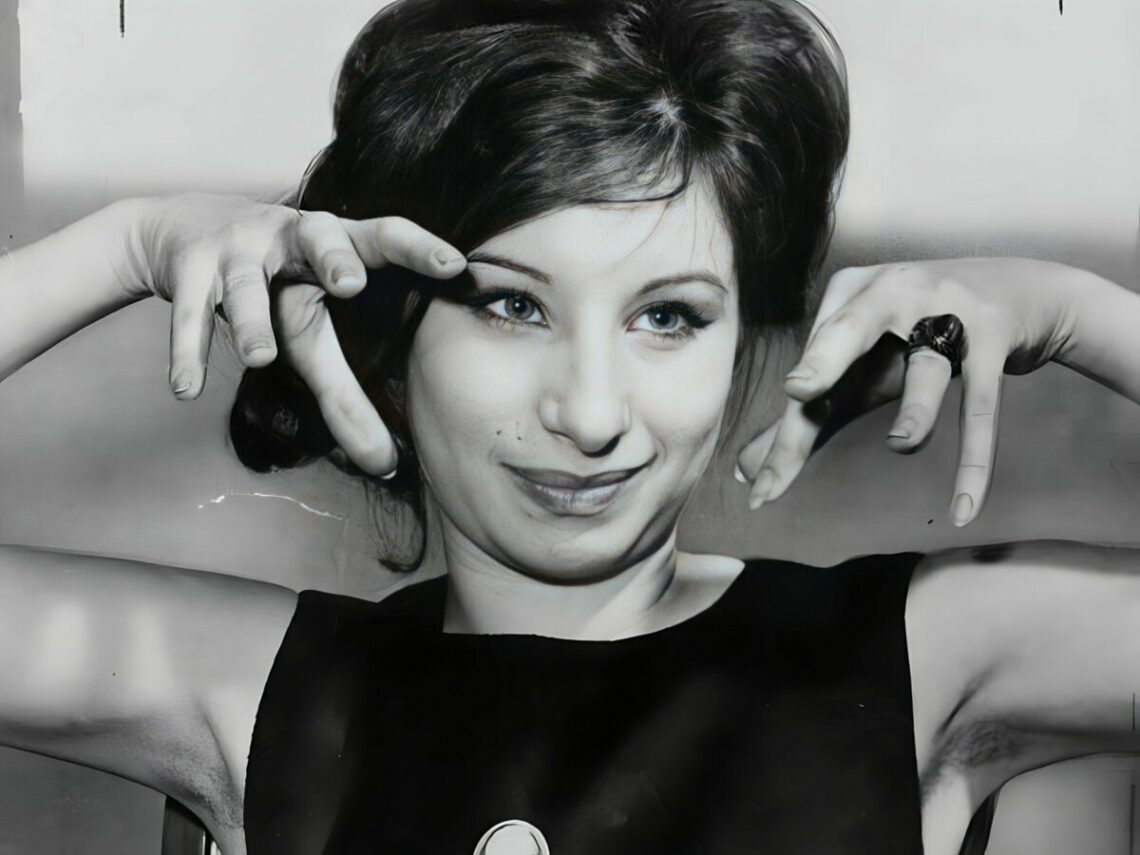
The 1970 John Lennon song Barbra Streisand turned into a hit: “It’s directly linked to family”

There’s very little uncertainty when acknowledging John Lennon‘s impact on the music industry. Not only was he a pivotal founding member of The Beatles, but his influence on infusing his own persona into pop and rock music should never be underestimated.
On his 1970 album John Lennon/Plastic Ono Band, the track ‘Mother’ stands as one of Lennon’s more emotionally charged and introspective songs. The lyrics touch upon the themes of Lennon’s troubled childhood, including the absence of his parents during his upbringing. Beginning with the heartbreaking lines, “Mother, you had me, but I never had you. I wanted you, but you didn’t want me,” Lennon conveys the sense of abandonment and emotional distance that he felt from his parents.
In Lennon on Lennon: Conversations With John Lennon, the artist explained his connection with pain and how it comes through in his songwriting: “It’s directly linked to family. I mean, your family is what moulds you,” he said, making clear reference to his father’s desertion and the tragic loss of his mother at a very young age.
Tapping in further, ‘Mother’ is characterised by its sparse arrangement, with Lennon’s vocals accompanied only by a sombre piano melody and occasional bursts of raw emotion. The instrumentation’s simplicity highlights the intensity of Lennon’s lyrics and vocals, creating a powerful and affecting listening experience.
When Plastic Ono Band arrived in 1970, songs this emotionally exposed were still relatively uncommon in mainstream rock music. The direct nature of his work has since become commonplace, but at the time it felt startlingly raw, particularly coming from a musician who had spent most of the previous decade at the centre of the biggest pop phenomenon Britain had ever produced.
Although the song appears deeply personal, Lennon clarified that anyone who’s been through family troubles could relate to its lyrics. When asked whether he referred to his family in particular, he said: “The extraordinary thing is my father and mother split – I never saw my father till I was like 20 – so I’m an extreme case. But Yoko had her parents there, but she never had ’em”.
“The lyrics of ‘Mother,’ which said, ‘You had me, and I never had you,’ applies to people with parents too.”
John Lennon
Due to its inherently personal roots, it may seem as though ‘Mother’ would be impossible or insensitive for any other artists to attempt to cover. However, within the rich tapestry of Barbra Streisand’s album Barbra Joan Streisand, featuring an array of songs crafted by renowned songwriters like Carole King, Alan Bergman, Marilyn Bergman, and Burt Bacharach, her reimagining of the hit Lennon ballad remains a standout.
That is arguably what makes Streisand’s interpretation so intriguing. Rather than trying to imitate Lennon’s anguish, she approached the material from a different emotional angle, allowing the song to function less as a personal confession and more as a universal meditation on absence and longing.
Her rendition of ‘Mother’ deeply resonated with fans of both artists, propelling it to claim the 79th position on the Billboard Hot 100 chart. As the album itself soared to an impressive number 11 on the Billboard 200 chart, Streisand’s rendition showcased its lasting ability to captivate hearts. Streisand captured Lennon’s poignancy various times, including her cover of Lennon’s ‘Imagine’, especially after combining it with Louis Armstrong’s ‘What A Wonderful World’.
“I wove the lyrics of ‘Imagine’ with Louis Armstrong’s ‘What A Wonderful World,'” she explained, “To convey the idea that if we could only arrive at a place where peace and tolerance and generosity ruled the day, just imagine what a wonderful world it would be!”
Within the world of music, the echoes of creativity resonate, transcending the boundaries of time and genre. Streisand’s powerful rendition of ‘Mother’ serves as a testament to the boundless possibilities of musical reinterpretation: while Streisand’s version carries her distinctive vocal signature, the song’s roots remain intertwined with the poignant narratives of familial sorrow, connection, and recovery — narratives that reflect the very essence of Lennon’s heart.
In this seamless blend of artistic expression, Streisand’s version becomes a powerful strand in its own right. Dylan’s original may have been personal, but Streisand made it her own.
