


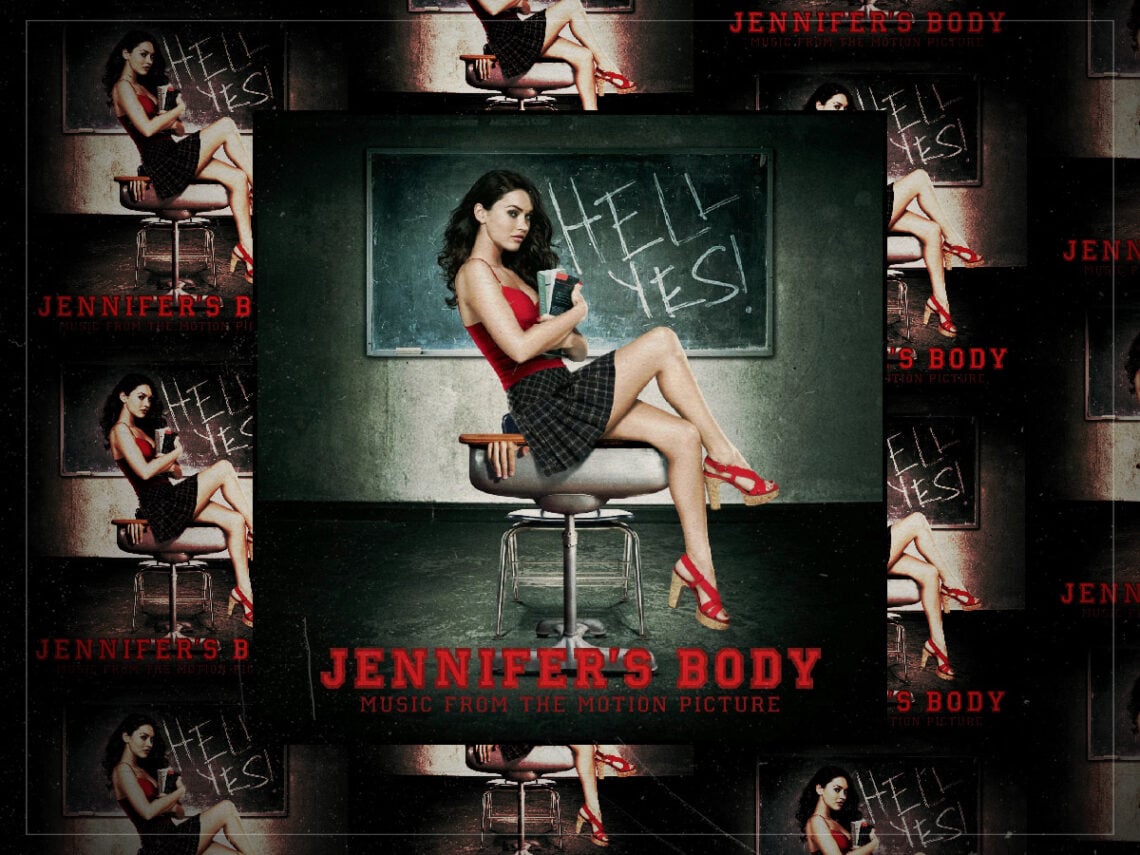
The ‘Jennifer’s Body’ soundtrack is an indie rock vault

In the title sequence for Karyn Kusama’s 2009 campy horror masterpiece, Jennifer’s Body, we get a glimpse into Jennifer Check’s bedroom, with her pink-hued walls and lampshades contrasted by a collage of band posters above her bedframe, seemingly torn out of teen magazines.
Familiar faces, including Fall Out Boy, Escape the Fate and Gallows, stare back from her wall, as nods to the pervasiveness of indie rock in the millennium that makes up the film’s soundtrack.
There are endless facets of Jennifer’s Body that continually make the film fascinating: of course, the overarching storyline is a depiction of female violence and the demonisation of young women. Then, there is the obvious undercurrent of queer desire, making the film a cult classic among the queer community while being simultaneously panned and grossly misunderstood by general audiences, which only adds to its extended cult following.
Unfairly marketed as a raunchy comedy intended for teenage boys, the film is for a feminist audience, where Jennifer, played by Megan Fox, becomes an icon of reclamation and revenge, inflicting violence after becoming a target of it firsthand, subverting the objectification she was a lifelong victim of. Being a black comedy, the film’s humour is not for everyone, but resonates with those familiar with writer Diablo Cody’s scathing commentary on popular culture. Stylistically, it perfectly encapsulates the era’s culture, told through the fashion that is still replicated for Halloween costumes to this day and the Myspace-era pop-punk, indie rock and alternative that make up its soundtrack.
In the film, the indie rock band Low Shoulder personifies the Devil, wandering into the small, aptly named town of Devil’s Kettle, their leader, Nikolai, played by Adam Brody, fashions himself (hilariously) as an Adam Levine wannabe. The band looks like the poster children of the time’s emo rockers: smudged eyeliner, all-black outfits and facial piercings, and their song for the film, ‘Through The Trees’, becomes an unofficial anthem that haunts the plot.
As we come to find out, Low Shoulder is the evil incarnate, plotting to and successfully killing Jennifer in a sacrifice to the Devil, in exchange for fame, and while their ritual works, Jennifer survives and proceeds on a vengeful rampage, killing every boy in her wake. When she reveals what actually happened to her to her best friend, Amanda Seyfried’s Needy, she describes Low Shoulder as “agents of Satan with really awesome haircuts”.
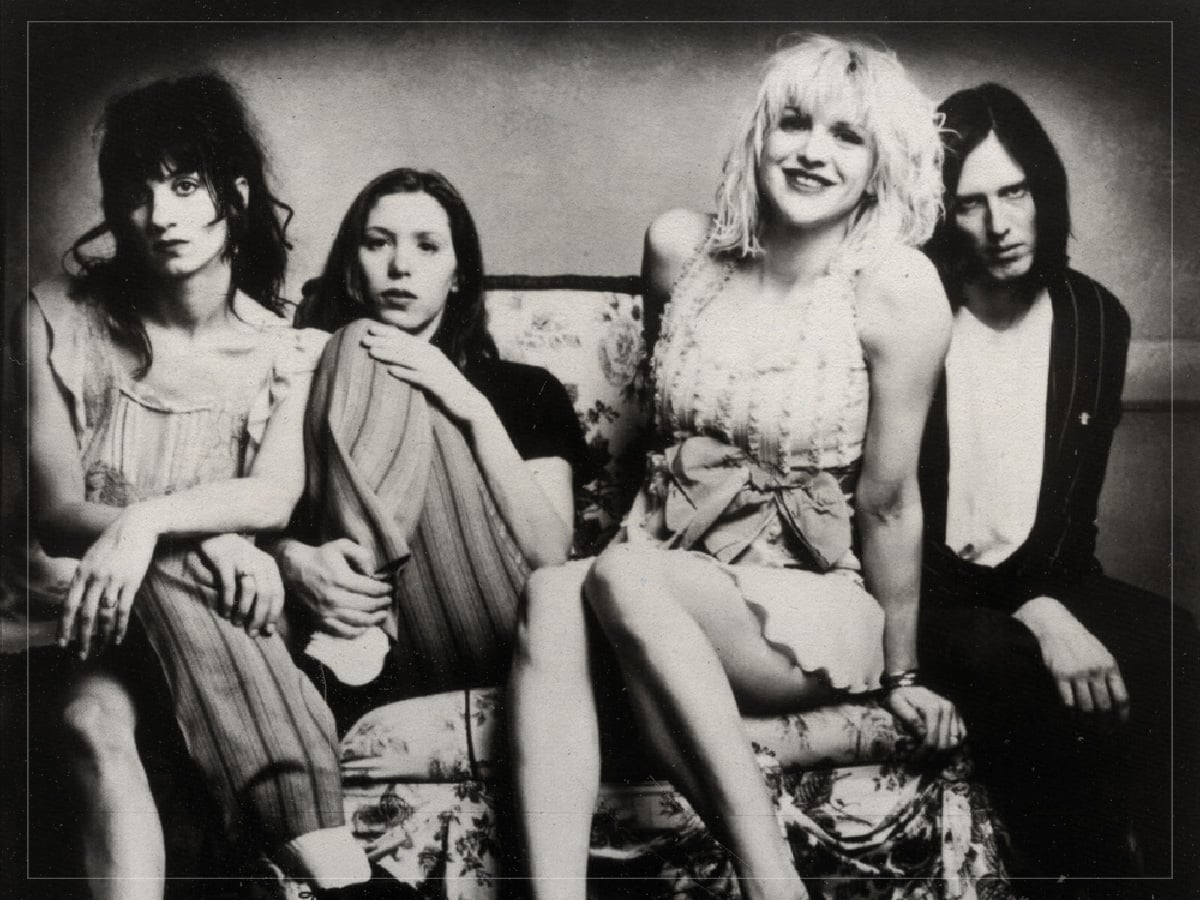
The brilliance of Jennifer’s Body’s plot cannot be understated, but one of the film’s driving forces is its music. For one, the film is named after the Hole song, which itself is a poignant reverberation of violence against women that finds relief in the film’s plot. While not included on the official soundtrack, another song from their 1994 album Live Through This, ‘Violet’, plays during the end credits.
It’s worth noting that the soundtrack was released by Fueled by Ramen, the legendary alternative label that housed some of the time’s biggest names, from Jimmy Eat World, Paramore, Fall Out Boy, to Dashboard Confessional and many more, hence it was only fitting that Jennifer, despite her conventional ‘popular girl’ image, and her music taste aligned for an accurate reflection of the time, rooted in an appreciation for the era’s last gasp of rock music, spanning doom metal, shoegaze, indie, emo and alternative.
Supervised by Randall Poster, various musicians were asked to contribute original songs for the film. Brendon Urie, in the aftermath of guitarist Ryan Ross and bassist Jon Walker leaving Panic! at the Disco, wrote ‘New Perspective’, a song about a lucid dream he once had. The demo floated in limbo before finding a home in Jennifer’s Body, playing as the film’s characters prepare for an ill-fated prom night, while Myspace legends, Cobra Starship, also lent their dance rock electronica to the soundtrack, writing the fitting tune, ‘Chew Me Up and Spit Me Out’.
Paramore’s Hayley Williams, the defining voice of a generation of young women, wrote ‘Teenagers’ for the film while still a teenager herself, where she recently recorded a rendition of the song, singing it live for the first time, and sharing the video to her Instagram story, writing, “Lore behind this one is so ridiculous I can’t tell if tellin’ it would make the song better or worse”. Lines such as, “Well, how was I to know that what we carved in stone / Would be so temporary?” capture the fragility that pervades Jennifer’s Body’s plot, rooted in the tension between Jennifer and Needy and the commentary on teenage angst and naivety.
The film’s first needle-drop is Black Kids’ ‘I’m Not Gonna Teach Your Boyfriend How to Dance With You’, a synth-based indie rock tune, while The Sword’s stoner rock track ‘Celestial Crown’ plays after Jennifer consumes her first victim. Also featured are Cute Is What We Aim For, All Time Low, White Lies and Florence and the Machine, soundtracking moments that mirror the energy of the time perfectly.
In a sea of Myspace quips, low-rise denim and graphic band t-shirts, the soundtrack amplifies an era when the internet was just beginning to overtake the music industry, with Jennifer even noting that she found Low Shoulder on the famed music-sharing app.
Both the film and its music harness a nostalgia that is now intangible, when music was still ‘discovered’ and not yet oversaturated by imposing algorithms, making the soundtrack feel genuine as an intentional curation of what the characters would appreciate and not just a reflection of the time’s most popular songs. Now a horror classic, Jennifer’s Body continues to resonate with the genre’s outsiders, and its soundtrack furthers its unconventional beauty.
