


The James Joyce paragraph Leonard Cohen never forgot

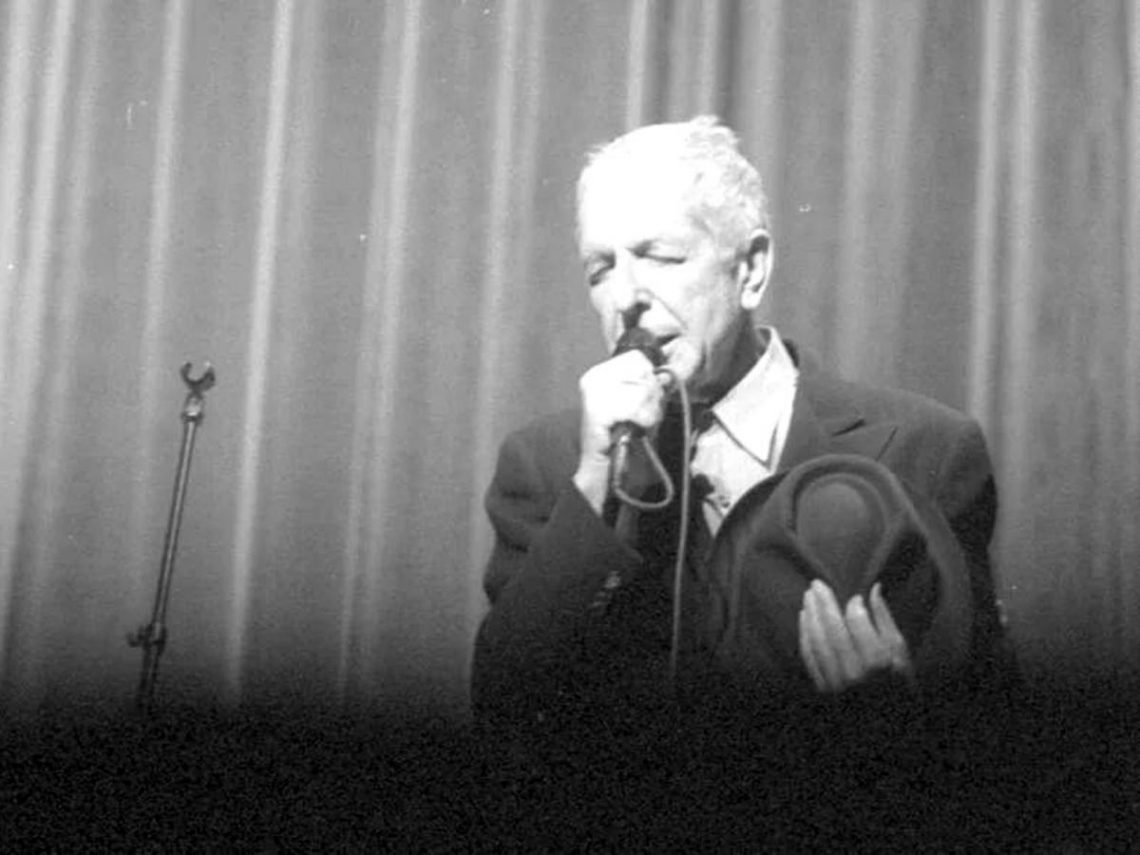
Leonard Cohen left behind a multi-faceted legacy. The Canadian lives on in endless covers of ‘Hallelujah’, in lists of the greatest lyricists of all time, but, most of all, in his writing, whether accompanied by orchestral instrumentation or simply a pen and paper. Perhaps more than anything else, Cohen was a poet.
Before venturing into music, Cohen spent his time pursuing poetry, honing a skill that would define his songwriting. Infused with emotion and eloquence in equal measure, Cohen delved into almost every aspect of the human experience through his writing. From faith to love to loss, his greatest lyrical musings refused to shy away from the depths of feeling, somehow articulating them with poise and precision.
Alongside being a purveyor of poetry, Cohen was also an avid reader. Expectedly, he was a fan of beloved poets like W.B. Yeats and Irving Layton, who he described as “one of the finest writers in language”. Cohen also once shared his praise for Irish writer James Joyce, noting his love for one paragraph from his short story collection Dubliners in particular.
The paragraph Cohen picked out marks the closing moments of the collection’s closing poem, titled ‘The Dead’. Marked by themes of lust, love and loss, it’s no surprise that Cohen was a fan, but he seemed particularly taken by the story’s descriptive final paragraph.
“Yes, the newspapers were right,” the story reads, “snow was general all over Ireland. It was falling on every part of the dark and central plain, on the treeless hills, falling softly upon the Bog of Allen and, farther westward, softly falling into the dark mutinous Shannon waves. It was falling, too, upon every part of the lonely churchyard on the hill where Michael Furey lay buried.”
“It lay thickly drifted on the crooked crosses and headstones, on the spears of the little gate, on the barren thorns. His soul swooned slowly as he heard the snow falling faintly through the universe and faintly falling, like the descent of their last end, upon all the living and the dead,” Joyce’s story concludes.
Speaking about the memorable and moving final paragraph, Cohen enthused, “That paragraph. It’s not the work of an author, but maybe five lines. It’s those five lines that will get me reluctantly to explore the rest of the guy’s work. But that paragraph I’ve never forgotten. There’s that paragraph ‘Snow was general all over Ireland.’ It described the snow.”
The peaceful image may have referred to Ireland, Joyce’s homeland, but Cohen found his own country within it, adding, “It’s Montreal. It’s our snow, our black iron gates in Montreal. It was perfect.” The beauty of Joyce’s words reflects Cohen’s own – making the personal universal.
