


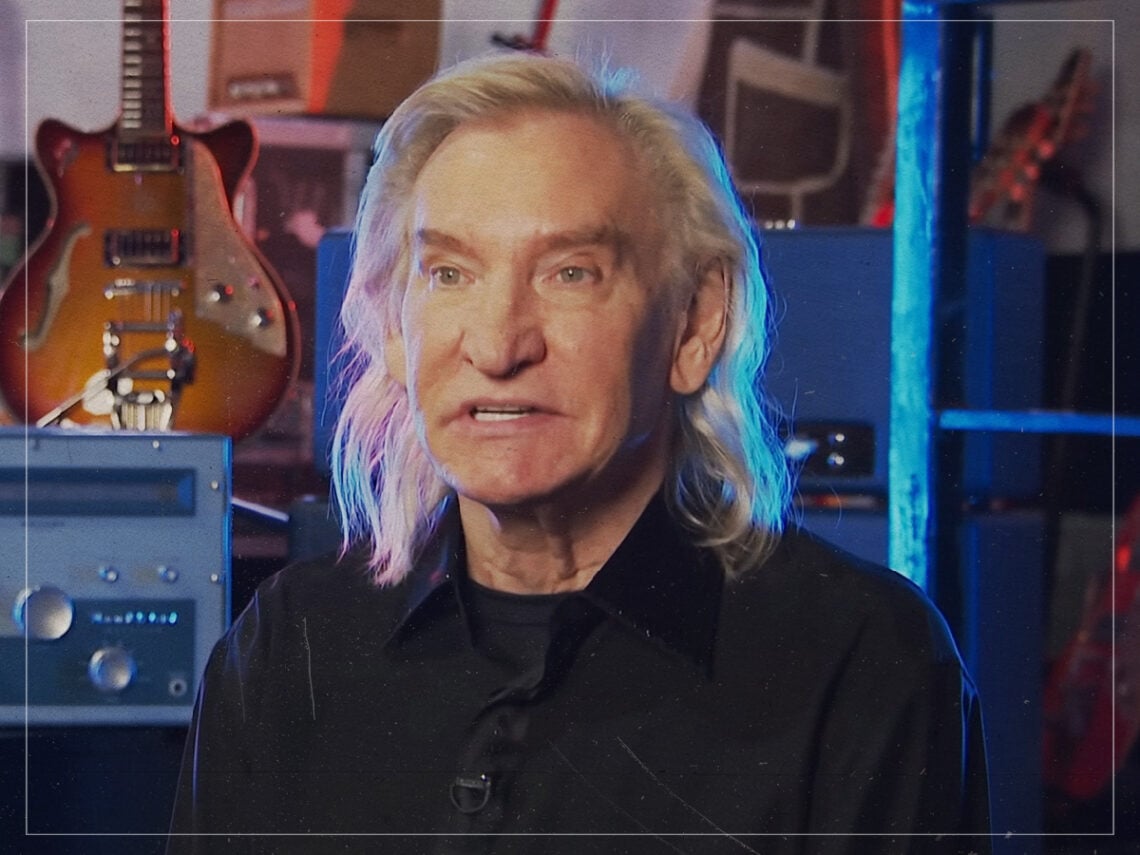
The guitarist Joe Walsh crowned as the king of the acoustic: “He’s a real groovemaster”

The six-string machine from Eagles has dazzled audiences all over the world with his spirit, passion, and eclectic sound, but guitarist Joe Walsh is following in the footsteps of someone who’s been doing this for half a century, and at the fresh young age of 80, still holds as one of the best in the finger-picking game.
In listing his favourite guitar acts back in 1988, Walsh didn’t hesitate to include “Anything that Leo Kottke ever recorded”. Although the rest of the list wasn’t a bad company to keep, the likes of Jimmy Page and Eric Clapton being alongside him, Kottke was the only artist not mentioned alongside a specific guitar solo: anything he plays sets the bar higher for others following in his wake.
“Ah, man, he’s [whistles]. He’s very tough and unique, and I love him. John Fahey and Bert Jansch are good, too, but nobody can touch Leo Kottke on acoustic 12-string bottleneck,” the Eagle told Guitar Player.
Call him old school, but Kottke was one of the only guitar acts to successfully bring a 12-string guitar into the mainstream, and that’s also probably due to the increased difficulty of its mastery. Regardless, the Kansas native was able to strum countless mergers and interpretations of different genres into being, from country to blues to rock.
Describing him as ‘tough’ was a brilliant illustration of Kottke’s craft, as all his songs, albeit stubbornly different, echo a distinct style that’s been carved into stone, and that isn’t for sale. Although he’s had a remarkable career, the guitarist’s success was less of a rapid-fire explosion and more of a slow-burning triumph. His music was never bent to fit mainstream standards, but had long-term effects, inspiring three generations of musicians to explore acoustic guitar.
One of these was visionary guitarist Michael Hedges, who said, “Leo is a true example of a composer writing on the guitar. He’s got so much soul, but he’s also got so much rhythmic drive. He’s a real groovemaster. You just can’t beat him, and you’d never want to.” He left his mark on a significant acoustic following, even climaxing in an honorary PhD in Music Performance from the University of Wisconsin in 2008.
It was age that unfortunately tried to conquer his folk leads and creative imagination, as hearing and tendon damage brought him to alter his playing style. However, he never went as far as ditching his beloved acoustic guitar for the electric trend, albeit “only in the studio”. In 2012, he told Westword: “I’ve taken electric guitars on stage, but the density shift is just too much”.
Although the sliding hands behind solos like ‘Those Shoes’ and ‘Life in the Fast Lane’ stayed rather faithful to the electric guitar, Walsh and his edge are much akin to the human spirit so present in Kottke’s work. Both are frequent subscribers of melodic, vocal-like slide work, fingerstyle elements, and free improvisation, such that you can sense where Walsh got his spontaneity, and it isn’t among fellow rockers.
One thing about Kottke, which inspires to inspire, is how humble he’s remained throughout the years, telling Acoustic Guitar in 2021, “You know what? It never stops being a surprise that somebody wants to pay me to play”. If a guy like that isn’t going to rack up a few fans along the way, the music business is lacking some likeable people.
