


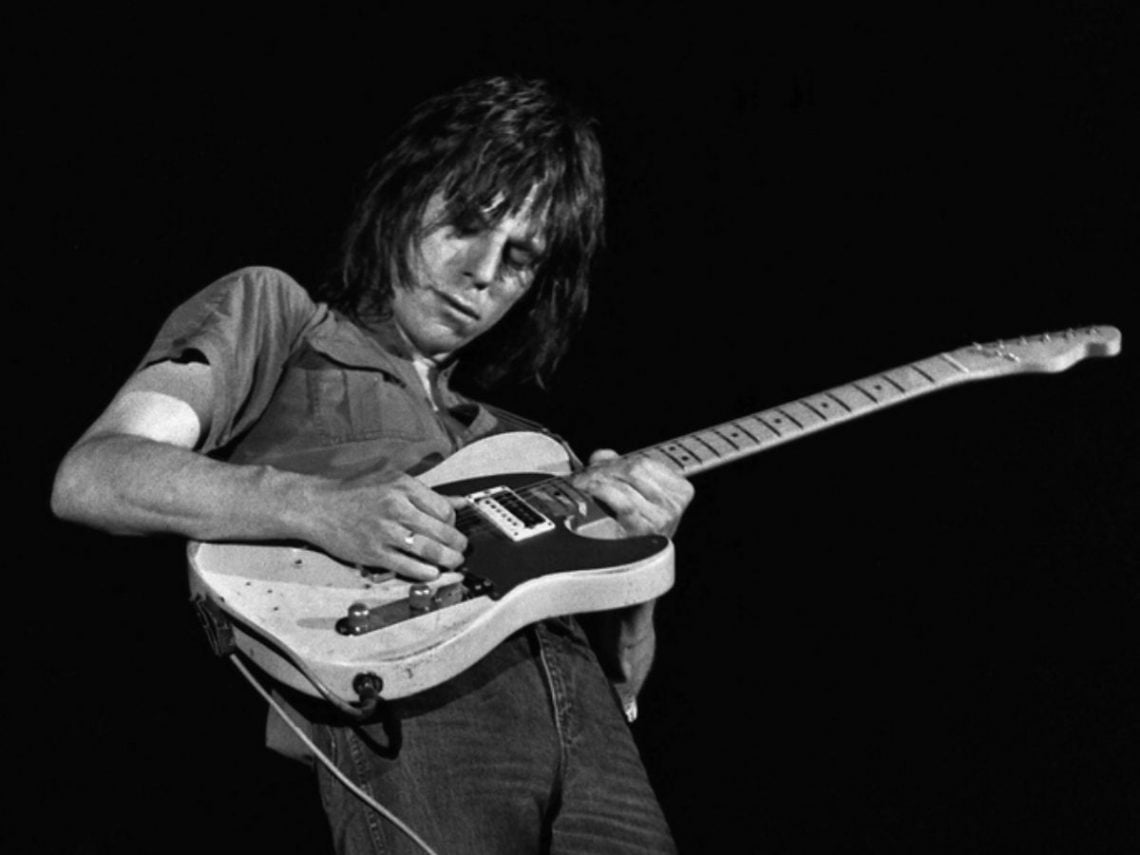
“Leave it”: The guitarist Jeff Beck initially thought Jimmy Page stole from him

In the world of rock, poor timing is a legitimate challenge. Even for legends like Jeff Beck and Jimmy Page, it’s not just about having good material; it also has to be the right moment, so that the complexity of getting it right doesn’t lead to failure or hesitation. This is why, while some may think the right collaboration is enough to warrant success, Beck maintains that there’s more to it than that.
Several familiar names surface in the depths of almost any discourse about groundbreaking guitarists who shaped modern rock. And while the different ways that Jimi Hendrix, Jeff Beck, Eric Clapton, Jimmy Page, and a handful of others no doubt changed the landscape in unimaginable ways, they also borrowed, repurposed, and reinvented those who rippled through the space long before in the rockabilly genre, with names like Gene Vincent shaping the sounds of those we still hear about today.
This was especially true for Beck and Page, who looked to figures like Vincent and James Burton the way many enthusiastic music lovers do: with a level of excitement so palpable they could barely sit still, each comparing different versions of their favourite tunes to try to replicate the same magic emanating from the record player. “That sort of seemed to be a common ground between most guitarists around that time,” Page recalled, “To see how well other guys could cut this solo.”
That said, beyond the effervescence of feeling like their heroes, Page and Beck soon became privy to another beast that makes its presence known the moment everything suddenly becomes a whole lot more fickle: circumstance. This became particularly notable following the 1983 ARMS Charity Concerts, comprising Beck, Page, Clapton, Ronnie Wood, Paul Rodgers, and others. Aside from providing a special moment with Clapton, Beck and Page performing for the first time since The Yardbirds, it also saw Beck facing another musical convergence he hadn’t necessarily anticipated.
“The ARMS tour was a great thing, but then [Paul Rodgers] was playing with Jimmy Page, in a band called The Firm,” Beck recalled to Fuzz, noting how the spark initiated several ideas that could have led to varying formations, but Page somehow got in there first with Rodgers. “I thought, well, now that he’s been exposed with Jimmy, it wouldn’t be too wise a move to go that route,” he continued.
Still, the success—or lack of it—meant Page seemingly jumped the gun, with Beck observing something with so much promise in the early stages falling victim, yet again, to poor timing and less-than-standard material. “That band didn’t go too well,” he said. “So I thought, leave it. One day when the tunes are there, once again, it’s the material, you’ve got to have the common ground. I don’t think we’re going to produce much in a couple of days in a rehearsal studio.”
Clearly, Beck understood the significance of getting all the other factors right, with a sudden hyper-awareness that it wasn’t enough to be one of the best guitarists of the modern age. After The Firm disbanded, many remaining members, including Page and Rodgers, returned to solo work, proving that, while supergroups sometimes serve unparalleled cultural moments, it’s okay to recognise when it’s time to simplify and refocus.
