


The Great Escape Boycott: Is it the right thing to do? We spoke to those still involved…

Since October 7th, 2023, it is estimated that over 36,000 people have been killed – roughly 34,844 Palestinians and 1,410 Israelis – amid the ongoing conflict in Gaza. The atrocities have prompted an upswell of activism from all over the world. The call for a ceasefire has been a heartening one that the music industry and its artists have promoted. One manifestation of this activism has been the boycott of festivals, like The Great Escape, which have financial ties to sponsors that have reportedly increased investment in weapons companies that trade arms with Israel.
This movement began with SXSW in Austin, Texas, owing to the festival’s sponsorship funding from the US Army, which has supported Israel in the conflict. Ella Williams, who was set to perform as Squirrel Flower at the event, was one of the first to drop out, stating that she deferred any involvement “in protest of SXSW’s ties to the defense industry and in support of the Palestinian people”. Over the course of the weeks that followed, more than 100 bands, artists and panellists pulled out for related reasons.
The rhetoric surrounding the boycott was encapsulated further by Williams, who stated: “Genocide profiteers like Raytheon [a US Defense contractor and one of the SXSW funders] supply weapons to the IDF [Israel Defense Forces], paid for by our taxes. A music festival should not include war profiteers. I refuse to be complicit in this and withdrawl [sic] my art and labor in protest.” This discourse was fervent at the time, creating a climate whereby boycotting seemed like the morally obvious decision – one which was spearheaded, by and large, by international acts who were scheduled to take part in the festival.
In some regards, this moral certitude put forward in over 100 public statements made it seem like taking part was tantamount to advocacy of the sponsors. However, the artists still playing at the festival, whom Far Out spoke to at the time, explained that they were simply financially unable to pull out. One source anonymously told us: ”There are so many factors involved in bringing an artist to a festival, and some musicians just don’t have the financial luxury to back out of them. Doing so could literally bankrupt them.”
With irretrievable funds already pledged and related parties reliant upon involvement, it became impossible for certain acts to pull out regardless of their stance on the matter. At a time when touring is already an expense for many artists – one band recently told Far Out that their headline US tour left them at a deficit of £7,500 – boycotting was simply never an option, never mind a viable one. Nevertheless, these acts feared their involvement tarred them with a problematic brush opposed to their own moral and political principles.

Some figures within the industry even raised questions about whether the sponsors of SXSW came under such scrutiny because it is allegedly one of the lowest-paying international festivals. Reportedly, the Austin music showcase often only covers travel expenses for international acts, meaning involvement actually costs artists thousands rather than remunerating them, raising concerns as to whether pulling out of such festivals, for those who could easily do so, provided free publicity and financial relief rather than meaningful protest and a reasonable precedence.
Of course, that is not to question the sincerity of the boycotters; it’s just that the financial intricacies highlight that in today’s music climate, being in a position to do so is a luxury. This underscores the nuanced nature of the situation, which largely has not yet been met with nuanced discussion. Increasingly, simply partaking in live music has become a polarised ‘you’re either with us or against us’ moment that runs counter to the actual intricate realities at play.
There are complexities to the situation beyond what can be stated as morally clear-cut in a public soundbite posted on a social media page. This concern is heightened further by the fact that many of those who pulled out of SXSW have chosen to take part in other festivals with questionable sponsors, but perhaps more favourable logistics, finances or other circumstances that have precluded a second boycott, evidencing the myriad factors beyond moral/political/principle positions.
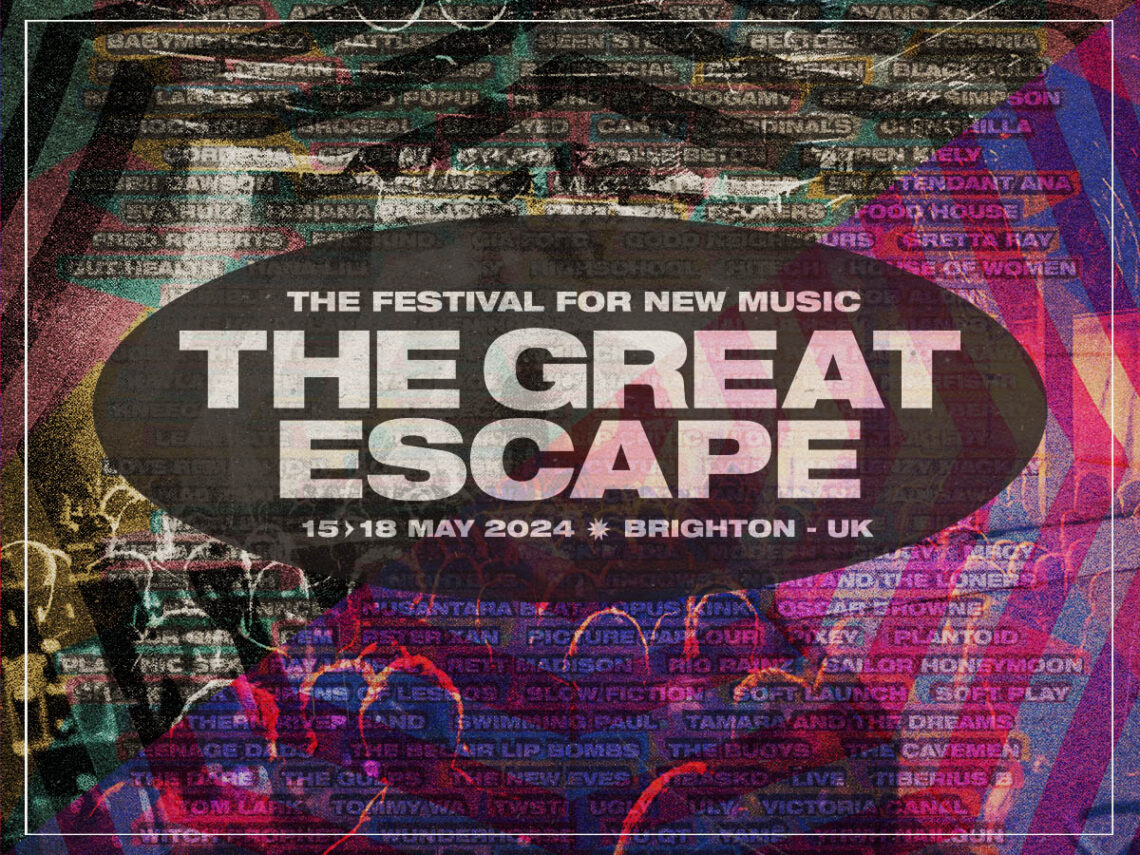
One such festival is The Great Escape. The longstanding Brighton showcase has long been credited as a champion of new music and a vital launchpad for many progressive acts, despite its historical ties to the far-from-independent company Live Nation. However, this year, the event has been met with a call to boycott from prominent music industry players like Brian Eno, Massive Attack and Idles. The ongoing campaign, ‘Bands Boycott Barclays’, cites that attacks in Gaza ”are bankrolled by Barclays, which invests over £1bn in – and provides financial services worth over £3bn to – companies supplying weapons and military technology to Israel”.
As a result, roughly 25% of the 500+ acts who were scheduled to perform at The Great Escape have pulled out over concerns that were embodied by Alfie Templeman when he stated: ”My morals cannot and will not align with the amalgamation of entertainment and human suffering.” He went on to explain, ”I really hope that together our absence from the festival will make other festivals and events around the world prioritise being ethical when choosing their partners.”
The message of many musicians is that peace takes prominence over everything else in the present crisis. So, if you can pull out, then you should. The document shared to bands and industry players by the lobbyists behind the movement, seen by Far Out, explains, ”The key tactic is to remove consumer and cultural support from target companies, in order to pressure them to cut ties with Israel and the arms companies it uses against Palestinians.”
The document goes on to say that cultural pressure from the music industry was an effective tool when it came to ending apartheid in South Africa. The hope is that a boycott such as this, no matter how small, will snowball into a wider movement, through raised awareness and direct action, that hits companies with enough commercial significance for them to reconsider investment (in the case of Barclays) and financial partnerships (in the case of festivals).

However, whether this ethical re-think materialises – and in a manner that isn’t to the detriment of a live music industry already facing an existential crisis – is another matter. As one source commented, ”You have to consider how many festivals around the world are sponsored by corporations with links (direct or indirect) to similarly nefarious activities.” Even Glastonbury Festival, a bastion of progressive musical activism, incongruously sported sponsorship from Land Rover in 2023 – the manufacturer of the alleged worst polluting vehicle in the UK – alongside its longstanding partnership with Greenpeace.
So, while well-meaning, there are concerns among those who simply can’t stand in solidarity with the boycotters, for a range of external reasons, that the boycott itself will not actually impact the sponsors but ”only harm the festival itself” and those who have no option but to perform under what has now become a problematic and polarised cloud.
That’s before addressing the fact that protest is also nuanced in itself – activism is about having the autonomy to decide what you feel to be the best response to a situation, and many feel like they can send a message by playing. It’s not the sincerity of the protest being questioned by these performers but the validity of a boycott – what makes a better statement: thousands of people coming together in a show of solidarity, showcasing what peaceful freedom looks like, or 100 indie artists posting a tweet to say they’re not playing in the hopes of impacting Barclays, a bank with £1.5 trillion in assets.
In principle, both stances make valid points. Many of those pulling out have explained that they can’t be complicit and hope that bold statements garner press that can be seen by millions as opposed to the mere 15,000 to 20,000 people who attend The Great Escape. As Lambrini Girls put it in response to pulling out of SXSW: “We were considering going to the festival and protesting on stage, but there isn’t a way to do that doesn’t feel performative or inherently exploitative.” In effect, even if you perform in protest, are you effectively still a part of the system you’re rebelling against?
A contrasting opinion to this came from one anonymous musician still playing The Great Escape, who explained: “I do not support the genocide; I would hope the rest of the world feels the same. But as an artist already existing in a very toxic industry, the best many of us can hope for is a few scraps – the glimmer of an opportunity, a gig, anything to help us get our music out into the world, and in turn make it a better place with the love we promote in our art.“
Continuing, they added: “I feel as if I am to be judged by my peers and by fans if we don’t cancel our performance, yet my heart tells me that this is ill-advised. I don’t want to be bullied into following a trend, yet I worry my silence makes me look complicit.“
They concluded: “Integrity is all we have, so how are we expected to navigate through this world when all commercialism and corporate sponsorship comes from darkness? Latitude, Isle of Wight, Reading & Leeds are all sponsored by Barclays [but have not yet been boycotted en masse] – it’s a huge expectation on struggling musicians who will be replaced by one of a thousand other hungry musicians if they decide to boycott.“
In response to calls such as this, Nick Cave – who controversially played in Israel in 2016 – urged artists to use their voices in performance. Explaining that music appeals to “people’s better angels“ and may be more effective than “rejectionism“. Similarly, fans we have spoken to at the event have explained that they would instead prefer to fly the flag for Palestine at the festival and offer donations and a public display of support rather than pull out of something that they have already effectively pledged funding to. All the same, there is a sense of trepidation.

Principally, pulling out and partaking can, in effect, convey the exact same message. But in practice, the more the debate becomes polarised and nuance is lost, only one stance has been deemed publicly acceptable. Perhaps the most indicative factor of the entire predicament is the nervousness shared by many people we spoke to. Their fear is that a call for nuance will somehow be misconstrued as opposition to what the boycott stands for, which, ironically, highlights supremely the lack of nuance involved. When Far Out asked an array of sources for comments regarding whether a more nuanced take on the means and methods of solidarity was needed, not one person disagreed, but all requested anonymity.
Furthermore, the lobbyists who set the campaign in motion are not members of the music industry. The document they shared makes no mention of the financial ramifications for the artists that they call upon for support or the broader implications for live music in the present climate. These are factors that the artists have been left alone to reconcile. Meanwhile, the difficult, intricate factors that they have been tasked with considering privately have largely not been presented to the public, creating a disparity between what the masses deem as the just response and what is actually a realistic, actionable response for those involved.
On the one hand, does the relatively negligible plight of musicians really matter in the face of such catastrophic casualties when they are in a prime position to amplify a progressive message; on the other hand, does that view undermine alternative avenues and overstate the efficacy of a boycott? In a fashion, does culture’s show of silence serve as the extreme height of sacrificial solidarity that may well bring change, or does it diminish music’s power for propelling progressive discourse and the joy it brings, effectively furthering the rampant repression of humanity in the Middle East, sequestering active engagement in favour of a fixed position?
These are very difficult questions for bands caught up in the push-and-shove of modern music to answer. At this stage, the efficacy of the boycott as the optimal strategy for all involved seems obscured, with artists feeling ”forced” to participate more as a public-facing obligation than as a form of protest that also effectively safeguards the livelihoods of their peers and the industry at large. But the present surface narrative is the inverse of this. While the boycott might appear as the best option if available for those who can, being able to do so is not forgone, and such presumption should not cast damaging aspersions on those who opt for alternative methods of protest, given the nuanced and complex nature of the issue.
In essence, the discussions we have had with those involved, call for recognition of the multifaceted landscape of activism, where diverse approaches are valid, subject to personal circumstance, and all worthy of consideration. It is commendable that a generation of musicians have aligned in the pursuit of a common goal of peace and justice. It furthers the strides made by the student protests in the US recently in proving the progressive potential of political activism that should be encouraged in the name of peace. However, it also needs to be recognised that effective means is anything but as black and white as the just cause.
For those affected by this topic and would like to provide vital aid to people in Israel and Gaza, The British Red Cross are accepting donations. Visit the website here.
