


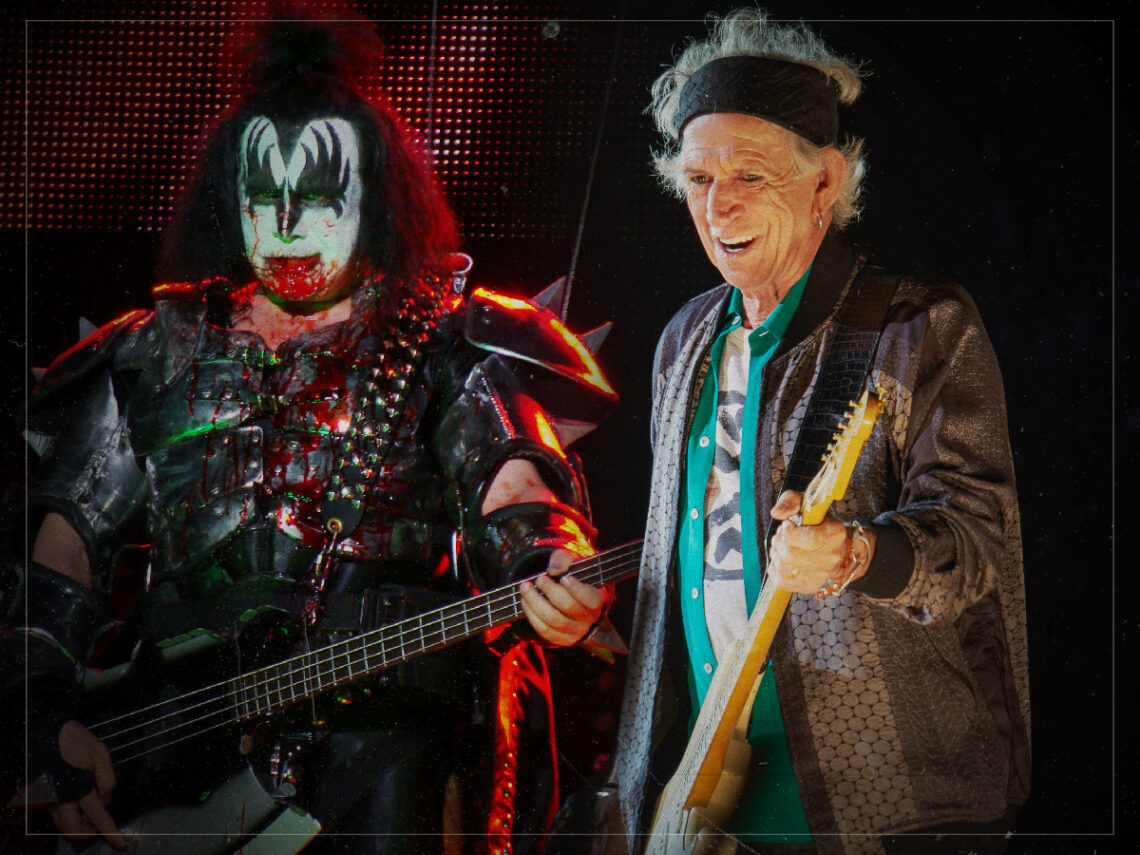
The genre Keith Richards and Gene Simmons are “looking forward to the death of”

As a genuine music fan, there’s nothing more irritating than being asked the question, “What genre of music do you listen to?” Not just because it painfully draws the word “indie” out of my mouth, as a means of bringing this conversation to a swift close, but mainly because of how I listen to multiple.
Like most of you reading this, my listening habits don’t circle around one exclusive style of music. Instead, I appreciate all music with a common sense of authenticity, which has largely been fostered by a more merged cultural landscape. No longer are we in the 1970s, when rockers were bullying disco fans through a false sense of entitlement. Instead, we’ve rightfully given way for all genres to have their moment in the sun.
To get to that point, we had to embrace conflict, though. More specifically, we had to embrace the conflict caused in 2008, when Jay Z was offered the top slot at Glastonbury Festival 2008. Despite being one of the most influential rappers of the late 1990s and early 2000s, leading music into a new world with his unrivalled lyrical and performative ability, his place on the Pyramid was questioned.
It largely stemmed from antiquated views on rap music, which were ultimately shaped by systemic racism and prejudice. The product of urban oppression that stemmed from the evolution of jazz and bebop was reductively viewed as “not proper music” by those who had an electric guitar strapped around their shoulder, largely unwise to the fact that their beloved rock and roll came from the very same origins as the supposedly disgusting rap music.
Jay’s performance in 2008 put all of that to bed and helped open up the door to a more diverse musical landscape that no longer views hip-hop or rap as a secular genre. Now, it’s rightly found its place on some of music’s biggest stages.
But the icons of music, who had to give up their space on said stages in the process of diversification, ultimately did so begrudgingly. Keith Richards and Gene Simmons were two of the most prolific names from classic rock who stepped forward and vilified the genre as a means of promoting their beloved rock.
The latter, Simmons, was quoted as saying, “I am looking forward to the death of rap. I’m looking forward to music coming back to lyrics and melody, instead of just talking. A song, as far as I’m concerned, is by definition lyric and melody … or just melody.”
The lack of melody clearly seemed to be an issue for Richards also, who said, “What rap did that was impressive was to show there are so many tone-deaf people out there. All they need is a drum beat and somebody yelling over it, and they’re happy.”
There are gaping holes in both arguments. Simmons labels lyricism as an important part of musicality, yet forgets to acknowledge how rap, as a genre, is based around the performance of poetry. Meanwhile, Richards claims to disapprove of tone-deaf wailing over the top of frenzied rhythm sections, which seemingly tells me he hasn’t listened to a handful of his own band’s songs.
