


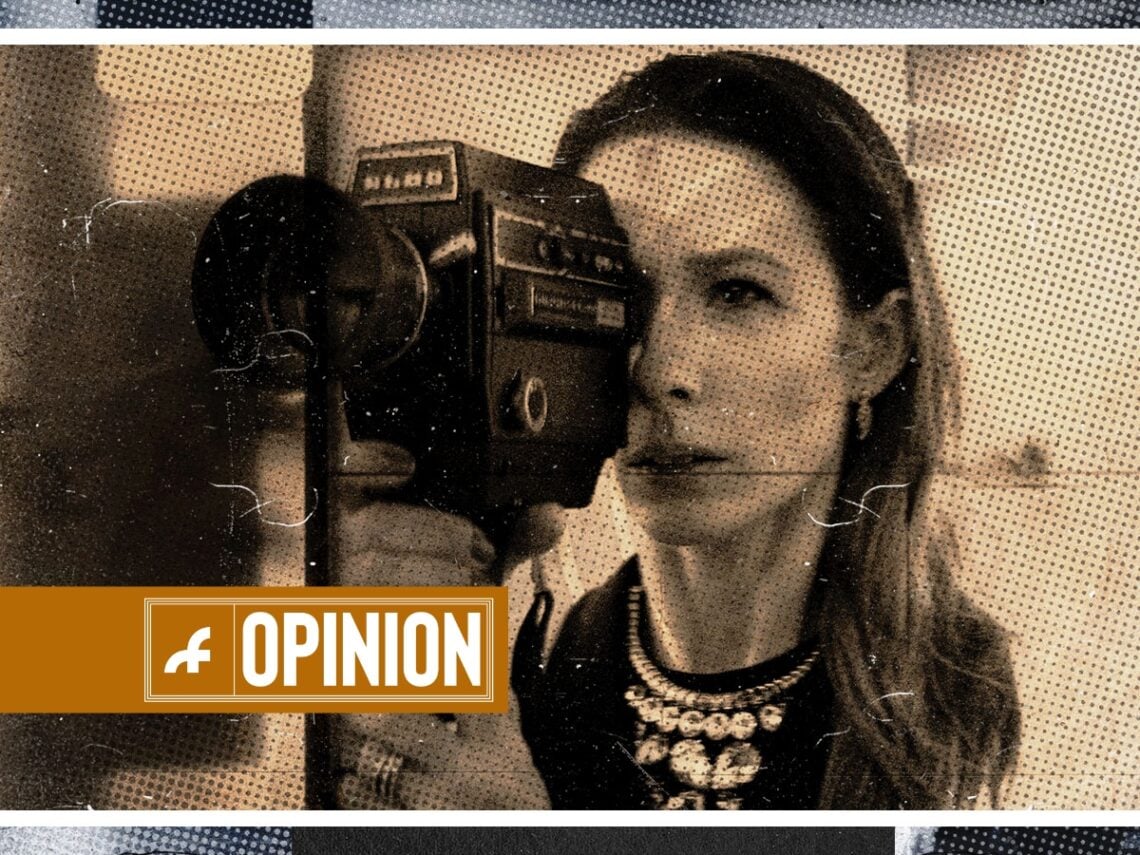
The future of British filmmaking is female

When Rose Glass won ‘Best Debut Director’ at the British Independent Film Awards (BIFA) in 2020, it was a sign of things to come. Saint Maud, which had come out the year earlier after several delays due to Covid, wowed audiences with its commitment to a singular style, its original approach to horror and its fantastic casting, particularly of lead actor Morfydd Clark of The Rings of Power fame.
Set in a bleak coastal town, the film follows the eponymous Maud who, after being assigned as a carer to the terminally ill Amanda, descends into a spiral of religious hysteria, insanity and murder. Constantly testing the audiences’ faith, director Glass flitted between grotesque hallucinations and heavy-hitting moments of drama and wisely withheld from telling us whether Maud’s experiences were real or the result of mental illness.
After winning at the BIFAs, Glass went on to win the IWC Schaffhausen Filmmaker Bursary Award: a prize of £50,000 gifted to emerging filmmakers to ensure they have the means to keep the momentum rolling. Nearly four years later and Glass is in post-production on her second feature, Love Lies Bleeding. Following the success of Glass, as wave after wave of debut British films began hitting festivals around the world, something became clear: the really bold and original ones were all from female directors.
The year after Saint Maud brought us Prano Bailey-Bond’s first film, Censor. Based on her own short film from 2015, this feature was set in the seedy world of ‘Video Nasties’, cheap horror or exploitation movies that were passed around on VHS, gaining a sordid cult following. Censor followed Enid Baines, a censor working for the British Board of Film Classification in 1985, who becomes convinced that a film she’s just screened actually holds the secret to the whereabouts of her missing sister. Toting a distinctly 1980s aesthetic, with all its analogue glitches and scratches, the film marked another entry by a woman with a bold filmmaking vision.
Then, last year, we got the devastating debut of Scottish filmmaker Charlotte Wells. Set sometime in the 1990s, Aftersun followed a young father and his daughter staying together at a Turkish holiday resort during the off-season. Shot on beautifully saturated 35mm, featuring a star turn from Paul Mescal and a wonderful introduction to the 13-year-old Frankie Corio, Wells’ first film was a staggering exploration into memory, nostalgia and male fragility. It was reminiscent of another Scottish talent, Lynne Ramsay, whilst also charting its own distinct path, and at the 2022 BAFTAs, it rightfully won the award for ‘Outstanding Debut by a British Writer/Director’.
That same year also gave us Georgia Oakley’s Blue Jean, a powerful portrait of a teacher grappling with her sexuality in 1980s Newcastle. At a time when the Thatcherite government is about to pass anti-homosexual legislation, Jean is forced to completely separate her love life from her work, friends and family, but when a student catches her at a local gay bar, everything threatens to come crumbling down. Nominated alongside Aftersun at the BAFTAS, Oakley’s first feature went on to win the People’s Choice Award at the prestigious Venice Film Festival.
2023 has already delivered two more fantastic British debuts, both from women. Molly Manning Walker’s How to Have Sex won the ‘Un Certain Regard’ at Cannes only a couple of weeks ago. To win at Cannes with a feature is an unbelievable achievement, and it marked the first time in the entire history of that specific award that a solely British filmmaker was the recipient of it. Then, winning the ‘Grand Jury for World Cinema’ at the 2023 Sundance Film Festival, we have Charlotte Regan’s Scrapper making waves for Britain once again.
Whilst we’ve had male British directors put out some excellent work, with the likes of Ken Loach, Jonathan Glazer and Steve McQueen showing their films at Cannes, it’s obvious that a significant and much-needed shift is occurring within the UK’s film industry. Talented British women have made films before, but the concentration of excellent cinema currently being made is profound, exciting and cannot be ignored. With regard to new cinema, looking at the past three years, the message is clear. In terms of up-and-coming outstanding British d talent, the future of filmmaking is undoubtedly female.
