


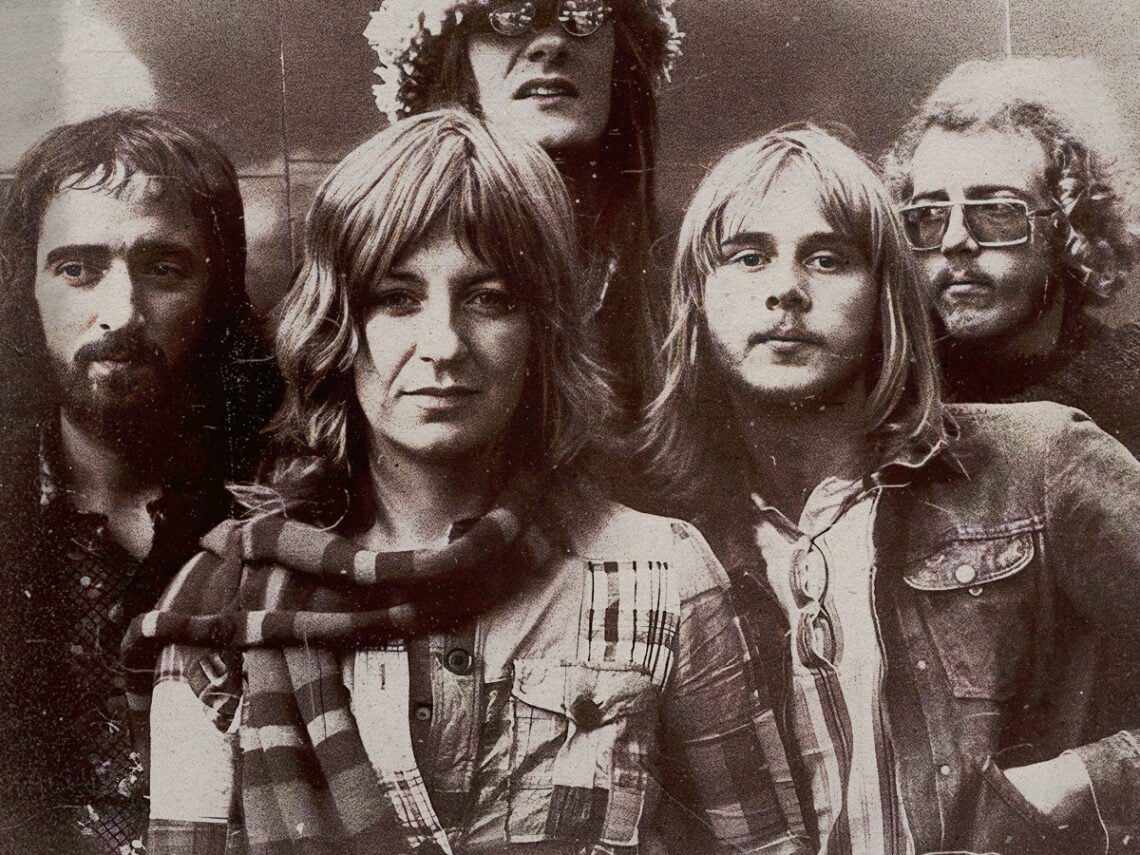
“What the hell is he doing?”: The Fleetwood Mac album Christine McVie couldn’t stand

Every artist usually gets to a point where they have a love-hate relationship with their own work.
They may be happy to hear that millions of people like their style, but there are just as many times when they start to feel a little bit disgruntled, knowing that some songs aren’t getting the same attention as they think they should. While it’s almost impossible to juggle the dynamic that Fleetwood Mac had, Christine McVie admitted that she was not that much of a fan of the album Tusk on first listen.
That internal push and pull is something most artists face as their catalogue grows. Over time, their relationship with their own work becomes more complicated; songs that once felt essential can start to feel overexposed, while overlooked tracks gain new meaning in hindsight. Perspective has a way of reshaping how artists view their own output.
In a band setting, that tension is often intensified. Each member brings their own creative instincts and expectations, which don’t always align. For a group like Fleetwood Mac, with multiple strong songwriters, balancing those competing visions was never going to be straightforward. What one member saw as a bold step forward, another might view as a misstep.
That dynamic becomes even more fragile after a record as monumental as Rumours. Following such overwhelming success, the pressure to either replicate or deliberately avoid that formula can lead to uncertainty. In that sense, Tusk represents a pivotal moment. It was a band pushing against its own identity, even if not everyone was immediately convinced by the results.

Out of all the members of The Mac, McVie was always the one who never wrote a bad song. Even when her music didn’t hit the mark as well as it should have, her calming presence behind the microphone and her close attention to harmony made her one of the greatest assets to the band, no matter which period the band were in.
For a brief second, the powerful role of being the only girl in the band was about to be overshadowed when Lindsey Buckingham and Stevie Nicks came into the picture. Instead of resulting in the age-old tension with “the new guys”, McVie warmed up to Nicks almost immediately, having a confidante to work with throughout the touring circuit.

Even though Rumours was the moment where everything clicked for the band, Tusk was the kind of comedown that no one wanted to go on. Since everyone had their own ideas about how Rumours worked so well, the resulting double album featured some of the most out-there recordings that would ever be found on a Fleetwood Mac project.
Whereas the band had already pivoted away from their bluesy roots, Buckingham had his heart set on making the rootsy equivalent to a post-punk album, crafting songs that thrived on the weirder side of rock and roll. As McVie and Nicks listened to the final tracks, they weren’t exactly in love with everything they came up with.
When McVie discussed the album with Rolling Stone, she felt that the album could have been a bit better on first listen, saying, “[Stevie and I] didn’t really like [Tusk]. We just kind of went, ‘O-kaaay.‘ Because it was so different from Rumours. Deliberately so. In hindsight, I do like that record, but at the time, me and Stevie would be like, ‘What the hell is [Lindsey] doing?’”.
If anything, the closest comparison to what Tusk sounded like would have probably been The Beach Boys’ aborted album Smile. Since Brian Wilson didn’t know where to go after making Pet Sounds, he went down a similar road of trying to sound strange in order to get the sounds he heard in his head.
With multiple songwriters to go around, the album is far from a failure, with Nicks coming up with some of her strongest material on ‘Storms’ and ‘Sara’, while McVie proves why she is one of the best members of the band on ‘Never Make Me Cry’ and ‘Think About Me’. This was Fleetwood Mac, though, and they didn’t have time to dwell on the technical issues. The real issue was what was happening on the road.
In the wake of Tusk, Nicks would eventually leave the band for a solo career, leaving the group in limbo while everyone worked on solo projects. Even though the band’s 1980s material like Mirage and Tango in the Night had phenomenal material spread across its runtime, Tusk was one of the last times where the band decided to be weird and came away with a few pop diamonds.
