


The five most pointless remakes in cinema history

The irony of modern Hollywood is that the industry that is supposed to be the epicentre of creativity and originality has become more obsessed with recycling than the environmentalist movement. Nearly every big-budget movie these days is a sequel, a reboot, or a straight-up remake. There are live-action remakes, modernised remakes, and remake that seem to have absolutely nothing new to say.
On rare occasions, a remake comes out that is actually better than the original. Steven Soderbergh’s Ocean’s Eleven is much slicker and more suspenseful than the original Rat Pack puff piece from the ‘60s. The Coen Brothers’ True Grit is miles ahead of the original John Wayne effort, though they were more focused on adapting the novel than reimagining the film. Alfred Hitchcock pulled a surprising switcheroo when he remade his own 1934 film, The Man Who Knew Too Much, more than two decades later. The updated version isn’t his greatest film of all time but it is slightly better than the first.
There are two ways that a remake can fail spectacularly. The first is to be completely redundant and the second is to be completely and utterly inferior to the first. The latter category is much more fun to explore. The live-action remake of The Lion King doesn’t really justify its existence, but it isn’t a mess. It’s no Oldboy.
To raise the bar, another key criterion for this roundup of worst-ever remakes is that they all have to have been based on iconic, critically acclaimed movies. You will not find Flatliners or Bangkok Dangerous here, though there is no disrespect implied to anyone who loves the originals. So, from least-worst to worst-worst, these are the most pointless remakes in cinema history.
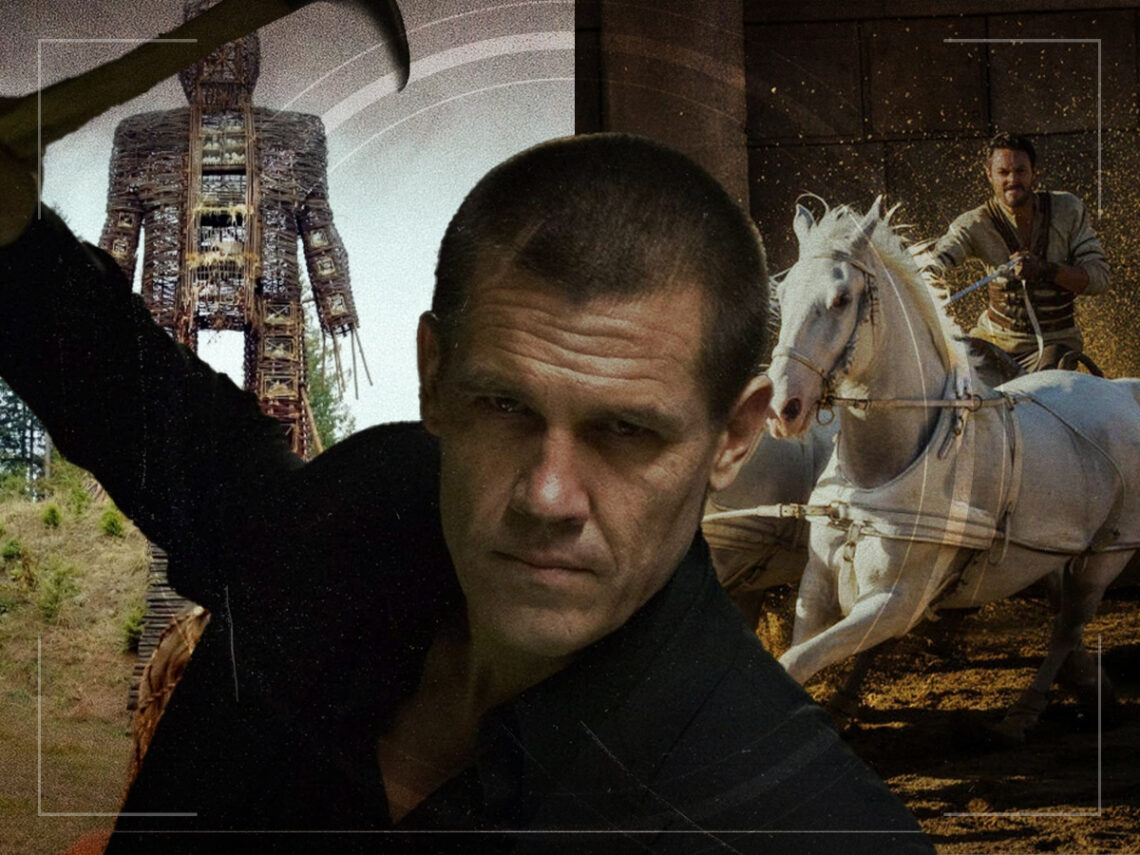
‘Ben-Hur’ – Timur Bekmambetov (2016)

You’ve got to be pretty ballsy to remake one of the most acclaimed films ever. 1959’s Ben-Hur became the first film to win 11 Oscars, including ‘Best Picture,’ ‘Best Director’ for William Wyler, and ‘Best Actor’ for Charlton Heston. It also became the second highest-grossing film in history after Gone with the Wind. It stars Heston as an enslaved prince who seeks revenge on the friend who double-crossed him, and it was, at the time, the most expensive movie ever made. The sets were colossal; the action sequences are still legendary. Remaking it was an act of sheer hubris, and it somehow still managed to underwhelm.
It wasn’t a foregone conclusion that a remake was destined to fail. The 1959 version of the story is bloated, over-acted, and dated, so you could imagine a scenario in which a 21st-century filmmaker brought a little more restraint and period realism to the table. That was not to be. Timur Bekmambetov’s film presents an even shinier cast of characters whose shouty performances are dwarfed by shonky CGI. Many of the action setpieces in the 1959 film are quaintly outdated now, but the digital effects that take their place in the 2016 version look cheap and rarely follow the laws of physics. Add a forgettable protagonist and you have an empty spectacle that isn’t even fun to laugh at.
‘The Women’ – Diane English (2008)

Gender politics have gotten much better over the past century, thank goodness, but in Hollywood, we’ve gone in the opposite direction by some metrics. Once upon a time, female actors used to be the biggest box office draw. They were movie stars around which stories were written, and no film is as emblematic of that as 1939’s The Women. Directed by George Cukor, who was known for bringing out the best in actors like Katharine Hepburn, Ingrid Bergman, and Judy Garland, it was a drama about the relationships of a group of wealthy Manhattan women.
Not all of it holds up by 21st-century standards, but its sharp script from Anita Loos and Jane Murfin ensures that it is still satisfyingly ruthless about its characters without making any of them charmless. It also provided the perfect showcase for its cast of A-listers, including Norma Shearer, Rosalind Russell, Joan Crawford, and Joan Fontaine.
The 2008 version had so much potential. Starring a who’s-who of Hollywood leading ladies, including Meg Ryan, Annette Bening, Debra Messing, Carrie Fisher, Bette Midler, and Candice Bergen and written and directed by Diane English, it should have been a success, but it was worse than a letdown. There are plenty of ways to critique wealth and explore friendship in this day and age, but instead of using a scalpel to get the job done, it uses a soft mallet. It’s meandering, unfunny, and cloying. The words ‘emotionally manipulative’ come to mind, but that suggests that it actually evokes an emotional response.
‘Oldboy’ – Spike Lee (2013)

Spike Lee has a habit of remaking his favourite movies, and while that might have been a successful gamble with Akira Kurosawa’s High and Low, it was a decidedly unsuccessful one with Park Chan-wook’s 2003 revenge thriller Oldboy. The original follows a kidnap victim who is held captive by an unknown enemy for 15 years, only to be hounded upon his release. Seeking answers, he tumbles down an increasingly brutal, gory, incestuous path that starts out dark and ends up somewhere much worse.
Lee tried his best to mimic the grotesquery, but utterly failed to capture the essence of what made Park’s movie so revered. It’s hard to blame him for that. The original Oldboy is such an assault on the psyche that it really shouldn’t have been so darn enjoyable. It should have been obvious that its magic is impossible to reverse-engineer.
No one should have tried, but since Lee did, the least he could do was make a forgettable redundancy. Instead, he made a laughably hammy Hollywood production that pales in comparison to his own work, let alone the original. Sharlto Copley shows up to play the villain, seemingly divorced from any notion of what movie he’s appearing in. Messy in all the least interesting ways, it doesn’t even leave you wanting a shower, a clear sign that it bore no resemblance to its successor.
‘The Wicker Man’ – Neil LaBute (2006)

Hollywood should dread really fucking lightly whenever it decides to remake a cult classic from another country. 2006’s The Wicker Man is the most glaring cautionary tale in recent years, a film that tried to update the cornerstone of British folk horror for a US audience and ended up annoying everyone. Robin Hardy’s 1973 original is not a masterpiece, but it is a strangely mesmerising nightmare that has been captivating audiences for half a century. Set on a remote island off the coast of Scotland, it follows a police inspector who travels from the mainland to investigate the disappearance of a young girl and finds that the locals practice paganism.
Neil LaBute’s 2006 version stars Nicolas Cage as the investigator and is set on an island off the coast of modern-day Washington State. There are burned dolls, an enormous bear suit, a strange yellowish tinge to everything, and, most importantly, a scene in which Nic Cage goes full Nic Cage, shrieking “NOT THE BEES” as a swarm of them attacks his face. LaBute decided to tinker with the original plot by making the islanders a matriarchal society in which men are second-class citizens, and while that is an interesting premise, it doesn’t really have anything to do with the original.
Massive plot deviations and general messiness were enough to make the film a box office flop and one of the most reviled movies of the early 2000s. In an interview with Far Out in 2025, LaBute said that he and Cage thought of it as comedic horror rather than all-out horror, but that the studio wasn’t on board. “It was a difficult road because there were a lot of people,” he explained “A lot of cooks in that kitchen.” At least we got some good memes out of it.
‘Psycho’ – Gus Van Sant (1998)

Gus Van Sant made a very bold choice when he had the opportunity to remake Psycho in 1998. While most filmmakers try to bring something new to a remake, Van Sant decided to stick so closely to Alfred Hitchcock’s 1963 original that it was basically a copy. In fact, he opted to make a shot-for-shot replica that, if it wasn’t for the use of colour, modern-day setting, and new cast, would be indistinguishable from the source material. There are a few flashes of surreal imagery at certain stages to illustrate Norman Bates’s psychosis, but otherwise, Van Sant sticks to Hitchcock’s shot list.
Hot off the success of Good Will Hunting, the director was able to pull in an impressive cast. Ann Heche played the ill-fated embezzler Marion, who takes a very bad shower; Vince Vaughan played Norman Bates; Julianne Moore played Lila, Marion’s sister who shows up to Bates Motel to look for her; and William H Macy played the cop who helps her. It’s a fine movie because Hitchcock was a great filmmaker, but at no point does it make the case for its existence.
When asked why he wanted to make a near shot-for-shot remake, Van Sant said, “Why not?” He also referred to the decision as a “marketing scheme,” which, given the film’s dismal box office, clearly didn’t work out too well. Ultimately, 1998’s Psycho is so brazenly redundant that it takes the word ‘pointless’ to new lows.
