


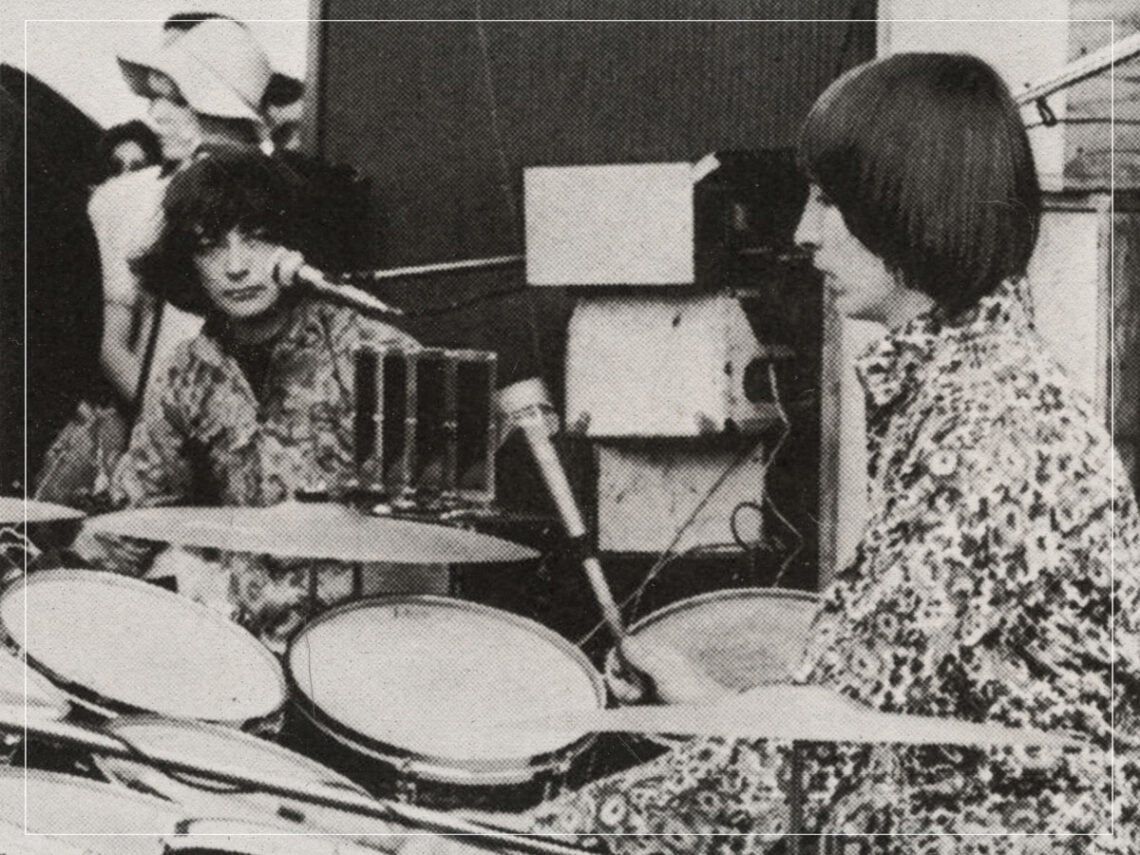
How Silver Apples harnessed World War II oscillators to create the first electronic rock record

Though previously used to block Nazi communications during World War II, the duo Silver Apples found a way to use the technology to make what many believe to be the first electronic rock record.
The materials were initially decommissioned surplus, which was brought back to the states for auction, repurposed for civilian use, and sold in surplus stores. In the midst of these items being returned, there was a plethora of radio gear and audio oscillators, which had previously been utilised to emit audio frequencies designed to jam up communications within enemy channels.
In the 1950s and 1960s, oscillators began to appear in greater numbers, though most people wouldn’t have given much thought to their influx, given that they seemed irrelevant to everyday life. For those with a bit of technological know-how, however, these devices presented intriguing possibilities. In 1967, Simeon Coxe, a budding musician based in New York City’s East Village, acquired his first oscillator. Facing financial struggles, Coxe turned to these modest yet accessible tools as an outlet for innovation, transforming them into a cornerstone of his creative expression.
Coxe took the oscillator to his band to show them a new way to create and bend their musicality together. However, before they had a chance to get to work, the group split. Though it could’ve been the end for Coxe altogether, his drummer expressed interest, and from there, they began working together as a duo. As gig musicians popping around East Village, they “were dirt poor” using what they had “which was often discarded World War II gear”, as noted in 2019 by The Guardian.
Despite having worked with Jimi Hendrix and influencing the likes of Stereolab, Silver Apples fell from grace. Coxe and Taylor felt themselves evaporate into musical obscurity despite having found a way to create the first electronic rock record via the oscillator as a modest tool. The duo had just released their debut album, a groundbreaking project involving collaboration with heavyweight industry members. They even played Central Park to thousands of people, but as soon as they were about to drop in and seemingly stick, they were ousted as their album was pulled.
This happened as a result of misguided creative direction for a collaboration shoot that the advertising agency Kapp organised for their album art. The collaboration was between Silver Apples and Pan Am, the airliner. The concept was signed off, though someone from the airline company took issue with the images, given that the back of the album featured the boys sitting amongst plane crash wreckage, and a judge ordered an injunction to have the records pulled from shelves.
Unfortunately, this incident pushed Silver Apples into a corner creatively, as many regard them and what they were doing as pioneering a new direction for electronic music. The oscillators—something that would’ve otherwise been considered useless to many—were the building blocks with which they used to create something entirely new. They are arguably changing the direction of electronic rock forever, regardless of whether they receive the acknowledgement they deserve.
