


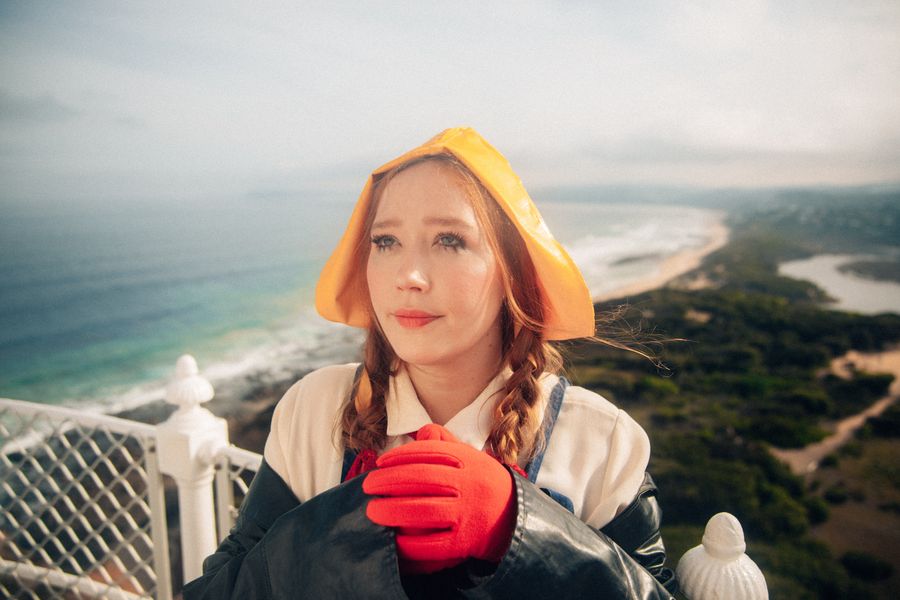
The Fiona Apple album that changed Julia Jacklin’s life

Julia Jacklin is a bastion of soul-clutching indie folk who has stolen the hearts of a generation and upheld the current storm of Australian alternative music. With the sort of voice that could haunt an empty house and her own singular songwriting sentiments that weave a snare of honest 21st-century relatability. The phenom is the sort of star who you can call one of a kind without Jacklin herself trying to do anything other than dole out her fair share of sincerity.
As ever, there was a formative album that came along in her youth and illuminated the path to sad ditties of gentle six-string strumming. For Jacklin that was Fiona Apple’s 2005 epic Extraordinary Machine. “My first love introduced me to this album when I was about 15,” Jacklin told Howl & Echoes. “I’d just never really heard anything like it before. I think it was the lyrics that really got me. She talks about love in such a unique way, I appreciate it even more now that I’m older.”
Jacklin herself has crafted similar tales of love laid bare. The caustic side of a breakup can often prove so cutting that it has endlessly been poured over by professional songwriters in a raging war against ‘happily ever after’ since the guitar was invented. However, in truth, that brutal severance period proves somewhat fleeting, and it’s the uncomfortable parting of the final lingering threads that Jacklin tackles in such a way that it seems like the first time anyone has ever put their finger on it.
However, it wasn’t just this honesty that Apple imparted on Jacklin. The Australian musician also learnt her trade in a performative sense by playing tracks from this beloved record. “’Not About Love’ was the first song I ever performed on stage with guitar at an open mic night in Glebe. I sang ‘Parting Gift’ for a year 11 school performance, and I covered ‘Extraordinary Machine’ in my first band. It’s been with me for a while.”
Given how good Jacklin is at covers – from Big Thief’s ‘Paul’ to ‘Someday’ by The Strokes – there is no doubt that these would’ve been stirring affairs and a force to behold for greasy teens. Now, you can almost see how they have shaped her emotive but never overbearing way of performing. Jacklin’s is a profundity that meets you halfway before it whisks you off.
As her hero, Fiona Apple, once said, “Everybody sees me as this sullen and insecure little thing. Those are just the sides of me that I feel necessary to show because no one else seems to be showing them.” Now, a string of indie stars are bearing vulnerability as strength and Jacklin is scoring endless masterpieces in doing so.
