

A catalogue of mayhem: The horrendous pranks Black Sabbath played on Bill Ward
Read More


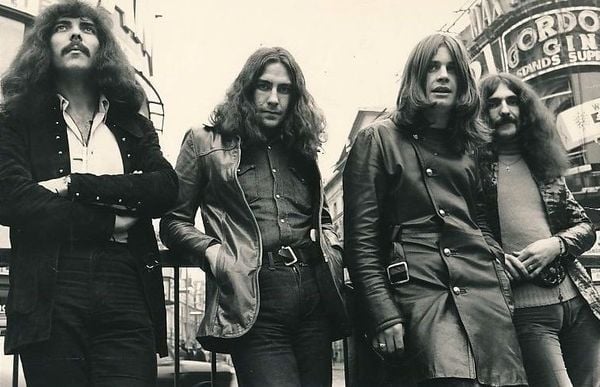
Bill Ward is the man who drummed up a new music revolution by simply restyling the timeless—and he did it all while being set on fire, poisoned and generally tortured by madmen throughout. As Bruce Dickinson said of the star: “I’m a massive lover of Bill Ward’s drumming style; I think it’s inspired because he’s not really a rock drummer. He’s more like a jazz drummer playing rock.”
With this unique style, he gave the darkness of Black Sabbath’s grooves a grounding sensibility. A measure of this is just how many rock ‘n’ roll fans who don’t usually go as heavy as Sabbath have a love for them, nevertheless. As Dickinson continues: “It’s like drums kind of wander around the rhythm and everything else—but he’s on it, he’s brilliant.” As ever with Ward, he added, “He’s a lovely bloke as well. Slightly mad, but very nice.” His hospital record could tell you that.
In short, Ward is an original behind the sticks and that helped to progress the way that music was going. However, there was one drummer that heralded that with an even louder crash of thunder. You see, in the era before they arrived, the drummer was there to keep time as Ringo Starr said: “At the beginning, because of the songwriters, which is a very powerful force in The Beatles and John and Paul mainly as the singers and I was just playing the drums and nodding my head, so I didn’t get noticed.”
The new generation wasn’t having any of that and they ensured their rhythm was going to muscle in with the songwriting. As Robert Plant once said, “John [Bonham] was the greatest drummer in the world. I knew this because he told me so.” Continuing: “Bonzo was the main part of the band. He was the man who made whatever Page and I wrote basically work, by what he held back, by what he didn’t do to the tempos. I don’t think there’s anyone in the world who could replace him.”
And that’s a notion that was ratified by his contemporary, the manic Mr Ward. And as it happens, both sticksmith met each other before fame befell them when they were mere teenagers. “I never called him Bonzo, I used to call him John. I have really, really good memories,” Ward once recalled. “Besides being a brilliant drummer, when he was really young, when he was 16, I would watch him play.”
It says a lot about how ground-breaking Bonham was even in his drumming infancy that Ward couldn’t fathom him at first. But soon he was encouraging him to break the traditional mould and joining him with some offbeat fills and thrashing. “We were both playing drums by the time we were 16 years-old. When he played I thought he was playing out of time because I would hear his bass drum kind of doing these really odd hits. I didn’t understand what he was talking. I couldn’t understand how his drums were talking to me,” Ward said.
“It took me at least one year to understand that he was talking in a completely different language. Then I got it and I just woke up to it. I went ‘Oh my God. I don’t believe that he is doing this’. And I didn’t really heard a lot of the big bands drummers do it, I hadn’t heard anybody in Rock do it before him. Not quite how he was doing it. I am talking about his bass drum work, specifically. I just watched and went ‘Oh my god, I don’t believe this guy!’.” The rest, as they say, is ancient history and sound beat defined the 1970s.
And his sound continued to reverberate beyond that. As Ward proudly concludes: “He was leading, for a lot of other people to walk down that path. He is not only an innovator but he was a brilliant time keeper. And He has left an imprint and he really is, for every drummer that wants to be a drummer, (someone) to listen to. If you want to know something about drums then you have to listen to John Bonham, especially his foot work. His foot work is decisive and it’s just so pure in how he is laying it all down.”
