


‘The Dream of a Ridiculous Man: animating Dostoyevsky

Adapting a Fyodor Dostoyevsky work is one of those mammoth tasks that almost every filmmaker has dreamt about at some point or the other. While pioneers like Jean-Luc Godard and Akira Kurosawa actually managed to do so, there are countless who tried and failed and even more who never got the opportunity to attempt it in the first place. Although it is semi-impossible to fully translate Dostoyevsky’s literary genius to another medium, there are some films that transcend these limitations.
Russian animator Aleksandr Petrov ended up creating one of the most interesting adaptations of Dostoyevsky when he decided he was going to make an animated work based on the legendary author’s short story, The Dream of a Ridiculous Man. Published as a part of Dostoyevsky’s journal A Writer’s Diary, The Dream of a Ridiculous Man contains several important thematic strands that the novelist explored throughout his extensive literary output.
Of course, it’s no surprise that Petrov pulled it off since many of his popular animated projects were adaptations of stories by eminent writers ranging from Andrei Platonov to Ernest Hemingway. In fact, Petrov’s treatment of The Old Man and the Sea is often regarded as one of the finest films based on Hemingway’s work. In addition to the widespread critical acclaim, it also won the coveted Oscar for ‘Best Animated Short Film’.
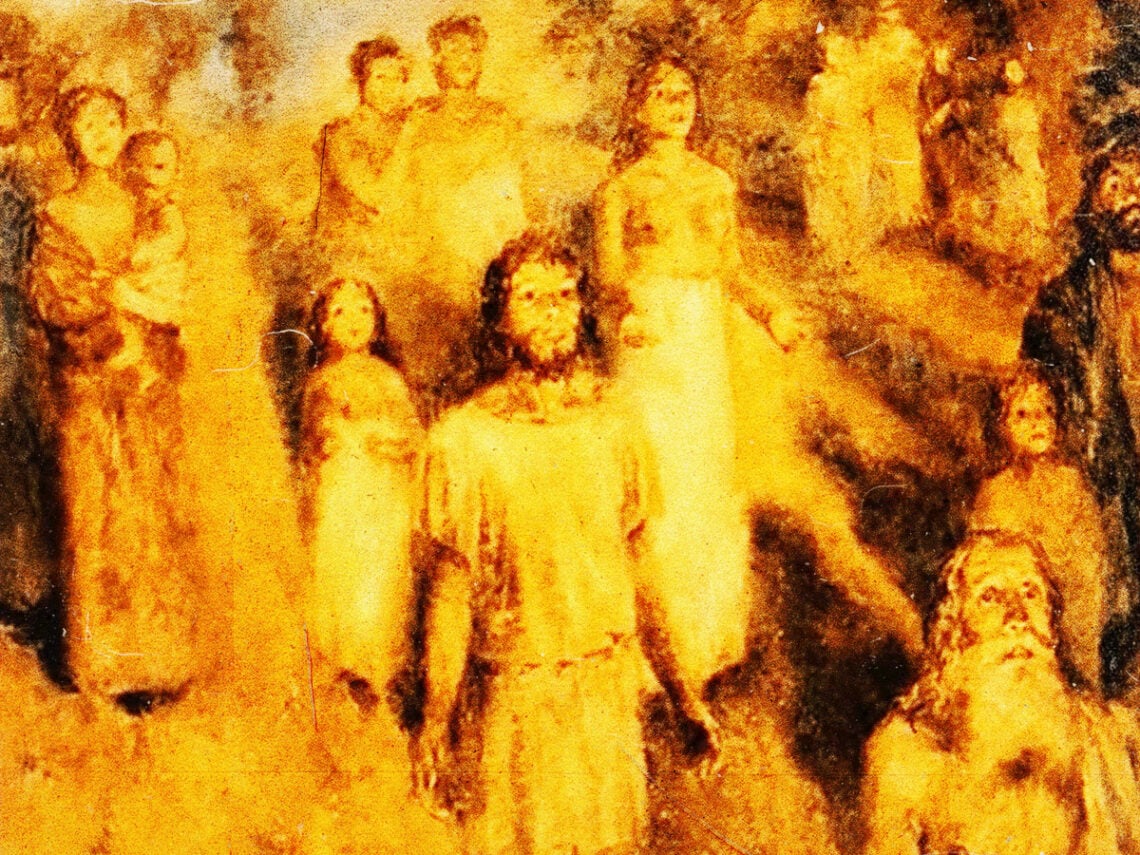
However, Petrov’s version of The Dream of a Ridiculous Man is more interesting because it conjures up a very specific aesthetic framework for Dostoyevsky’s dark world. In the world of animation, Petrov is widely known as the most influential practitioner of paint-on-glass animation, and The Dream of a Ridiculous Man is undoubtedly one of the best examples of this. Using crude but powerful images that link with each other to paint a striking Dostoyevskian portrait, it’s easy to get lost in the raw beauty of the animation.
Like the original short story, Petrov’s film revolves around a man who decides he is going to kill himself after declaring that the world he inhabits is fundamentally flawed. However, after a strange encounter with a little girl one night, he slips into a moving dream where he witnesses the magic of an ideal society, one that is inhabited by human beings who are in complete harmony with the environment as well as with each other.
Using Biblical ideas of corruption and utopia, Dostoyevsky’s story is an important chronicle because of the density of its philosophical foundation. To Petrov’s credit, he adds many more dimensions to this tale by creating a visual experience that captures the darkness of modernity as well as the brightness of the hope that is necessary for our survival.
Watch the film below.
