


The defiant story of Greenland’s rock ‘n’ roll scene

Over a 1,000 years ago, the exiled Viking Erik the Red settled on an ice-covered island that he decided to call “Greenland” as an early form of real estate fraud.
Then, 500 years after that, the mapmaker Gerardus Mercator introduced a new flat projection of the world to help out explorers, but as a compromise, made Greenland look about 12x bigger than it actually is. While the consequences of these events shouldn’t matter all that much after another 500 years of human development, they’re probably the top two reasons Donald Trump thinks he needs to own Greenland: it’s huge and it’s great real estate.
It’s safe to assume that no thought whatsoever has been granted to the people who call this place home, many of whom could trace their roots back at least as far as Mercator’s time. It’s a small population, to be sure; a headcount smaller than that of Littlehampton, England, but the remote location and unique Inuit background of the majority of Greenland’s residents, combined with hundreds of years of Danish influence, have made it a singular culture with its own language, traditions, and, of course, music.
Greenland’s relationship with rock ‘n’ roll is particularly interesting, as the arrival of that new type of music into the country happened during a time when the Danish government was still doing its best to repress Inuit traditions and the use of the Greenlandic language, also known as Kalaallisut.
Rock ‘n’ roll, often played by British bands and arriving in Greenland via the record collections of American soldiers on military bases, offered a new form of rebellion and a way for local musicians to backdoor some political messages into their art.
The original giants of Greenland rock were Sumé, who formed in 1972, inspired by the likes of The Beatles and The Doors, but singing in the country’s language about issues relevant to the plight of indigenous Greenlanders.
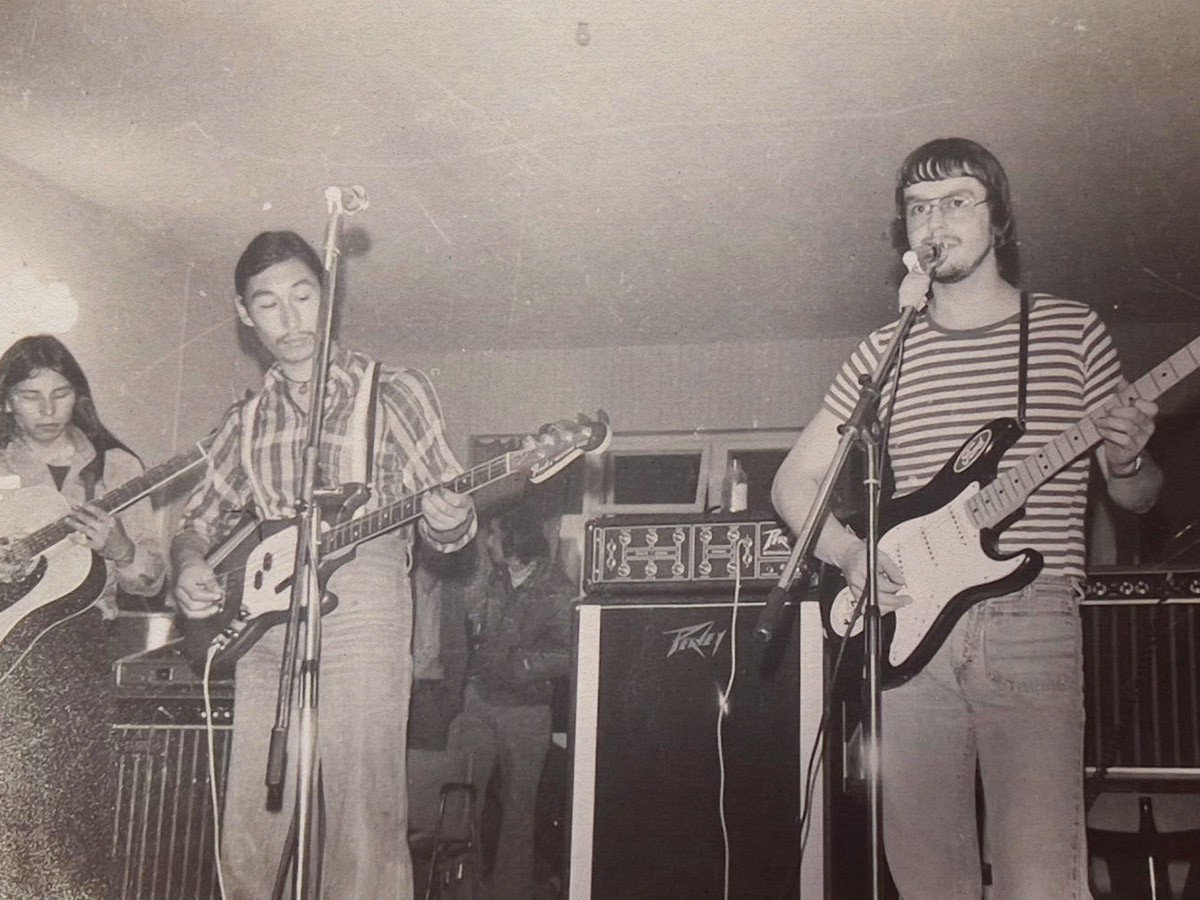
“We are considered the pioneers of rock and roll in Greenland,” Sumé co-founder Per Berthelsen told Psychedelic Baby magazine in 2024, not suffering from any humbleness, adding, “About a year after our first release, new bands slowly began to emerge, all inspired by Sumé. They refer to us as the ‘living legends’ and say, ‘Sumé is to Greenland what Gasolin is to Denmark and The Beatles are to the world’.”
Following Sumé’s lead, a small but vibrant rock scene did slowly emerge in Greenland, centered in the capital, Nuuk. In the 1980s, the band Zikaza became a phenomenon, selling 10,000 domestic copies of their 1988 album Miki Goes to Nuussuaq, meaning about one in five people in Greenland owned the record. In the 2000s, the bands Chilly Friday and Nanook found similar success, with the latter turning down a chance to sign with Sony because the deal would have required them to sing in English.
Nanook singer Christian Elsner, whose family also runs a record label and recording studio in Nuuk, recently told the Times that abandoning the Kalaallisut language for a payout would have been “awkward and unnatural”. He has seen a growing pushback against the old colonial influences among Greenland’s artists in recent years, even the artists who’ve side-stepped folk-rock in favour of heavy metal and hip-hop. Greenland’s music, according to Elsner, is like the island itself, “staying true to its origins yet also evolving”.
“We want to play metal,” added Pani Enquist, a member of the current Greenland band Sound of the Damned, which incorporates traditional throat singing and Inuit instruments like the ‘qilaat’ drum into their sound, “We also want to represent our culture”.
