


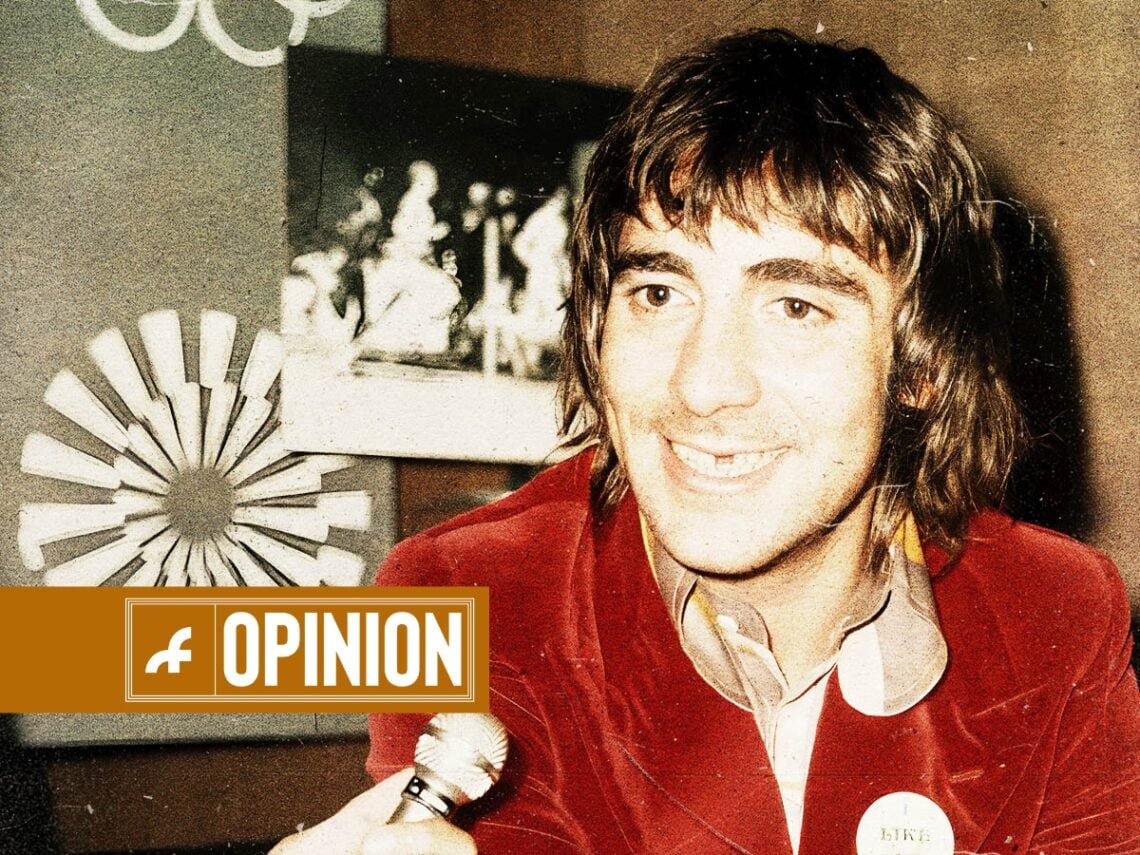
The death of the rockstar: Why musicians like Keith Moon no longer exist

Lincoln Continentals flying into swimming pools, exploding toilets, and getting so stupefied by alcohol and animal tranquilisers that he passed out during a show; in many ways, Keith Moon was the ultimate rockstar. Moon ticked all the boxes in qualifying for the rockstar tag and more by supporting his well-documented antics with technical ability that was of such gravitas that he remains one of the most influential drummers ever. Although he passed away in 1978, aged just 32, Moon remains one of the names most closely tied to the concept of sex, drugs and rock ‘n’ roll.
One of classic rock’s definitive heroes, Keith Moon was a total enigma. A tragic genius in many ways, he represents the best of his era and all its pitfalls. His musical oeuvre speaks for itself, and he brought both dynamism and dexterity to The Who, allowing the virtuosity of his bandmates, guitarist Pete Townshend, bassist John Entwistle and frontman Roger Daltrey, to shine on top of his compelling rhythms.
However, Moon was a mass of unrelenting energy. This, in addition to rockstar behaviour being coveted by the industry and fans, saw him add another more complex dimension to his cultural standing. Furthermore, when speaking on The Howard Stern Show in 2013, Roger Daltrey asserted that he believed his late friend was slightly autistic but never diagnosed, as in those days, it was a subject seldom spoken about or even understood for most of the populace. If this claim is valid, it dramatically changes the complexion of Moon’s life.
A talented extrovert who loved touring much more than his three bandmates, Moon’s restless nature would see him get up to all kinds of high jinks – with some of his most famous extra-musical moments even brought into question because he tended to tell stories. Yet, it says it all that his biographer Dave Marsh writes that Moon’s raucous attitude on the road was so intense that it would spill over into his existence outside of it. In Marsh’s words, Moon lived “as if his life were one long tour”.
Like many of the rockstars who embodied the traditional spirit of the genre, Moon’s life ended far too soon. In September 1978, he overdosed on the clomethiazole tablets he had been prescribed to alleviate his alcohol withdrawal symptoms. Morbidly ironic, the context of his death indicates how he consistently pushed himself to the limits, even when attempting to recover from alcoholism.
Reportedly, Geoffrey Dymond, a physician unaware of Moon’s lifestyle, prescribed him a bottle of 100 clomethiazole pills, telling him to take one when he craved alcohol but no more than three a day. However, after Moon’s death, the police determined that there were 32 clomethiazole tablets found in his system, with six digested, a number sufficient to cause death. Later that year, Max Glatt, an established authority on alcoholism, told The Sunday Times that Moon should never have been given the drug, saying, “It is suitable for a limited period of a few days but should not be used by patients who are not confined to bed”.
Tragically, Keith Moon was just the latest in a long line of rockstars passing before their time due to their lifestyle choices, with the likes of Jimi Hendrix, Jim Morrison and Janis Joplin coming before him, and others such as John Bonham and Hillel Slovak still to come. Without concentrating on the unfortunate aspect of Moon’s passing too much, it is safe to say that what he represents in terms of being perhaps the definitive rockstar – with particular concentration on his wild antics – will never be seen again. If it were to happen again, society will react differently.
It reflects Moon’s character as the epitome of the classic rockstar that he is nearly as well known for his excesses as he is for his many musical feats. Whether it be trying to drink Oliver Reed under the table in a mammoth drinking contest or visiting pubs in London with former Bonzo Dog Doo-Dah Band member, Viv Stanshall, wearing Nazi uniforms, The Who drummer lived on the edge.
“You’d come offstage and still be buzzin’,” Moon said in 1978. “Then you’d go to a party and it’d get out of hand, get wild. Things get broken. If you’re sitting around after a show and there’s something you don’t like, you just switch it off by throwing a bottle through the screen.”
While tragedies such as the deaths of Lil Peep and Juice Wrld have reinforced the argument that music and misadventure are still bedfellows, the idea of the raucous rockstar in the mould of Keith Moon is one that practically no longer exists. Although grassroots artists might party until the next day with those they’ve just shared a bill with, and more prominent acts touring might get smashed each night, there is just no room to do what Moon and some of his contemporaries did on such a grand scale anymore. Of course, sex, drugs and rock ‘n’ roll exist at every level of the music industry, as they likely always will, but the appetite and margin for a trail of destruction à la the late Who drummer has never been more diminutive.
This is due to several things. The first is that, over the years, the idea of a traditional rockstar has been confirmed to be a total fallacy, with the hedonism that Moon and his peers embarked on now largely nothing to aspire to. Even the youth of today are widely known to be giving up alcohol in favour of a healthier and supposedly more-rounded lifestyle.
In 2022, The Guardian reported that the alcohol education charity Drinkaware had found that there has been a general decline in drinking. Whilst older people are the most likely to consume alcohol, the demographic least likely to drink are those aged 16 to 24, with 26% of that age group completely teetotal. Whilst this was counterbalanced with the point that a 2015 study had found a spike in young people using ecstasy and LSD, even drug taking has changed from what it was in Moon’s day, with more information available on what people are putting into their bodies than ever before.
That said, this must be caveated with the point that most narcotics, and particularly Class A’s, still come with their inherent dangers, with the risks of drugs speaking now universal truths, unlike they were in Moon’s day. There have been far too many fatalities over the years due to drugs, which has been a primary factor in his shift.

The writer of that Guardian article, Barbara Ellen, made a fine point. She touches on something important in this “youth mass detachment”. Young people are clearly not interested in drinking due to what they see from their elders, just like she never felt the pull of weed due to the footage of longhairs from the 1960s and 1970s putting her off because of something so innocuous as their fashion. It also seems that peer pressure for hard drinking appears to have died a death, as Ellen points out that the old adage of “Never trust a bastard who doesn’t drink” doesn’t apply to young people. You can only think that seeing the worst sides of alcohol binging, from fan behaviour at the 2020 Euros to the states found daily in their local boozers, makes them think, “I don’t want to be like that”.
Keith Moon’s life is one of the most famous examples of what relentless hedonism can do to a person in a negative sense. In addition to this, if someone were to drive a Lincoln Continental into a pool or blow up a toilet, society would think that they are nothing short of an arse, using his status and money for no good, particularly in a time of such financial dire straits. Need we mention the visiting pubs in Nazi uniforms? Whilst Moon and his friends might have found it funny, the outcry would be monumental if a prominent musician did that today – and rightly so. If he didn’t get cancelled, Moon would at least be derided for such a culturally insensitive misstep, and his career would have surely taken a nosedive.
Elsewhere, we need to think of rockstar behaviour in the modern context. Two contemporary examples spring to mind that bring its relevance into question. The first is Queens of the Stone Age leader Josh Homme kicking photographer Chelsea Lauren during a 2017 show. This happened by him booting her camera, and the camera then hitting her in the face. Whilst we can all see what he was trying to do, oozing supposed rock ‘n’ roll swagger with such an act couldn’t have ended more distinctly from the original intent. For all his musical merits, Homme did not come off well from this incident. It was nothing short of an unprovoked attack on a young woman simply trying to do her job.
Elsewhere, we have Homme’s friend and collaborator, Arctic Monkeys frontman Alex Turner, who has at points been one of the closest things the 21st century has to the traditional rockstar. Let’s talk about that infamous mic drop at the 2014 Brit Awards. After the Sheffield band won the ‘British Album of the Year’ award, the frontman gave a presumably inebriated speech about “that rock ‘n’ roll”.
At the end of this now iconic moment, he said: “Yeah, that rock’n’roll, it seems like it’s fading away sometimes, but it will never die. And there’s nothing you can do about it. Thank you very much for this. I do truly appreciate it. Don’t take that the wrong way…”
Turned then concluded, “And er, yeah… Invoice me for the microphone if you need to…” before dropping the mic off the stage. For all of its comedy value, many thought this stunt was too much, with Turner embodying the arrogance of rock excess. It’s safe to say that Turner seems far removed from that iteration of himself nearly a decade on, and that’s a good thing.
Bringing the point into complete focus about how the traditional rockstar has died, we only need to look at some of their most infamous moments to show that society has moved so far on. Despite the performative and addiction-fuelled nature of the following statement from David Bowie, suppose a renowned contemporary artist embraced fascism in such a way as he did, to the extent of labelling Adolf Hitler “one of the first rockstars”. In fact, Kanye West did just that in late 2022, and it did not end well for him. Only time will tell if his career recovers.
Bowie told Playboy in 1976: “I will one day. I’d adore to be Prime Minister. And, yes, I believe very strongly in fascism. The only way we can speed up the sort of liberalism that’s hanging foul in the air at the moment is to speed up the progress of a right-wing, totally dictatorial tyranny and get it over as fast as possible. People have always responded with greater efficiency under a regimental leadership.”
He continued: “A liberal wastes time saying, ‘Well, now, what ideas have you got?’ Show them what to do, for God’s sake. If you don’t, nothing will get done. I can’t stand people just hanging about. Television is the most successful fascist, needless to say. Rock stars are fascists, too. Adolf Hitler was one of the first rock stars.”
Elsewhere, we have the abhorrently racist Eric Clapton outburst during a 1976 show, a year marked by rockstars flirting with extreme politics. Supporting the rhetoric of anti-immigration politician Enoch Powell, a drunken Clapton went beyond the pale, which would have been a career-ender today, and perhaps even a matter for the police. “Stop Britain from becoming a black colony. Get the foreigners out,” the former Cream man told his audience. “Get the w*gs out. Get the c**ns out. Keep Britain white.”
He continued: “Do we have any foreigners in the audience tonight? If so, please put up your hands. So where are you? Well, wherever you are, I think you should all just leave. Not just leave the hall, leave our country. I don’t want you here, in the room or in my country.”
Not only is this outburst horrendous, but if anyone were to do that today, let alone a drunken or intoxicated musician, they would rightly be in hot water. Despite it being nearly 50 years ago, it does beg the question of how Clapton has been able to bounce back so seamlessly, particularly in the years since when he has expressed regret for his actions, but with highly questionable lines such as, “I was so ashamed of who I was, a kind of semi-racist, which didn’t make sense,” and “Half of my friends were black, I dated a black woman, and I championed black music”. Envision someone like Dave Grohl doing that. He’d be cancelled, packed straight into rehab by his management, and his career would be over in an instant. He’d go from hero to public enemy number one in the blink of an eye.
For our last exhibit, even Jimi Hendrix’s iconic act of setting his guitar on fire at the Monterey Pop Festival in 1967 would be viewed with disdain. After concluding his set by sending his Fender Stratocaster up in smoke, the American guitarist explained, “I decided to destroy my guitar at the end of a song as a sacrifice. You sacrifice things you love. I love my guitar.” If a prominent musician did that today, they’d be dismissed as a massive douchebag. People would say, “C’mon, we’re in the middle of a cost of living crisis, and such careless destruction of an expensive item in front of the public is nothing but crass. People can’t even afford to buy food”. The less serious commentators would say that Hendrix was being so extra.
As for the many high jinks of our main exhibit, Keith Moon, there is simply no room for most of them anymore. Cancellation, prison and who knows what would have followed him if he was around today, with him remaining a manifestation of the cultural era in which he performed and why we will never return to such a space. In short, the traditional rockstar is dead; to be a public figure and role model in 2023 comes with its own rules, informed by the lessons of the past.
