


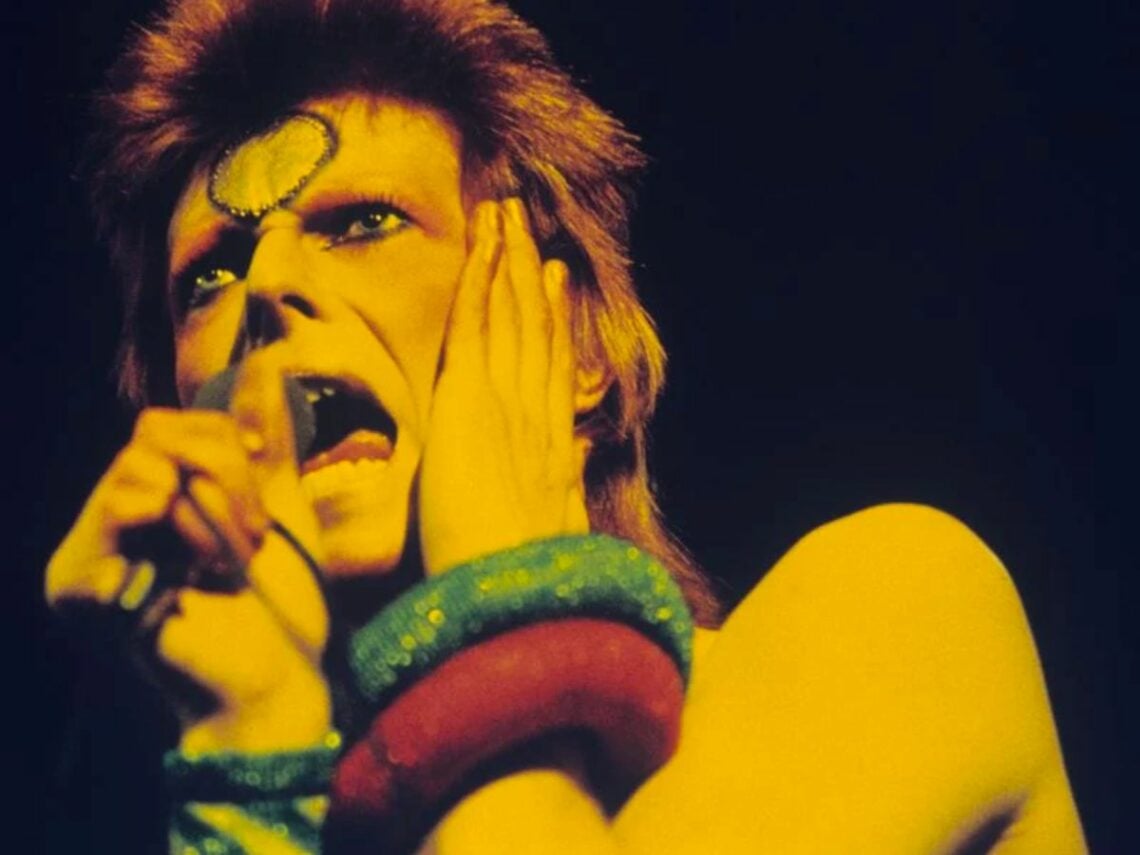
The David Bowie song inspired by James Brown

It took almost a full decade for David Bowie to find the right combination of influences. His initial musical output was largely based around novelty with songs like ‘The Laughing Gnome’ and ‘Space Oddity’. Bowie’s interest in theatricality and performance needed a true rock and roll avatar. It wouldn’t be until 1972 that Bowie would find his perfected persona – Ziggy Stardust.
When Bowie brought Ziggy to life for the album The Rise and Fall of Ziggy Stardust and the Spiders From Mars, he not only had a fully fleshed-out character arc but also an entire narrative involving the life and death of the alien rock star messiah. A sci-fi epic, the album would ultimately conclude with Ziggy’s gruesome end on ‘Rock ‘N’ Roll Suicide’.
“Ziggy starts to believe […] himself a prophet of the future starman,” Bowie detailed to William Burroughs in a 1974 Rolling Stone feature. “He takes himself up to incredible spiritual heights and is kept alive by his disciples. When the infinites arrive, they take bits of Ziggy to make themselves real because in their original state they are anti-matter and cannot exist in our world. And they tear him to pieces on stage during the song ‘Rock ‘N’ Roll Suicide’. As soon as Ziggy dies on stage the infinites take his elements and make themselves visible. It is a science fiction fantasy of today…”
Most of the elements that went into Ziggy Stardust came from Bowie’s rock and roll peers. Gene Vincent, Iggy Pop, and Lou Reed were all filtered into the character, but it was a soul superstar who helped Bowie construct the wild ending found in ‘Rock ‘N’ Roll Suicide’. Memories of listening to James Brown’s Live at the Apollo helped give Bowie the exit he desired for ‘Rock ‘N’ Roll Suicide.
“My old schoolmate Geoff MacCormack brought this around to my house one afternoon, breathless and overexcited,” Bowie told Vanity Fair in 2003. “’You have never, in your life, heard anything like this,’ he said. I made a trip to see Jane Greene [sales assistant at Bromley department store Medhurst’s] that very afternoon. Two of the songs on this album, ‘Try Me’ and ‘Lost Someone’, became loose inspirations for Ziggy’s ‘Rock ‘N’ Roll Suicide’. Brown’s Apollo performance still stands for me as one of the most exciting live albums ever. Soul music now had an undisputed king.”
Outside of Brown’s iconic soul music, Bowie pulled from across various cultures to perfect the Ziggy Stardust character. With elements of kabuki theatre and Bowie’s own mime training coming into play, the Ziggy character needed a slightly softer and more feminine angle as well. That’s when Bowie looked to French culture for an additional piece of the Ziggy puzzle.
“To go from a ’50s rock-flavoured thing with an Edith Piaf nuance on it produced that. There was a sense of French chanson in there,” Bowie explained to Performing Songwriter in 2003. “It wasn’t obviously a ’50s pastiche, even though it had that rhythm that said total ’50s. But it actually ends up as being a French chanson. That was purposeful. I wanted that blend, to see if that would be interesting. And it was interesting. Nobody was doing that, at least not in the same way. The same approach was being adopted by a certain number of artists from that era.”
Check out ‘Rock ‘N’ Roll Suicide’ down below.
