


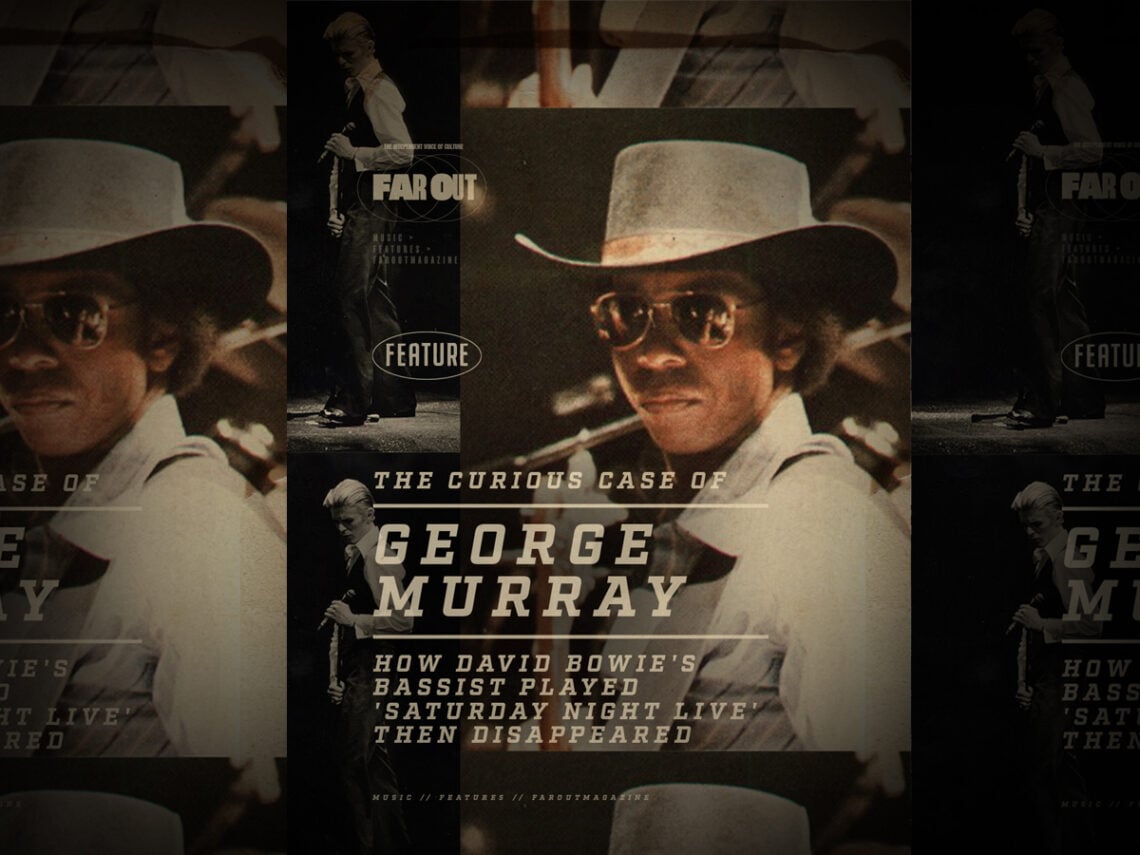
The curious case of George Murray: How David Bowie’s bassist played ‘Saturday Night Live’ then disappeared

The author Steve Tesich once wrote, “Life, it seems, is not meaningless but, rather, so full of meaning that its meaning must be constantly murdered for the sake of cohesion and comprehension. For the sake of the storyline.”
That’s perhaps why George Murray’s life seems so unfathomable: it doesn’t fit into the neat stories that we like to tell ourselves, his arc defying natural convention. He laid down golden grooves on eternal tracks like ‘Heroes’ and ‘Ashes to Ashes’, and toured the world with David Bowie, but then, rather suddenly, after playing alongside ‘the Starman’ in 1980 on Saturday Night Live, he disappeared for good.
Eventually, he would settle into the Los Angeles education system, where decades went by without any of the pupils, parents, or even his peers knowing that he was a pivotal cog in a moment of culture that changed history, bringing forth the glaring question of how. Over the years, you sense that Murray’s response has been wearily eroded to the simple epithet of: That’s life!
After all, his journey into music had been just as unassuming. He started playing bass as a youngster simply because he “couldn’t afford a drum kit”, but that being said, he couldn’t even be sure why he wanted a drum kit in the first place. It seemed that was simply what you did in those days, where you either learnt an instrument, picked a sport, or succumbed to the draft.
With The Beatles proving to be “a very big deal” and The Beach Boys being “inspiring even in New York”, Murray and his friends were simply leaning into the liberating riches that music had to offer. By the time that “Eric Clapton, Cream, Jimi Hendrix, early Traffic, oh and Sly and the Family Stones” came to Murray’s attention, he was just about to enrol his bass skills into a music college.
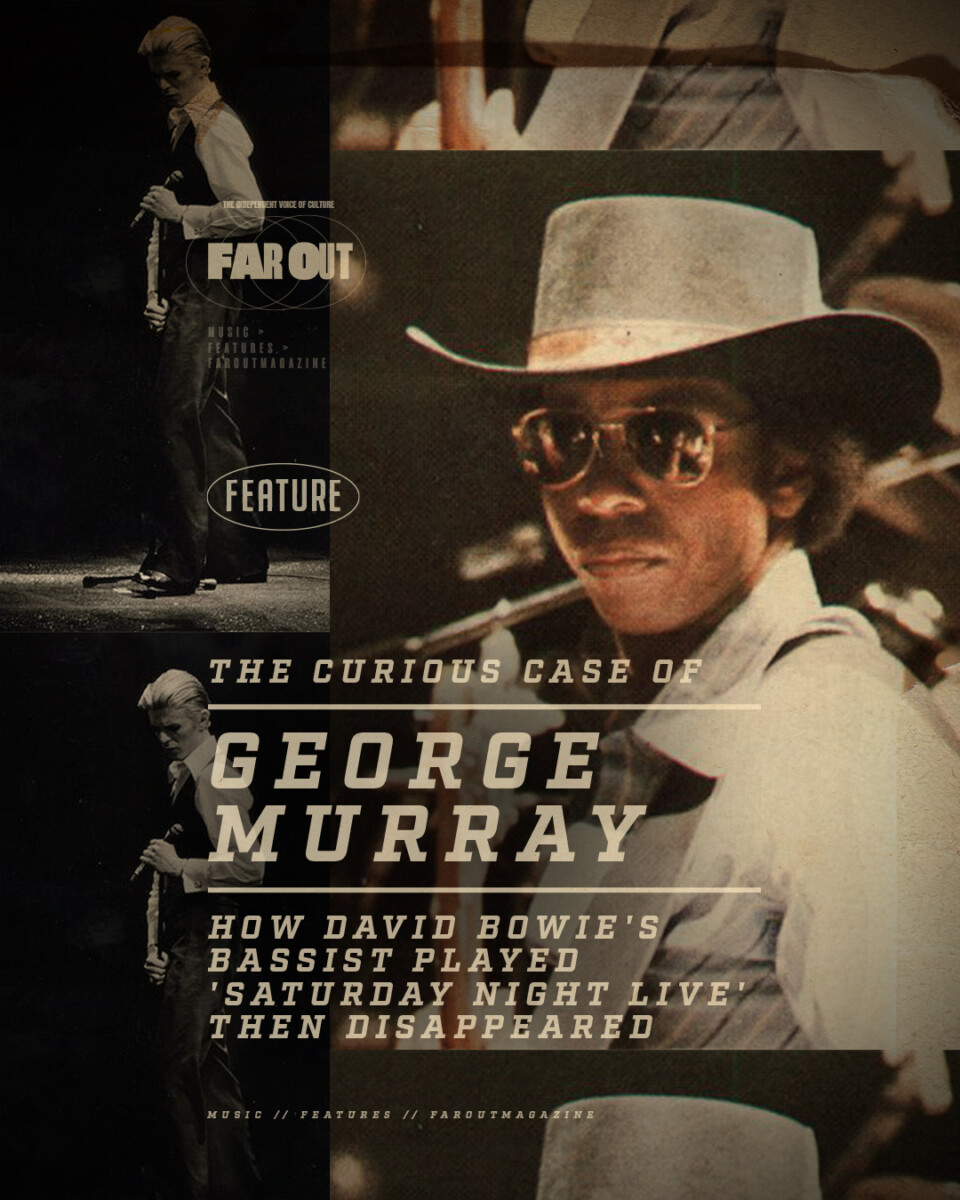
Once again, in Murray’s curious life, he can’t be all that clear why he did that, putting it partly down to “wanting to express” himself, and partly down to realising “you could make money at it”, but he doesn’t offer up either with much conviction, which becomes a recurring theme in my chat with the enigmatic musician.
I’d gone in expecting wild anecdotes of anarchic nights with Bowie and glittering chaos that unspooled towards an inevitable end, filled with regrets and reconciliation, but what I found was a fellow recounting a former job. In brief moments, it might have dawned on him that it was a rather extraordinary job, but nevertheless, it was just another chapter in a working life full of the unknowable and unarguable whims of fate.
When that job ended, he simply did what everyone does and found another one, and there’s something astonishing and deeply illuminating about that. I began trying to pick at his remarkable life, but slowly found myself nosediving instead into his remarkable character. In an industry awash with eccentrics and tall tales, the normalcy with which he recalls his years on the road with a man the world has come to crown a genius is casually confounding, yet it’s also humanly understandable, and even comforting in turn. There’s something oddly beautiful about brushing shoulders with genius one minute and brushing it off the next.
While it’s his sudden departure that is often pitched as the outlying element of his story, the more you speak to him, the more the inverse becomes notable: sometimes great musicians simply don’t fold neatly in the bizarro world of the music business to begin with, and that remains true on his recent re-entry.
Rather than mythologise his own story on the brink of the DAM Trilogy’s Back to Berlin tour, as he once again teams up with fellow Bowie acolyte, Carlos Alomar, his catchphrase remains a droll pronouncement of, “I am telling you my story how I remember it”. This dry disposition leads to an extraordinary insight not just into the workaday reality of Murray’s own meandering existence, but it also lends a more accurate apprehension of Bowie’s day-to-day, too.
Professionally, that story began bashfully. Murray always seemed to be close to graduating from college when a musical job would come along, and he’d quit school. The most significant vocational calling arrived when he was asked to tour as part of George McCrae’s band, and while McCrae mightn’t be remembered as a huge name, at the time, he was very popular in certain parts of the US, so the tour put Murray on the map.
When he returned and found himself looking for work once again, he was very relieved to receive a phone call asking him if he’d like to “audition by way of recording an album with David Bowie”. Most people might be dumbfounded to receive such a call, but Murray was merely relieved that more work was coming his way: “That was in the September of 1975”.
“I knew that David was a star,” he recalls, “But I didn’t know that much about his music”. Vitally, though, he had worked with Alomar, Bowie’s long-term guitarist, back in New York when he was starting out, which proved pivotal because he certainly wasn’t going to get the job on the strength of his intricate knowledge of ‘the Starman’ and his catalogue.
“I had never delved into his music beyond the surface of it,” he explains, “I just knew that Dennis [Davis, drummer] was there, and Carlos was there. And, mostly, that it was a good job. It was a good gig.” But that was it. Nothing grander. It was a good job, and Murray had bills to pay. “I had respect for him as an artist and respect for him as a successful artist, but no, I was not a fan,” he adds.
Not long after receiving that phone call, Murray was in a Los Angeles studio and the successful musician who he wasn’t that much of a fan of was approaching him with an outstretched hand. How does he recall this legendary moment? Well, as casually as he recalls everything else: “It was a very informal introduction, and we started working on his music”.
“I didn’t really have an impression,” he says of meeting the new megastar with multicoloured eyes and a diet of milk and bell peppers, “I didn’t form an impression of him at that moment. It was kind of neutral, but I did know that I wanted to make a favourable impression musically on him by being able to contribute to what he was going to present as his next project.”
The project happened to be Station to Station, the start of Bowie’s experimental trio of masterpieces. The traditional narrative would decree that Murray was walking into a circus with cocaine strewn across the mixing boards, cut-up lyrics littering the place like the confetti from Burroughs’ wedding, and perhaps Iggy Pop bounding into the place like a human pogo. But is that all just a fallacy?
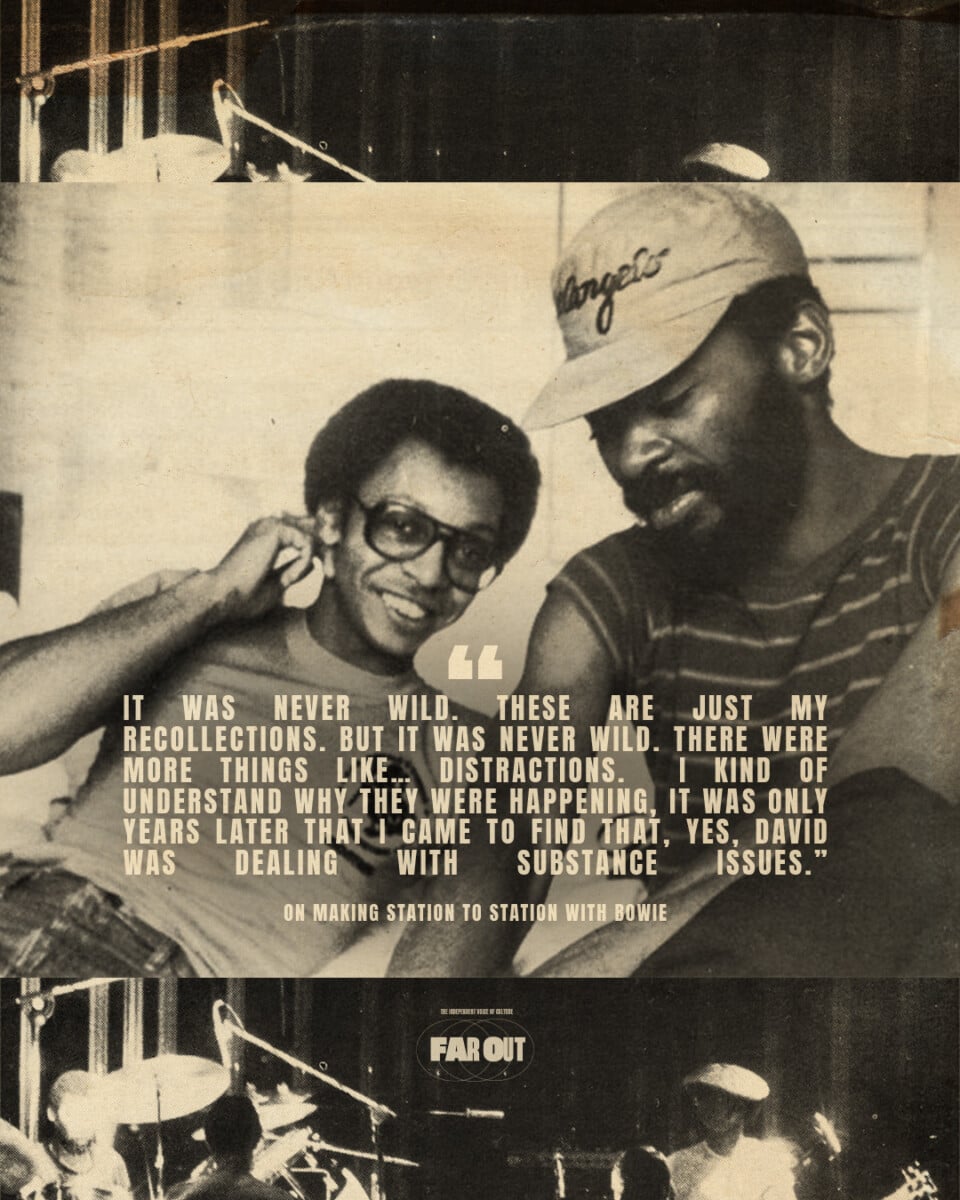
“It was never wild,” Murray carefully asserts. “These are just my recollections. But it was never wild. There were more things like… distractions. And I kind of understand why they were happening,” he says, “It was only years later that I came to find that, yes, David was dealing with substance issues.”
Murray would cherish some of these ‘distractions’, like when Bobby Womack, of whom he “was a big fan”, stopped by and collaborated with Bowie on a long-lost track “called something like ‘Staning in the Safety Zone’ that went nowhere”. But above all, bar shaking Bobby’s hand, his hope was to secure lasting employment on a softly touted forthcoming tour.
But the bassist’s position was perilous. He had caught wind that he had been roped into the studio as a replacement bassist, but he had no idea why the last performer had been dismissed. Was Bowie very picky about his bassists? It was hard to tell because all of his musical instructions usually came via Alomar as the bandleader.
Things got even more fretful for Murray when he heard that the rest of the band had all received contracts for the now confirmed tour, “except me,” he says. Had he fallen foul of the same mystic faults as the last guy? The album certainly seemed “to go very well”, and he knew that much. But he was in the lurch, so, one night in a hotel room, Alomar, a practising Buddhist, suggested that he start chanting.
“I was hoping, hoping, hoping, that I would, eventually, get asked,” he recalled. Whether it was the chanting that brought it about or not, pretty much as soon as Murray left his hotel room, he bumped into Bowie’s manager and was invited out onto the tour. Delight, euphoria, jubilation, you’d imagine the moment to be coloured by, but not quite, not with Murray.
“Yes, it was a bit daunting,” he says,“I had never performed with an artist at that level before. And confidence has always been a challenge for me. I was always unsteady with it, but confident enough to play what I needed to play to make the music sound good.”
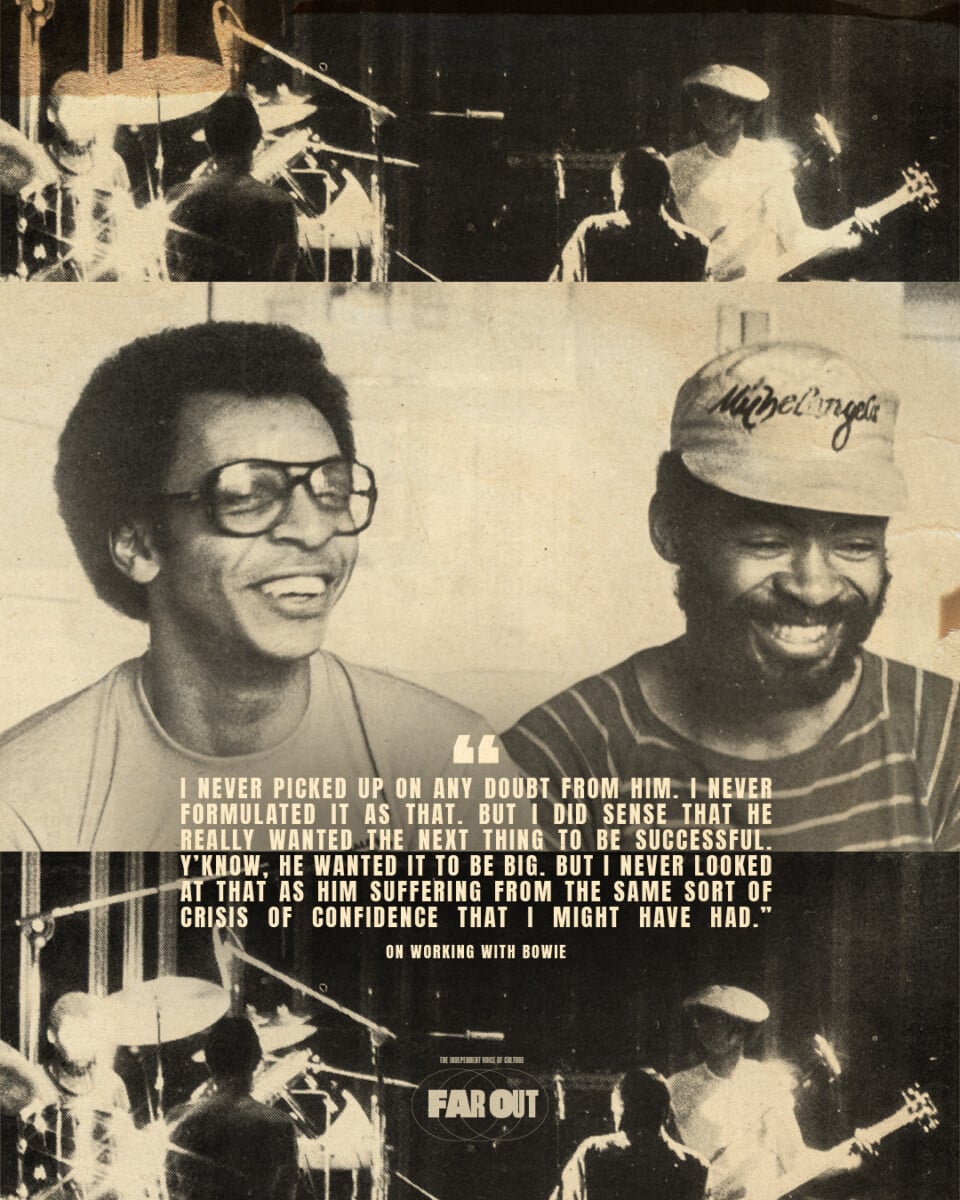
The tour somewhat amplified both sides of his fretful mind. Playing the songs became easy, but the interactions it thrust him into “were challenging”. Tales of Bowie’s self-doubt are widespread, so you might expect that Murray found a like-minded fellow in his frontman, but he didn’t quite see it that way. “I never picked up on any doubt from him. I never formulated it as that. But I did sense that he really wanted the next thing to be successful. Y’know, he wanted it to be big. But I never looked at that as him suffering from the same sort of crisis of confidence that I might have had,” he says of his five years with the man.
So, what did he think of the ’Five Years’ singer beyond his brave, jittery ambition: a genius, a maverick, a colleague? “I thought that this is somebody that I’m happy to be working with,” he characteristically puts it, “Wherever he wants to go, however he wants the music to do, wherever he wants to guide it creatively, I will try and support that.”
That was the simplistic goal and motive behind his days with him. While they would occasionally find themselves on nights out together, Murray says, “I kind of describe my relationship with him as: professionally personable. And I think those two words may be interchangeable in order”.
But the one thing he does assert is that these nights were not often ones of ridiculously wild abandon. Bowie was focused on his art, after all, that was his job, and one of the most illuminating insights that Murray imparts is that no matter what line of work you’re in, a job will always become a job.
“People might have had issues with drugs and alcohol, but when it came time to perform or produce, I never saw that,” he says. However, in time, he would develop his own issue. By 1977, he was looking to settle into life on the road, but when he got married, he struggled to juggle being a husband to a wife and a bassist to a mega star. His wife had moved out with him to record Heroes in Berlin, and as Murray put it, “Now, I was not only responsible for my own behaviour. I don’t mean this negatively or derogatory, but I was wondering where her personality fit in”.
An implacable worry ate away at him in the studio. There was a strange nascent anxiety that he couldn’t quite fathom regarding the chasm in his work and home life, despite Bowie sticking to a rather routine “set schedule”. Problems came along with that anxiety, nothing huge or glowering, but just enough to derail his focus, and somewhere in the middle of this irksome mindset, Murray had contributed to another masterpiece.
“I might have lost sight of that a little bit. I might have lost sight of my privilege,” he recalls off the Heroes period, “I think that might have gotten away from me a little bit, but I wasn’t arrogant. Well, I don’t know. Maybe people might perceive me as arrogant at that time. I never really gave that much thought.”
He was caught up in a haze, in which, only years later that he realised the magnitude of even the title track, a song that literally helped to topple the Berlin Wall. It marginally dawned on Murray when, in 2022, he saw “the audience’s reaction” to a live performance he was part of in the Moonage Daydream documentary, “just how much it affected people”.
And amid that haze of life simply unfurling in a fashion that doesn’t fit an expected arc, as is the case with most lives, even his departure from Bowie’s band and the whole music scene thereafter is muddied in his mind: “My memory on this is fuzzy, but I thought it ended after our performance on Saturday Night Live, but chronologically, it looks like it ended after we finished the Scary Monsters album.”
While the recorded dates would suggest the latter, the specifics don’t matter much to him; the conceit of the final curtain fall is that he simply wasn’t asked back into Bowie’s band. It was something that he always knew might happen: that’s the life of a musician, and it’s a life he simply never fell back into.
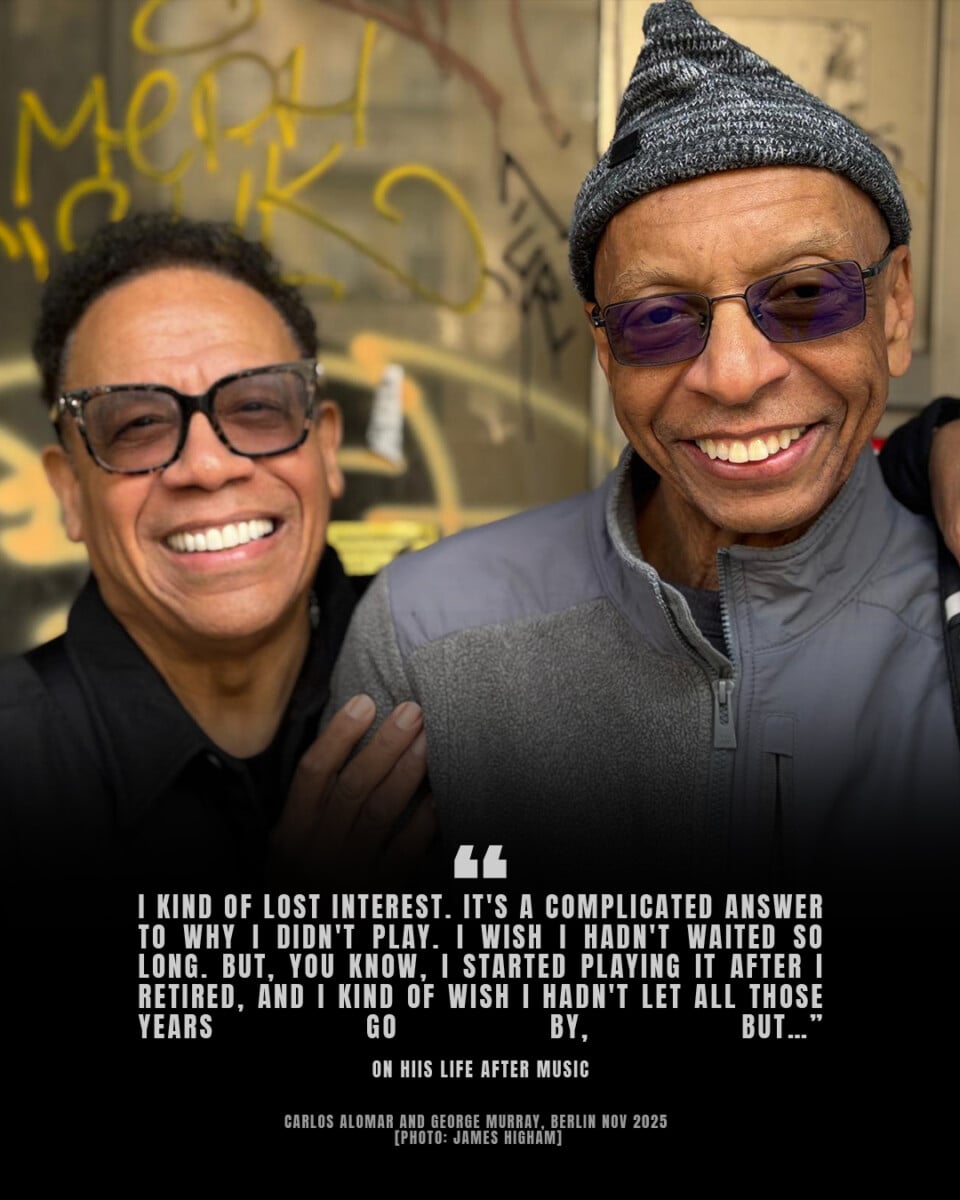
He gigged a little but afterwards, took up a job delivering flowers for a while, and eventually entered the educational system, all but hanging up his bass. “I stayed there almost 35 years until I retired in 2022. As to playing music, it just diminished, and I kind of lost interest. It’s a complicated answer to why I didn’t play. I wish I hadn’t waited so long. But, you know, I started playing it after I retired, and I kind of wish I hadn’t let all those years go by, but…”
It’s a ”but” that says a lot, yet Murray, it seems, has refined it down to two words: That’s life.
You can check out the dates for the DAM Trilogy Back To Berlin Tour here.
